
REVIEW · EMPANADAS AND ALFAJORES
Buenos Aires: Empanadas and Alfajores Guided Cooking Class
Mate and pastry lessons beat another night out. In Buenos Aires, this empanadas and alfajores guided cooking class takes place in a real home setting in San Telmo, so you get hands-on practice with dough, fillings, and Argentina’s beloved flavors. I love how the mate ritual is taught as part of the evening, not tacked on like a garnish.
You’ll also like the teaching style. Clear, step-by-step guidance helps you learn the empanada dough and the all-important repulgue (the crimped seal), plus you’ll make alfajores with corn starch cookies and dulce de leche. One possible drawback to consider: the empanada fillings may focus on a main option (with a vegetarian alternative available), so if you’re hoping for lots of totally different fillings, go in with flexible expectations.
In just 3 hours with a small group (up to 8), you’re set up to leave full, confident, and with a new set of skills you can repeat at home.
In This Review
- Key highlights worth booking
- A San Telmo home-kitchen setup, not a demo show
- Learning the mate ritual before the first empanada bite
- Empanadas made the Argentine way, dough to repulgue
- Dough and filling, step by step
- The repulgue is the technique that changes everything
- Expect a full plate
- Alfajores with dulce de leche, from corn starch cookies to sandwich bliss
- Why corn starch matters
- Dulce de leche filling, the payoff part
- Price and value: $37 for a real dinner and a skill set
- Who should book this Buenos Aires cooking class
- A couple practical tips before you go
- Should you book this empanadas and alfajores class?
- FAQ
- How long is the cooking class?
- What is the price per person?
- Where does the class meet in Buenos Aires?
- What will I learn to cook?
- Is mate included?
- Are ingredients and the meal included?
- Is wine included?
- What languages are the instructors speaking?
- Is it a small group?
- What is the cancellation and payment policy?
Key highlights worth booking
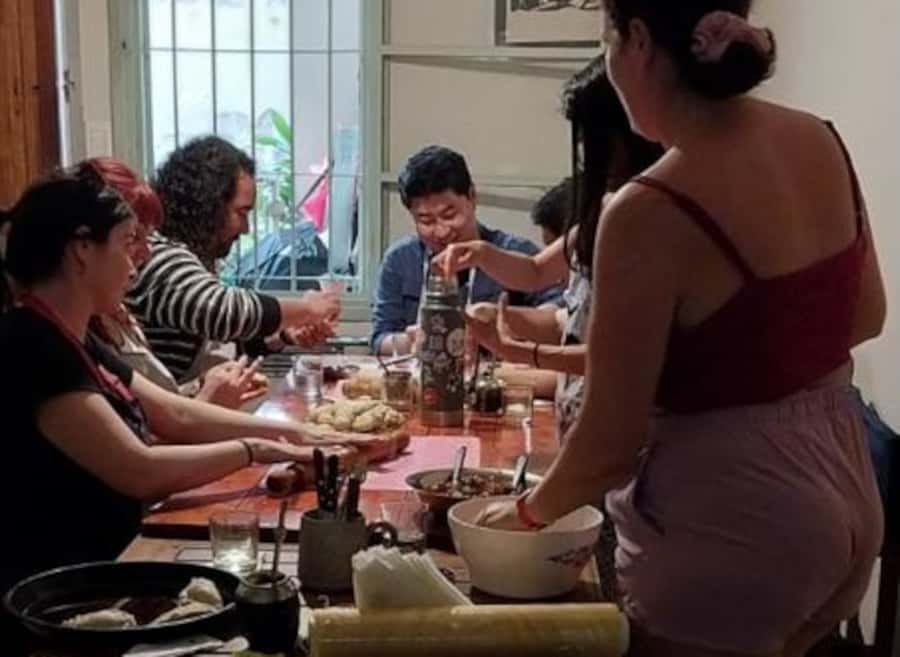
- A small group in a real household in San Telmo, with a family-kitchen feel
- Mate preparation and drinking basics, including the traditional herb setup
- Empanadas from scratch, dough to sealing, with hands-on practice
- Repulgue technique coaching, the detail that makes empanadas look and hold right
- Alfajores with dulce de leche, built with corn starch cookies
- You eat what you make, plus conversation that adds local context
Doughs and dulce de leche, a few more sessions
- Buenos Aires: Empanadas and Alfajores Guided Cooking Class
★ 4.8 · 486 reviews - Buenos Aires: Empanada & Alfajor Cooking Lesson in Palermo
★ 4.6 · 186 reviews - Buenos Aires Food Tour: Local Dishes, Steak, Empanada & More
★ 5.0 · 118 reviews - BA: Empanadas and Alfajores Cooking Experience in Palermo
★ 5.0 · 112 reviews
A San Telmo home-kitchen setup, not a demo show
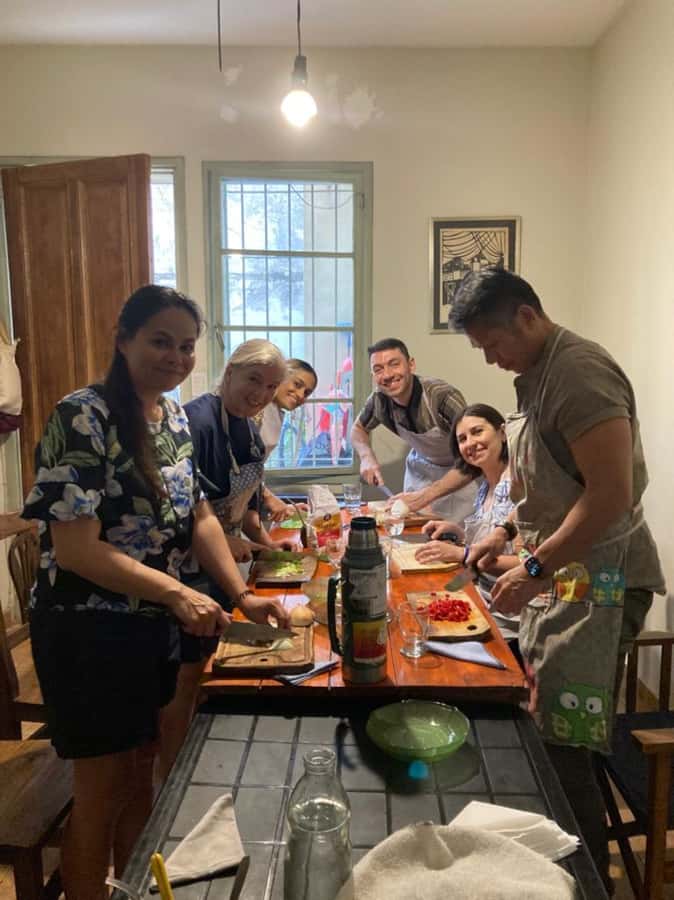
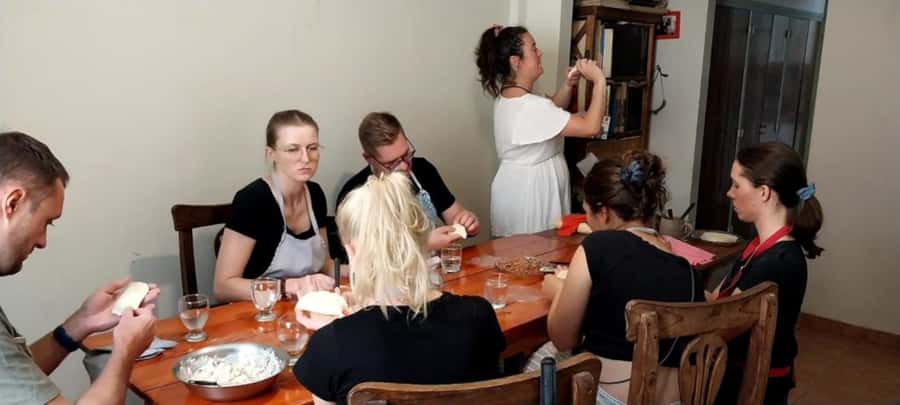
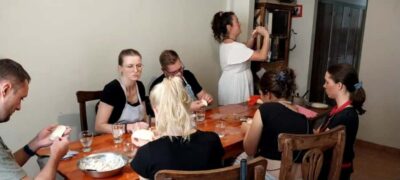
The experience starts in San Telmo at Paseo Colón 1355. You arrive at the class start time, ring the bell, and then you’re brought into the home kitchen where the evening unfolds. This matters more than it sounds. In a setting like this, you’re not watching from across a room. You’re right where the ingredients, tools, and small techniques live.
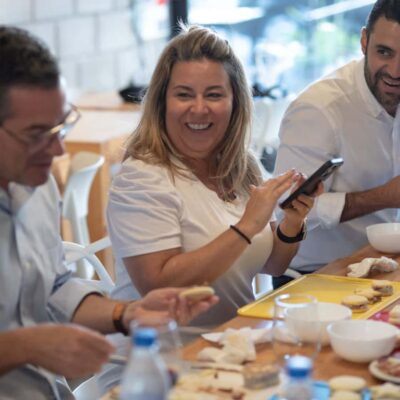
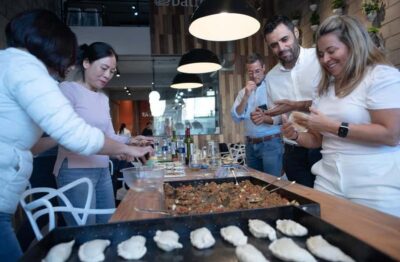
The group size helps too. With a limit of 8 participants, you get real attention while you’re rolling dough, shaping empanadas, and assembling alfajores. The instruction is offered in English and Portuguese, so you’re less likely to feel lost if your Spanish is rusty. People also mention that hosts bring humor and warmth, and that strangers end up talking like you’re at someone’s table, not at a scripted tourist event.
If you want a smooth start, plan to show up ready to work. Wear clothes you’re okay with getting flour on. You’ll be handling dough, and it’s a practical, hands-on meal, not a glass-and-sip experience.
Learning the mate ritual before the first empanada bite
Before the cooking gets busy, you’ll learn how to prepare mate, Argentina’s iconic herbal drink. You’ll be shown the traditional way of creating mate, including how the herbs and serving setup work. Even if you’ve had mate before, this kind of explanation helps you understand what you’re doing when you prepare it yourself.
Mate isn’t only a drink here. It’s a pace-setter. Hosts use it as part of conversation, which makes the class feel like an evening in an Argentinian home rather than a rushed food task. You’re also given water, so you’re not left guessing how to pace yourself during the tasting and cooking.
Practical tip: mate has a strong taste, and it can be an acquired habit. If you’re sensitive to herbal bitterness, take smaller sips at first. You’re cooking too, so pace yourself so the rest of the evening still feels fun.
Empanadas made the Argentine way, dough to repulgue
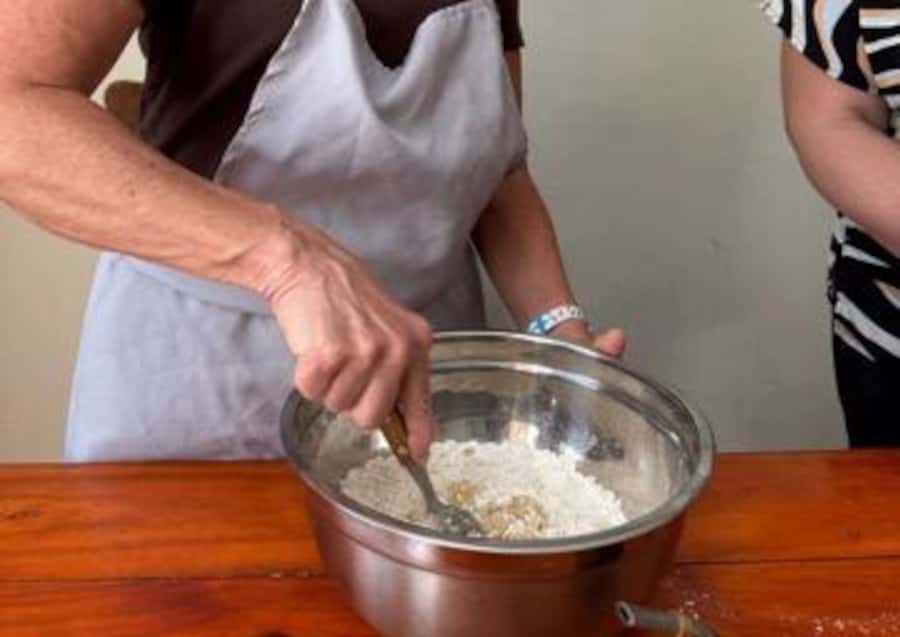
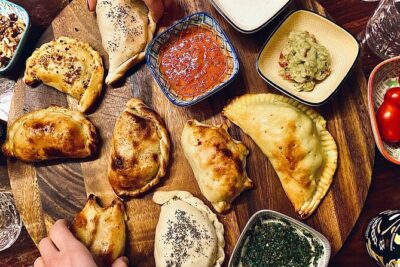
Empanadas are the star of the night, and you’ll learn the core workflow from scratch. The class focuses on the kind of structure you need to succeed: dough preparation, filling setup, portioning, shaping, and then sealing with a proper repulgue.
Other Buenos Aires write-ups sitting in the pile

Dough and filling, step by step
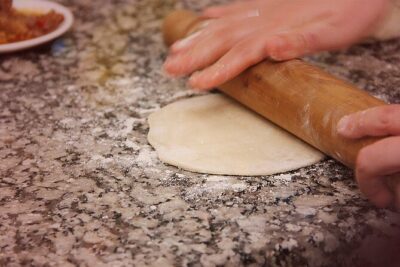
You’ll follow instructions to prepare the empanada dough. Then you’ll work through savory fillings. Based on how the experience is described and the way people talk about it, you can expect a mix that includes a classic meat option and vegetarian alternatives. That’s the best of both worlds. You get variety in one household-style menu, without the lesson turning into a confusion of too many separate techniques.
As for cooking methods, the overall concept of empanadas in Argentina includes both baked and fried styles. The class is designed for real making, not theory, so you’ll be guided through the process in the way that best matches what they’re teaching that evening.
The repulgue is the technique that changes everything
The most satisfying part of empanadas is the seal. A good repulgue helps keep filling in and gives that classic look. This is where a teacher with patience matters. People consistently describe the guidance as clear and hands-on, with hosts correcting technique so you don’t just copy shapes but actually learn the method.
If you’re a beginner, don’t aim for perfect on your first one. Work slowly. Use the repulgue as your practice goal, not speed. You’ll produce better empanadas when you treat each seal like a small craft project.
Expect a full plate
By the end, you’ll eat what you make. Many people point out there’s a satisfying amount of food, and the “you will not leave hungry” feeling comes from both quantity and timing. In a 3-hour class, you’re building, cooking, and then eating while everything is still warm.
Alfajores with dulce de leche, from corn starch cookies to sandwich bliss
After the empanadas, the focus shifts to alfajores. These are Argentina’s famous sandwich cookies, typically made with corn starch cookies and filled with dulce de leche. Here, you’re not just assembling store-bought cookies. You’ll prepare them as part of the workshop, with guidance that makes the process doable.
Why corn starch matters
Corn starch gives alfajores their specific texture. It’s not just a minor ingredient swap. It helps create the soft, tender bite that lets dulce de leche melt in your mouth instead of feeling like heavy frosting. When you make them yourself, you also learn how much you should handle the dough and how you should shape the cookies.
Dulce de leche filling, the payoff part
The dulce de leche step is where the reward kicks in. You’ll learn how to fill and finish the alfajores based on how the class is structured. The end result is a dessert you can actually recreate, which is the whole point of taking a cooking class instead of just grabbing a snack.
People describe the alfajores as deeply satisfying, and that makes sense: you’re building a classic Argentine flavor you can find everywhere, then learning the method that makes it taste right.
Price and value: $37 for a real dinner and a skill set
At $37 per person for about 3 hours, this class is priced in the “you’re paying for instruction and ingredients” category. The value comes from a few concrete things:
- You cook and eat the results, so the meal is part of the cost, not an add-on
- The class is small group (up to 8), which lowers the odds you’ll feel like a bystander
- You learn two signature Argentine items: empanadas and alfajores, plus the mate ritual
- You’re taught techniques, not just recipes, especially sealing and shaping
If you’re comparing it to a standard walking food tour, this is more hands-on and more work. If you’re comparing it to a larger, ticket-heavy cooking experience, it feels more personal, since you’re in a home space and you’re moving through the steps yourself.
One practical value note: wine is available for purchase, but it isn’t included. If you want an alcoholic pairing, plan for that extra cost.
Who should book this Buenos Aires cooking class
This is a great fit if you want more than “try local food.” You’re looking for a real process, real conversation, and a meal that feels like it came from someone’s kitchen.
It’s especially good for:
- Couples and small groups who want a shared activity that still feels intimate
- First-time cooks, because empanadas and alfajores have clear steps and forgiving outcomes when you learn the technique
- Families with teens, since people mention that younger participants enjoy getting involved and eating right after making
- Anyone who wants to understand Argentine food culture beyond restaurants, including mate as a social ritual
Language support helps too. Instruction is offered in Portuguese and English, which means you can follow without needing Spanish fluency.
Wheelchair accessibility is listed, which is a plus. If you have mobility needs, it’s still smart to check how the home setup works in practice, since every household is different.
A couple practical tips before you go
These aren’t deal-breakers, just things that can improve your experience:
- Ask about recipes before you leave, especially if you care about getting them in a usable form. Some people mention the recipe sharing process can be unclear, so it’s worth confirming what you’ll receive and how.
- If empanada variety is important to you, ask what fillings are on the menu that night. There can be vegetarian options, but some sessions may lean into a primary filling style.
Should you book this empanadas and alfajores class?
I’d book it if you want a night in San Telmo that teaches you two iconic Argentine foods and includes the mate ritual in the same evening. The small-group size, the fact that you cook and eat your own food, and the focus on the technique details like repulgue make it feel like you’re actually bringing something home, not just buying an experience.
Skip it only if you want a class that guarantees lots of totally different empanada fillings in one session, or if you’re looking for a purely passive food-and-wine tasting. This is hands-on cooking, and the satisfaction comes from doing the steps yourself.
If you’re open to learning, this is a smart use of a 3-hour block in Buenos Aires.
FAQ
How long is the cooking class?
The class runs for 3 hours.
What is the price per person?
The price is $37 per person.
Where does the class meet in Buenos Aires?
Meet at Paseo Colón 1355 in San Telmo. Ring the bell at the starting time.
What will I learn to cook?
You will learn to make Argentine empanadas and alfajores. The empanadas include savory fillings, and the alfajores are made with corn starch and dulce de leche.
Is mate included?
Yes. You’ll learn how to prepare traditional mate and you’ll have mate during the class.
Are ingredients and the meal included?
Yes. The class includes cooking instruction, ingredients, mate, water, and a meal.
Is wine included?
No. Wine is available for purchase.
What languages are the instructors speaking?
The instructor is Portuguese and English.
Is it a small group?
Yes. It is a small group limited to 8 participants.
What is the cancellation and payment policy?
You can cancel up to 24 hours in advance for a full refund. You can also reserve now and pay later.
More Guided in Buenos Aires
More Tour Reviews in Buenos Aires


More Dough and Dulce de Leche
Newest Buenos Aires write-ups on the desk
- Tango Show at El Querandi with optional Dinner★ 4.2 · 3 reviews
- Velez Sarsfield Football Match★ 5.0 · 3 reviews
- Tango Show at: MichelAngelo★ 4.5 · 3 reviews
- Guided tour Boca Juniors Museum & Stadium + Caminito★ 3.3 · 3 reviews
- From Colonialism to Eclecticism, Buenos Aires arquitectonica★ 5.0 · 3 reviews
- Enjoy a Rural Experience in a Vineyard near Buenos Aires★ 4.7 · 3 reviews
The rest of the Empanadas and Alfajores list.
 ★ 4.6Buenos Aires: Empanada & Alfajor Cooking Lesson in PalermoFrom $49186 reviews
 ★ 5.0Buenos Aires Food Tour: Local Dishes, Steak, Empanada & MoreFrom $93118 reviews
 ★ 5.0BA: Empanadas and Alfajores Cooking Experience in PalermoFrom $49112 reviews
 ★ 4.8Argentinian Empanadas Cooking Experience in Palermo, Bs AsFrom $4650 reviews
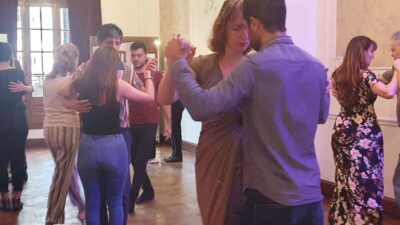 ★ 4.4Buenos Aires: Group tango class with mate and snacksFrom $2544 reviews
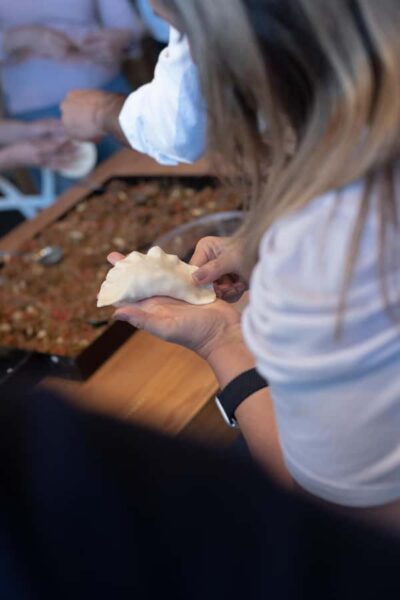 ★ 4.9Premium Empanadas Cooking Class & Wine Tasting ExperienceFrom $4935 reviews
 ★ 5.0Small Group Tasting to Become a Mate Expert in Buenos AiresFrom $2935 reviews
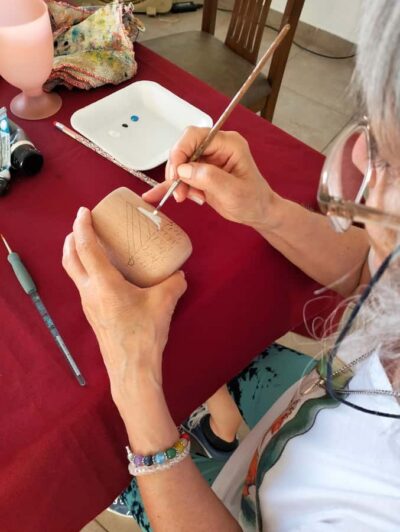 ★ 5.0Buenos Aires: Mate & paint experience with pastry tastingFrom $6219 reviews
Lists this one is on