
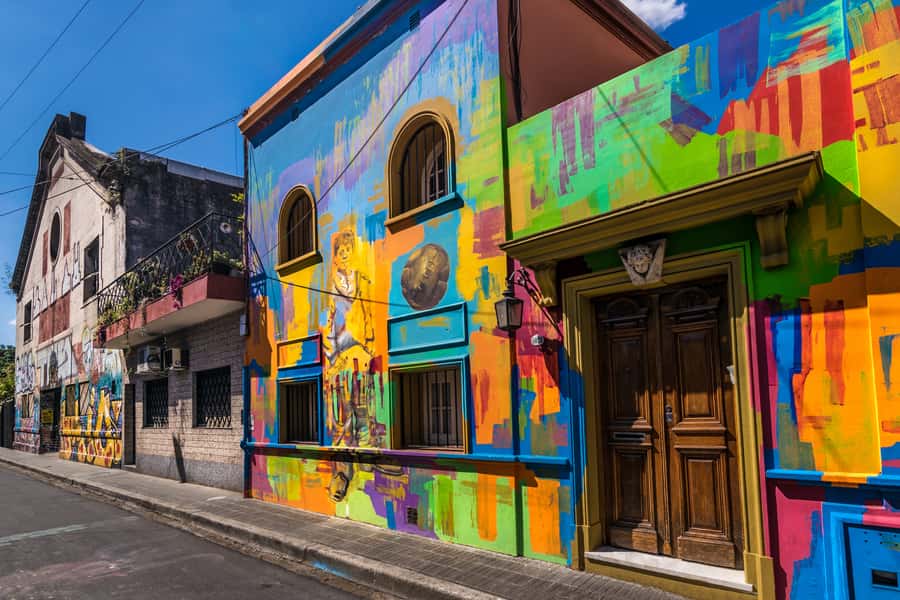
REVIEW · PALERMO TOURS
Palermo: Graffiti and Street Art Guided Tour in English
Street art with political bite. In Palermo, you get a guided timeline of protest, art, and power in just two hours. Palermo is the stage, and the street itself is the textbook.
I love two things most. First, you stop for photos of the Trump Wall graffiti at Madison Avenue Bar, where the jokes and the politics sit side by side. Second, the tour connects what you see to how graffiti worked as messaging, from election propaganda in the earlier decades to faster, bolder aerosol spray after 1969. Guides like Vito, Juan, and Elina get praised for keeping it fun, clear, and energetic.
One possible drawback: it is a short walk, so you see key pieces and story beats, not every mural in Palermo. If you want long lingering time at each wall, you may want to add extra time after the tour ends.
In This Review
- Key highlights worth your time
- Street art isn’t random here, it’s a message system
- From Plaza Serrano to Palermo streets in two hours
- Julio Cortazar area: your starting lens for the rest of the walk
- The Trump Wall photo stop at Madison Avenue Bar
- How graffiti turns into election propaganda, then speeds up with aerosol
- The political line: protest, permission, and why the street keeps talking
- What you might spot beyond the big names
- Ending at Plaza Inmigrantes de Armenia, then keep exploring
- Price and value: why $13 works if you like context
- Who should book this Palermo street art walk
- Should you book this Palermo graffiti and street art tour?
Key highlights worth your time
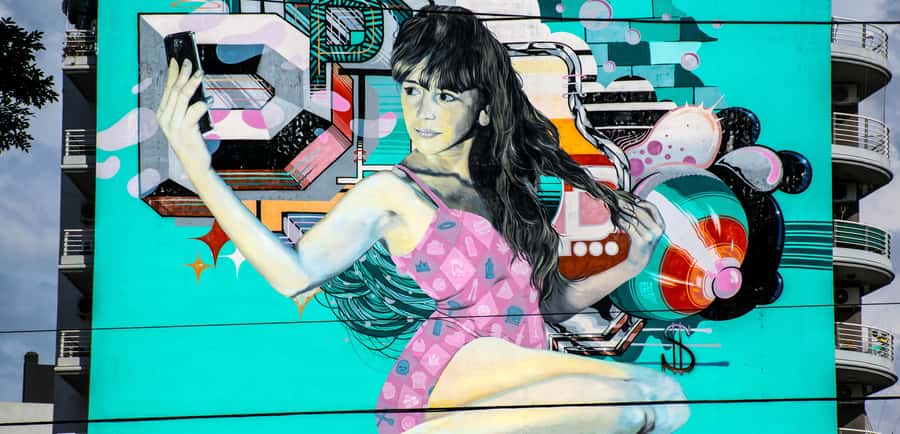
- Photo stop at the Trump Wall, including a planned moment at Madison Avenue Bar
- A clear politics-to-paint story, from earlier street messaging to aerosol paint after 1969
- Palermo’s eclectic streets, with stops that help you read the city like a poster wall
- Guides with energy and humor, often mentioned by name (Vito, Juan, Elina, Aylen, Victor)
- Easy meeting spot, Plaza Serrano (Plaza Cortazar), with an orange t-shirt and a big PALERMO sign
- Finishes at Plaza Inmigrantes de Armenia, so you can keep wandering on your own
Palermo runs wider than any single loop
- Palermo: Graffiti and Street Art Guided Tour in English
★ 4.8 · 684 reviews - Buenos Aires: Empanada & Alfajor Cooking Lesson in Palermo
★ 4.6 · 186 reviews - BA: Empanadas and Alfajores Cooking Experience in Palermo
★ 5.0 · 112 reviews - Buenos Aires Bike Tour: North Districts, Recoleta and Palermo
★ 4.5 · 91 reviews
Street art isn’t random here, it’s a message system
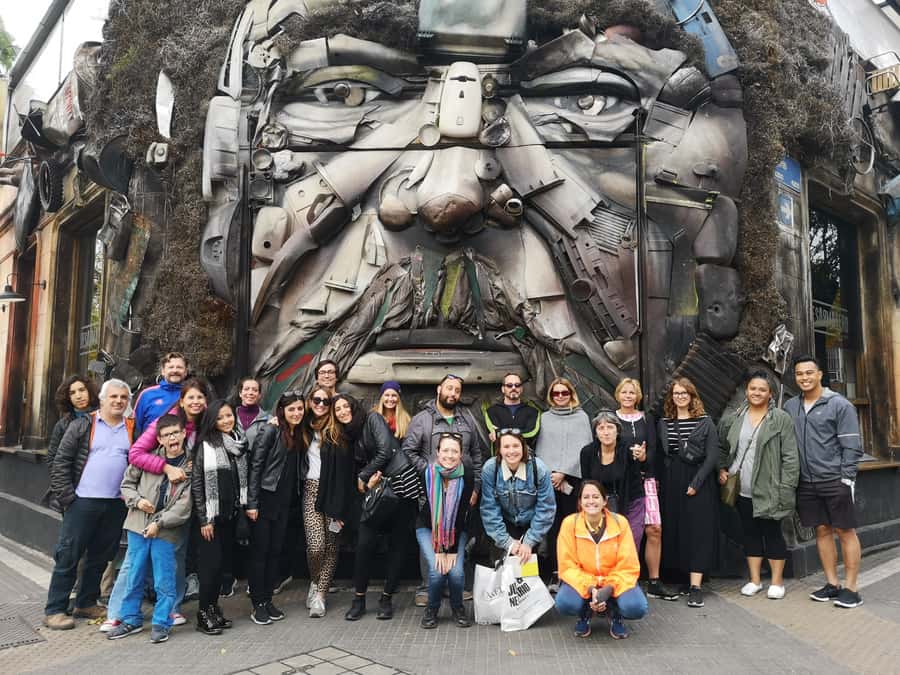
Buenos Aires street art has always been more than decoration. On this walk through Palermo, you learn how graffiti and murals became a fast way to take a position in public, especially when politics felt loud and personal. The big payoff is that you come away able to look at a wall and guess what kind of conversation it is trying to start.
I like that the tour gives you a timeline you can actually remember. You start with earlier political movements gaining traction, then move forward to the moment aerosol paint changes what’s possible. That shift helps you understand why some walls feel like posters, while others feel like rapid-fire statements.
You also learn how protest can grow in steps. As social conflict intensifies, more people get pulled into the act, not only the loudest voices. It’s one of those tours where the art becomes a clue to the city’s mood.
From Plaza Serrano to Palermo streets in two hours
The tour meets at Plaza Serrano, also called Plaza Cortazar. It is on the corner of Jorge Luis Borges and Honduras St, and you should look for the guide in an orange t-shirt with a big PALERMO sign.
You begin at Plazoleta Julio Cortazar and then walk through Palermo. Since there is no hotel pickup, you will want to arrive a few minutes early to avoid stress. Wear comfy shoes. This is a walking tour, and Palermo streets reward good footing.
Timing matters here. Two hours is long enough to feel the neighborhood shift, but short enough that you should expect quick stops, photo moments, and story beats rather than deep study at one wall. If you’re the type who likes to sketch, you may wish you had more time, but you will still leave with a strong mental map.
If you need to move at a slower pace, note that the tour is described as wheelchair accessible. Street-level walking can vary block to block, so go with a flexible mindset and let the guide know what tempo works for you.
Julio Cortazar area: your starting lens for the rest of the walk
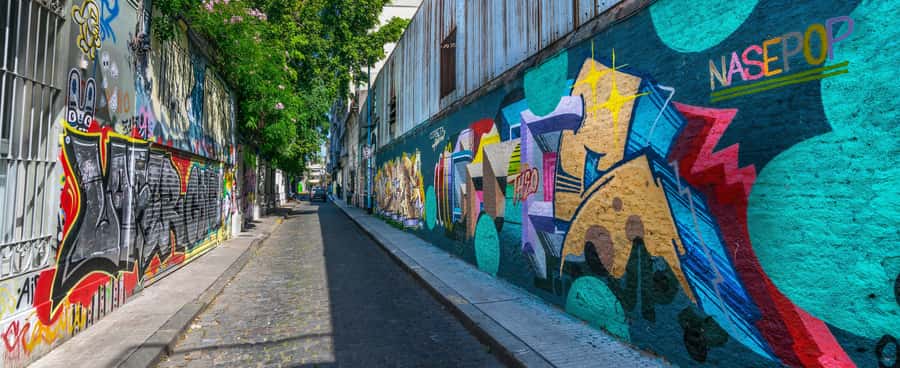
The start point sets the tone. This is a Palermo corner where you can look around and realize how much public art is part of daily life. The guide uses these first minutes to frame what you will see, so later murals and tags feel less like random color and more like communication.
I like how this early framing keeps you from missing the obvious. When you understand that graffiti can be endorsement, propaganda, or election support, the whole neighborhood starts to behave like a living bulletin board. You also start noticing how different styles can signal different intentions, from satire to straight-up messaging.
You should also pay attention to what the guide emphasizes in the first stretch. Some tours toss facts at you and hope it sticks. Here, the guide’s pace is meant to build one clear line, so you can connect the dots between eras.
Other Buenos Aires write-ups sitting in the pile
The Trump Wall photo stop at Madison Avenue Bar
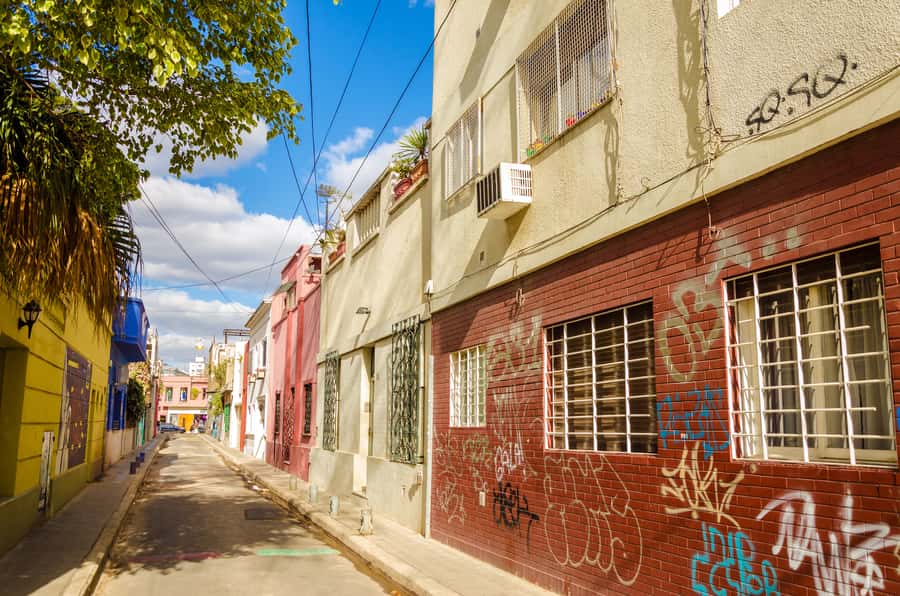
The tour includes a planned moment to take pictures of the Trump Wall graffiti at Madison Avenue Bar. That sounds like a simple stop, but it usually becomes one of the most memorable moments because it is recognizable and specific.
Here’s what makes it useful: the guide uses this stop as a bridge. You look at a current-world reference, then the story pulls you back to how graffiti grew political power over time. In other words, you are not just snapping a photo for your feed, you’re learning how street art borrows symbols and redirects them.
Practical tip: treat this as your photo anchor. Use it to set your camera settings and your walking rhythm. After this stop, you will likely start spotting smaller details you would otherwise ignore, like lettering choices, placement, and the way artists layer meaning.
If you’re traveling solo or with friends, this is also a good point to compare what everyone thinks they’re seeing. The guide’s explanation often makes people see the same wall in a new way.
How graffiti turns into election propaganda, then speeds up with aerosol
This tour’s main engine is the historical sequence. You travel back to earlier political movements and learn why street writing could be seen as more than vandalism. In that era, graffiti could act as a visible stamp of support. It could function like propaganda, including messages used during election campaigns.
Then the story jumps forward to a major change: aerosol paints arriving in 1969. The guide explains why that matters. Aerosol paint made it possible to write messages faster than before, which changes how urban movements operate. When you can create quickly, you can respond faster, and you can keep up with political pressure as it shifts.
The result is that what looks like simple street writing becomes part of a bigger social timing system. People are reacting to events, and the walls react with them. During the 1970s, that speed supports the growth of public protesting and the widening of social conflict.
I like that the tour doesn’t treat street art like a museum object. It treats it like a tool, used by people under stress and under scrutiny. Once you hold that idea, you start noticing why some works look urgent, and why others feel more staged.
The political line: protest, permission, and why the street keeps talking
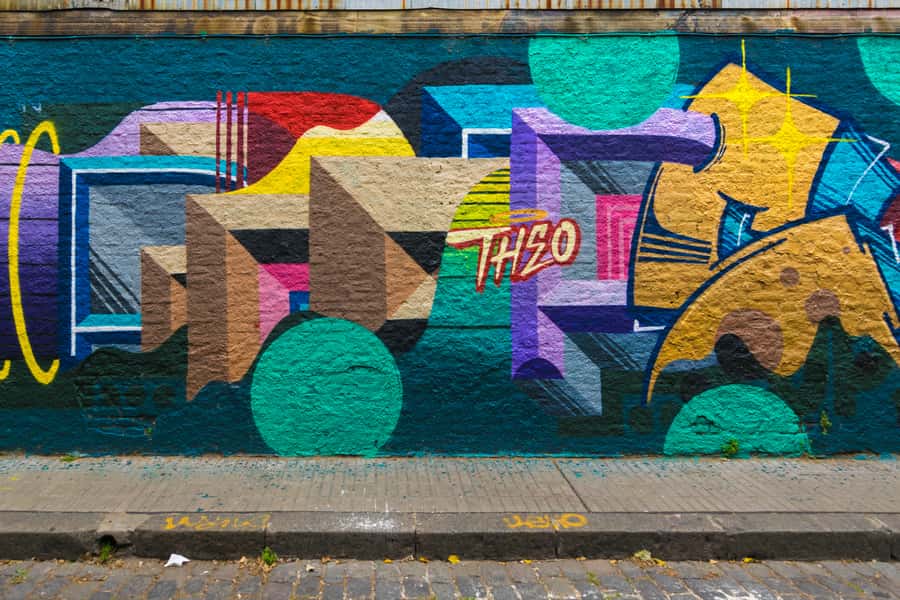
One of the most helpful parts of this tour is the way it frames the line between art and vandalism. You hear how graffiti can be interpreted as political endorsement, or as activism, depending on context. That matters because Palermo street art sits in a real city, with real rules and real consequences.
From the tone of the guide styles, you can also tell the tour aims for balance, not outrage. Many guides on these walks are praised for adding humor while staying respectful about the topic. That blend makes the political material easier to follow without turning it into a lecture.
You may also hear connections to how Argentinians become more involved in protesting over time. The guide’s story helps you understand that involvement is gradual. It starts with a few confident voices, then grows as more people decide public space is worth using.
If you’re sensitive to heavy political topics, pace yourself. This isn’t a bad thing, but the theme can feel intense if you’re expecting only aesthetics. Think of it as learning the rules of the street, then appreciating the art with better context.
What you might spot beyond the big names
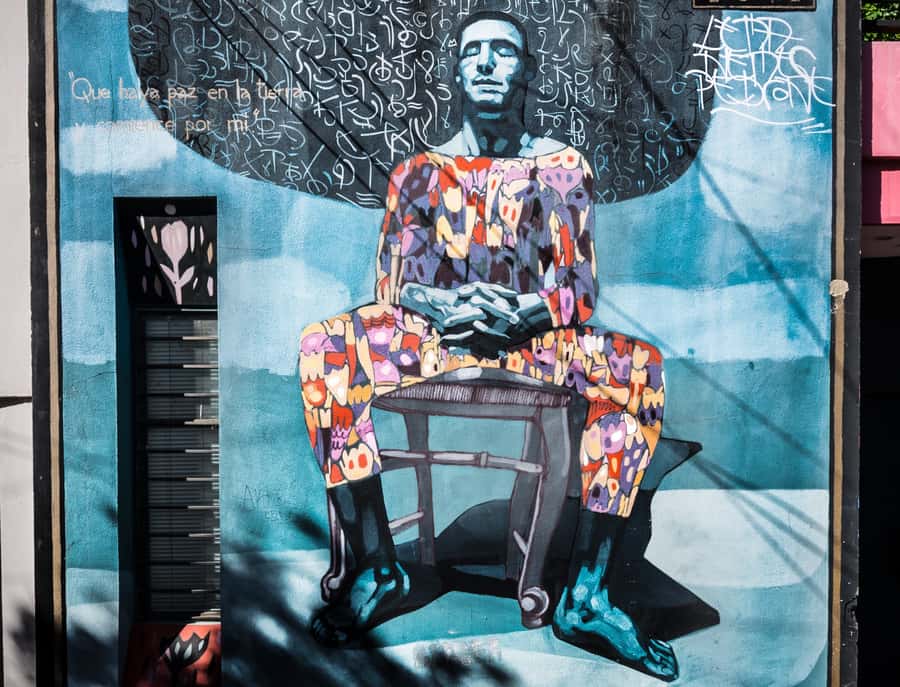
This is not just one mural and done. The walk encourages you to notice variety. You can encounter different styles, from large public works to more compact tagging or lettering. Some guides bring up related themes, like football culture, and you might even notice references that connect street art to that wider obsession.
A few people mention seeing styles ranging from sports murals to more whimsical pieces, like butterfly-themed art. You should treat that as a possibility, not a promise. Street art changes, and the best plan is to stay curious as you walk, not to chase a checklist.
The guide’s job is to point out what your eyes would skip. That can be anything from how a piece is placed, to how the artist’s style signals intent, to how one wall’s messaging connects to the era the guide is teaching.
If you like photography, this tour is built for it. The stops are spaced so you can step forward, get a clear shot, and still keep moving. And after you learn the political story, the images often look more layered, even when they are just letters on brick.
Ending at Plaza Inmigrantes de Armenia, then keep exploring
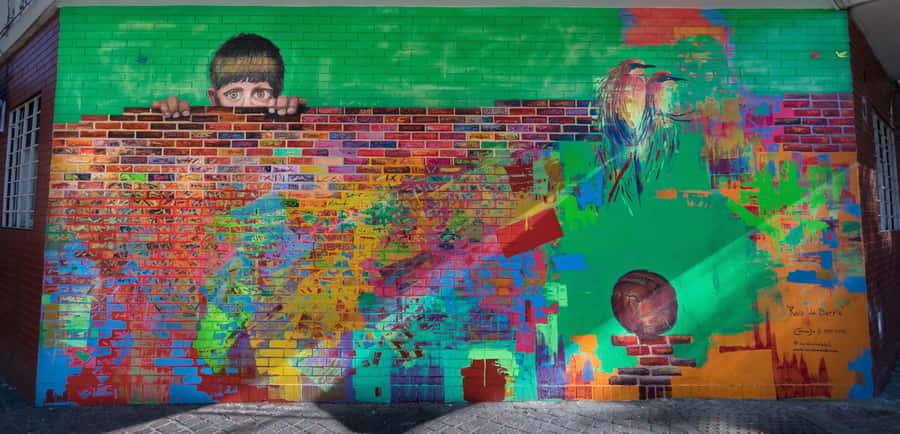
You finish at Plaza Inmigrantes de Armenia. That ending point is convenient because it gives you an easy place to pause and decide what comes next. Since the tour does not include food or drink, I suggest treating the end as your cue to grab a snack nearby, or at least refill water if you brought it.
Because there is no hotel pickup and drop-off, you should plan your return transport in advance. You’ll likely want to continue exploring Palermo at your own pace right after, especially if this walk made you notice street art in every direction.
Also, remember that the tour runs even if it rains. If the weather looks questionable, bring a compact umbrella or a light rain layer. Walking in light rain in Palermo can be totally doable, and it beats missing the whole thing.
Price and value: why $13 works if you like context
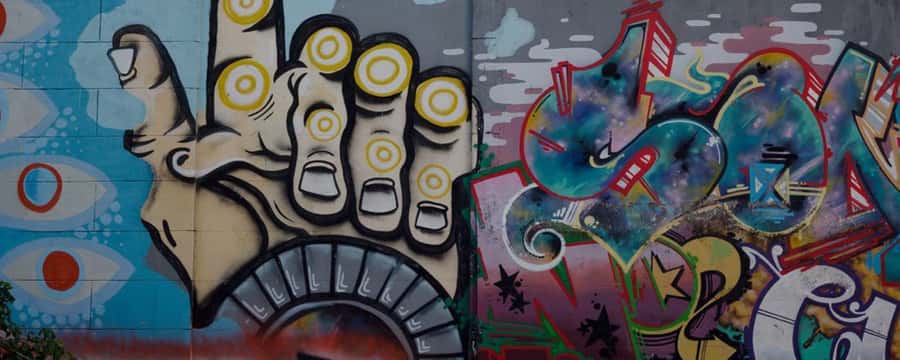
At $13 per person for a 2-hour guided walking tour, the value is in the combo: live English guidance plus a story you can use immediately. Street art is everywhere, but most people do not know how to read it. This tour gives you the reading key in a short time.
You also get planned structure. Instead of wandering and hoping you find a good wall, you follow a route with specific story stops, including the Trump Wall photo moment. That means you spend your time seeing meaning, not only color.
What’s not included is simple: no hotel pickup, no food, no drinks. So you’ll want to plan your day like a local. Eat before you start, or bring your own water, and keep your hands free for photos.
The tour is offered in English and uses a live guide, which is a big deal for political context. Even if your Spanish is decent, the political timeline and street-art explanations will land better in the language you’re most comfortable with.
Who should book this Palermo street art walk
This tour is a great fit if you like your sightseeing with a backstory. You will enjoy it if you like art but also want the reason behind the art. The focus on political origins, propaganda use, and the aerosol paint shift in 1969 is a smart way to understand why the walls look the way they do.
It also works well if you’re curious about Buenos Aires neighborhoods beyond the big postcard spots. Palermo is a good choice for this, because street art is part of the everyday texture.
If you dislike walking, this might not be your best match, even though it is accessible. It is still a walk, and it is still two hours long. If you hate politics, you can still enjoy the visual side, but the theme will always steer back to protest and public messaging.
Should you book this Palermo graffiti and street art tour?
Book it if you want a fun, structured way to read Palermo’s walls. The guide-led storytelling is the main reason people rate it highly, and the planned Trump Wall stop makes it easy to anchor your photos to something meaningful. I also think it’s strong value at $13 for a live English guide.
I would skip it only if you want long museum-style pauses at a few artworks, or if you want zero political discussion. Otherwise, this is one of those city walks where you finish thinking differently about the streets you already walked past a hundred times in your imagination.
More Tours in Buenos Aires

More Tour Reviews in Buenos Aires
Still in Palermo?
Newest Buenos Aires write-ups on the desk
- Tango Show at El Querandi with optional Dinner★ 4.2 · 3 reviews
- Velez Sarsfield Football Match★ 5.0 · 3 reviews
- Tango Show at: MichelAngelo★ 4.5 · 3 reviews
- Guided tour Boca Juniors Museum & Stadium + Caminito★ 3.3 · 3 reviews
- From Colonialism to Eclecticism, Buenos Aires arquitectonica★ 5.0 · 3 reviews
- Enjoy a Rural Experience in a Vineyard near Buenos Aires★ 4.7 · 3 reviews
The rest of the Palermo Tours list.
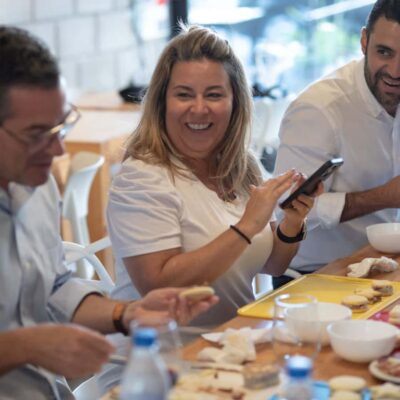 ★ 4.6Buenos Aires: Empanada & Alfajor Cooking Lesson in PalermoFrom $49186 reviews
 ★ 5.0BA: Empanadas and Alfajores Cooking Experience in PalermoFrom $49112 reviews
 ★ 4.5Buenos Aires Bike Tour: North Districts, Recoleta and PalermoFrom $4591 reviews
 ★ 4.8Argentinian Empanadas Cooking Experience in Palermo, Bs AsFrom $4650 reviews
 ★ 5.0Cultural Experience by Bike around Palermo and Recoleta Max 6 pplFrom $5444 reviews
 ★ 4.5City Bike Tour in Palermo and RecoletaFrom $507 reviews
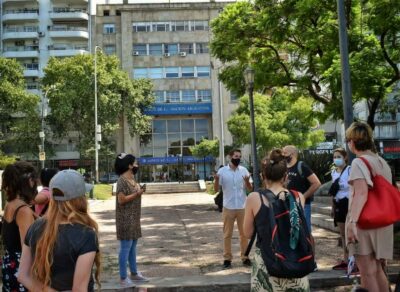 ★ 4.4Buenos Aires: Palermo Soho Guided Walking TourFrom $175 reviews
 ★ 5.0Palermo SoHo for curious peopleFrom $254 reviews
Lists this one is on