
REVIEW · ARGENTINA
From Colonialism to Eclecticism, Buenos Aires arquitectonica
Buenos Aires buildings tell stories you can walk. This 3-hour architecture walk strings together Plaza de Mayo classics, Corrientes theater landmarks, and the Brutalist Banco Hipotecario, with real context for what you are seeing, plus an included mate tasting.
What I like most is the way the tour turns facades into stories you can actually picture. With Juan Ignacio and Loli leading, you get clear explanations about the architects and the eras, and you can ask questions as you go. I also appreciate the small group size, limited to 4 people, because it keeps the pace human and the photo stops actually work.
One consideration: the tour finishes at Teatro Colón, but entry inside is not included. If you want to go in, plan for the extra step, since the guided interior option is just that, an option.
In This Review
- Key things to know before you go
- From Plaza de Mayo to Teatro Colón, one walking route
- Meet Juan Ignacio and Loli, and ask all your questions
- Starting at Plaza de Mayo, where the city’s power sits
- Reconquista Street and the Banco Hipotecario’s Brutalist punch
- Centro Cultural Kirchner and the older Post and Telegraph story
- Corrientes Avenue, Gran Rex, and the Opera before and after
- Obelisco and Plaza de la República, politics made visible
- Plaza Lavalle, the Courts Palace, and the Roca School
- Mate tasting, a small break with real cultural meaning
- Finishing at Teatro Colón, and what the optional interior means
- Walking comfort, timing, and what 3 hours really covers
- Price and value: why $25 feels fair for this format
- Who should book this architecture walk
- Should you book this Buenos Aires architectonica walk?
Key things to know before you go
- Plaza de Mayo as the launchpad, including the Cabildo and the big government landmarks around it
- Reconquista Street to Banco Hipotecario, with a focus on its striking Brutalist exterior
- Corrientes Avenue’s icons, passing the Gran Rex and the Opera in their showbiz context
- Obelisco and the staircase view, plus a panoramic angle over Av. 9 de Julio and Corrientes
- Plaza Lavalle and mate tasting, with time for a traditional snack and a culture lesson
- Teatro Colón as the finish point, with an optional guided visit inside
Narrowing the Buenos Aires list? These kept surfacing while we wrote.
- Buenos Aires Hop-On Hop-Off Bus, Free Walking Tours & Discounts
★ 4.5 · 2,218 reviews - Buenos Aires: Piazzolla Tango Show with Optional Dinner
★ 4.4 · 2,122 reviews - Buenos Aires: City Highlights Guided Tour with Transfer
★ 4.7 · 1,946 reviews - Buenos Aires: Hop-On Hop-Off City Bus Tour
★ 4.2 · 1,855 reviews
From Plaza de Mayo to Teatro Colón, one walking route
This tour is built like an architectural timeline, except you walk it instead of reading it. You start in the Plaza de Mayo area and work your way north through Microcentro, where Buenos Aires stacks different eras close together. You end at Teatro Colón, so your final stretch feels like the grand finale of the city’s public life.
The best part is that it is not just a list of famous buildings. You spend time on facades, corners, and the in-between details that make Buenos Aires feel like a conversation between colonial, political, and modern design ideas.
Meet Juan Ignacio and Loli, and ask all your questions
The guides, Juan Ignacio and Loli, are the kind of people who make architecture feel usable. You will hear not only what a building is, but why it was made, and how it connects to the city around it. In practice, that means you are not just looking up at stone, you are looking with a frame of reference.
Small group matters here. With only a handful of people, you get time to ask follow-ups instead of rushing the guide through a single question. And during the tour, the mate moment is not tacked on, it feels like a planned pause where the cultural side stays equal to the design side.
Starting at Plaza de Mayo, where the city’s power sits
You kick things off right in the Plaza de Mayo area, meeting at the intersection of Bolívar and De Mayo Ave, near Bolívar 65. From the first minutes, the tour places you in Buenos Aires’ political center, then uses that position to explain the buildings that still define the space.
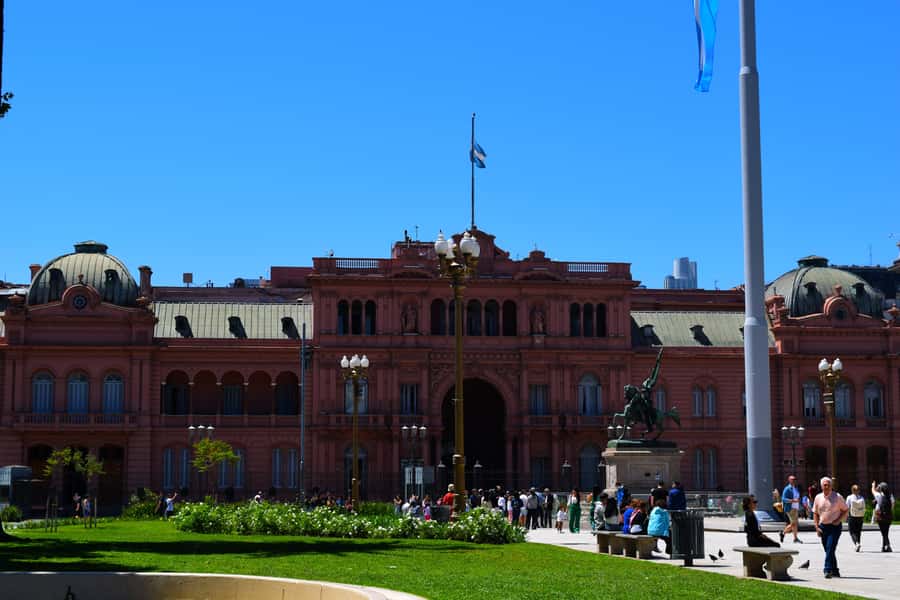
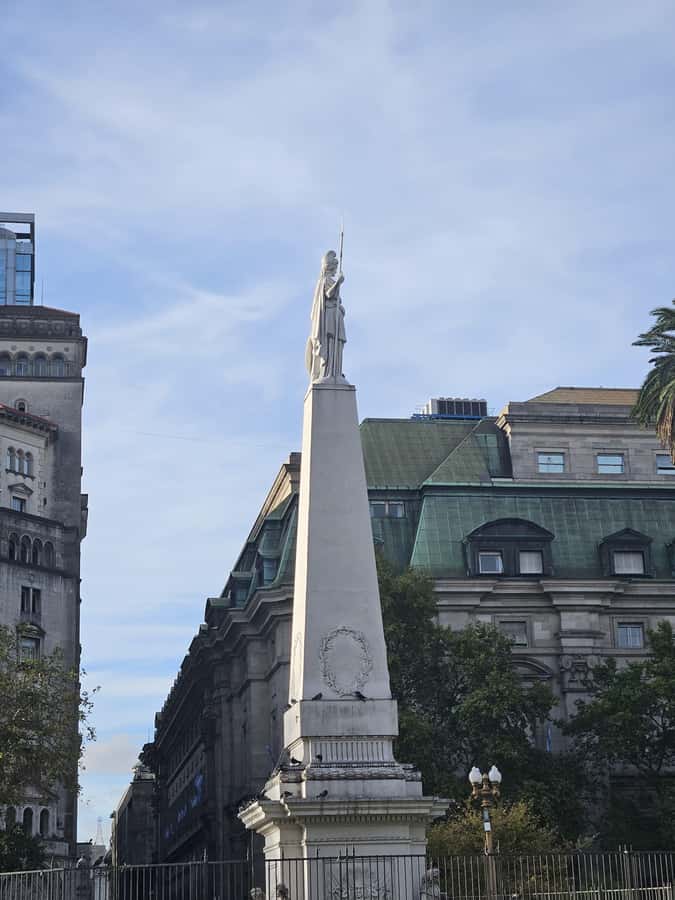
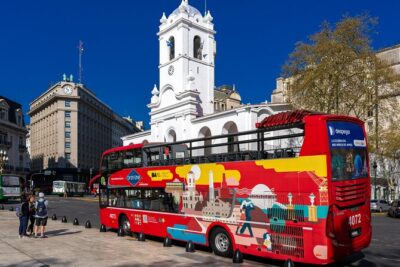
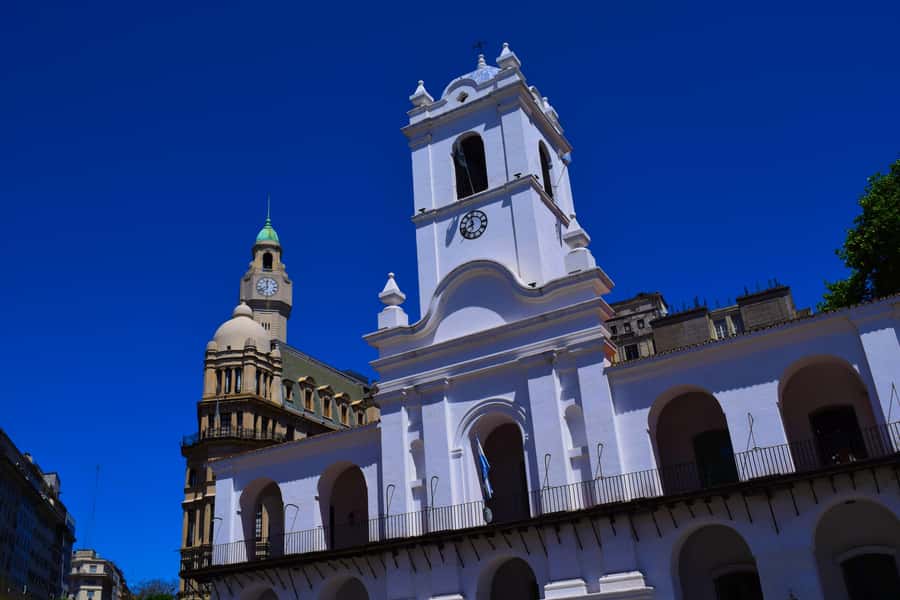
You will see the Cabildo, the Metropolitan Cathedral, and the Casa Rosada, plus Banco Nación nearby. Even if you have seen some of these names before, the value here is the way the guide links their look and function to the country’s public identity. The plaza also gives you an easy way to get oriented for the rest of the walk, since you can literally trace the city’s direction afterward.
Reconquista Street and the Banco Hipotecario’s Brutalist punch
Once you leave the Plaza de Mayo core, you head north through Reconquista Street. This section is important because it moves you from iconic landmarks into the dense, everyday geometry of Microcentro. It is where you can feel how the city layers styles without needing to “go to” a separate district.
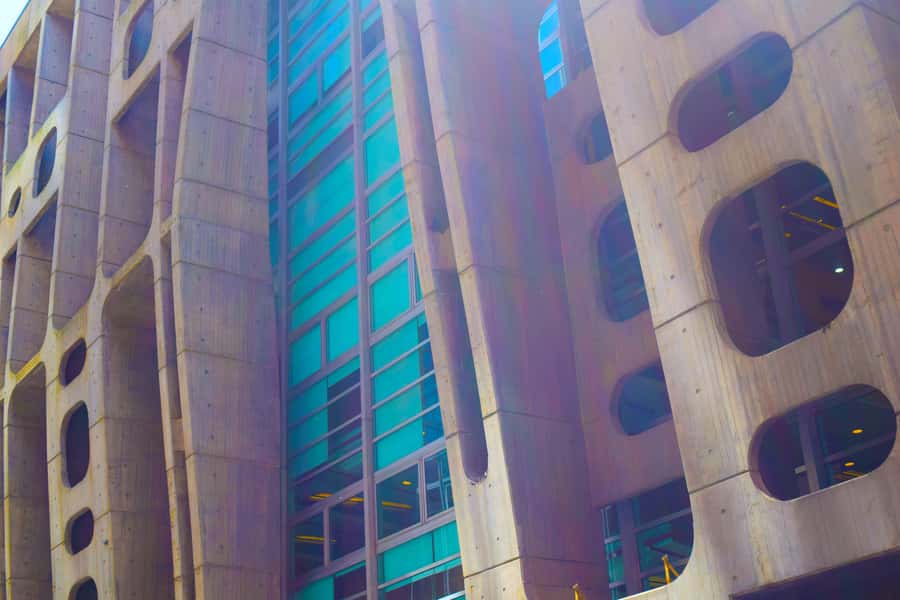
Your stop at the headquarters of the Banco Hipotecario is the standout for architecture fans. The exterior is described through its Brutalist facade, and the guide uses it as a lens to help you notice what changed as the city’s needs and taste shifted. The payoff for you is simple: you will start seeing modern design logic, not just older postcard views.
Centro Cultural Kirchner and the older Post and Telegraph story
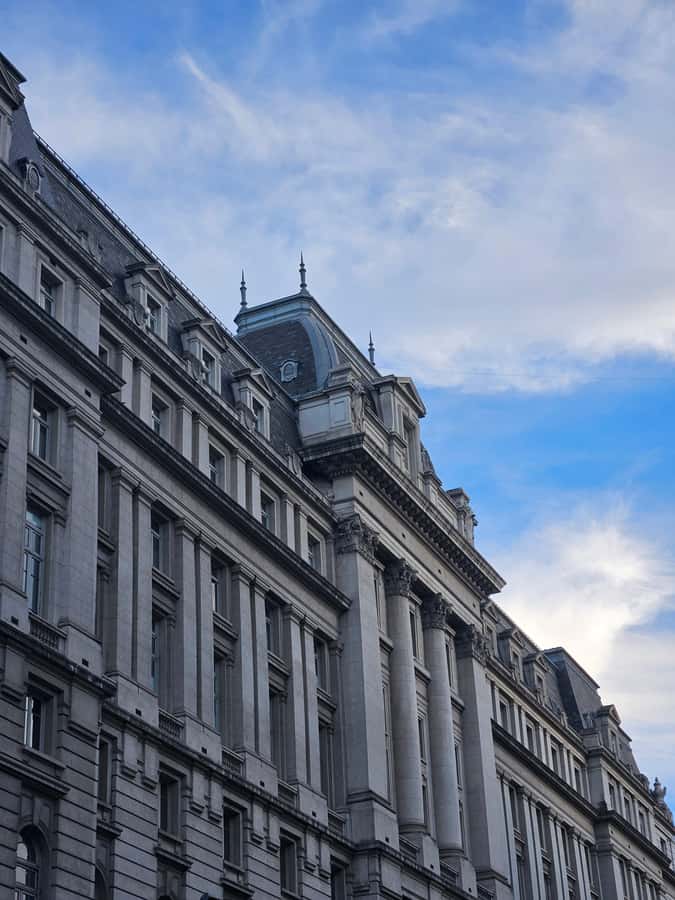
Next you continue toward the Centro Cultural Kirchner (CCK) area. You will also stop at the former Palacio de Correos y Telégrafos (Post and Telegraph Palace) to look at the facade and hear its history.
This is the part where the tour feels like it is showing you two Buenos Aires in one glance. On one side, you get a sense of the city’s cultural institutions today. On the other, you see how earlier infrastructure and communication ambitions shaped the kind of grand buildings leaders wanted in their center.
Even if you are not an architecture nerd, this section helps you read the city better. You start asking, What did they want people to feel when they entered these places? How did the building signal importance? Those questions will make your future self-guided walks far more rewarding.
Corrientes Avenue, Gran Rex, and the Opera before and after
Then you head up Corrientes Avenue, the street closely tied to nightlife and performance culture. The guide keeps this section grounded, so it is not only about the buildings, it is about what these theaters meant when they were in their heyday, and why they still pull people in.
You will pass by two key icons: the Gran Rex and the Opera. You will have time for the classic “look, then understand” approach, where you see the facades from the street and then learn what role they played in the social calendar. For you, the practical value is that you will recognize these structures later, even if you wander on your own. You will know how to place them in the story, not just name them.
Obelisco and Plaza de la República, politics made visible
The first big arc of the tour ends with the Obelisco and Plaza de la República. This is a strong stop because it is a physical marker for political and social life. The guide gives you the history and the why behind its importance, which turns the photo spot into something more meaningful.
From there, you continue along Diagonal Norte, with a brief pause at the Obelisco staircase. This is also where you get a panoramic viewpoint aimed at one of Buenos Aires’ busiest intersections, including Av. 9 de Julio and Corrientes.
If you like taking photos, this section is worth showing up for. If you do not, it still helps you understand scale. You see how the city channels people through major axes, and you learn how architecture fits the urban plan.
Plaza Lavalle, the Courts Palace, and the Roca School
In the final stretch, you reach Plaza Lavalle. Here, you see the Courts Palace and the Julio Argentino Roca School. The purpose of these stops is clear, they add a layer beyond entertainment and government. You get a glimpse of how education and justice spaces show up in the city’s built form.
This part also sets up the final cultural moment, because it is calmer than the most intense intersections. It is a good time to slow down, absorb, and let the architecture lessons settle. You are not just chasing famous buildings, you are finishing with institutions that shaped how daily life works.
Mate tasting, a small break with real cultural meaning
Right after Plaza Lavalle, you get a mate tasting and learn a little about mate and its tradition in Argentine culture. You also get an included traditional Argentine snack, plus water.
I like this moment because it breaks the rhythm without turning the tour into a food tour. It is cultural context that helps you understand the country you are walking through, not just the buildings you are passing. If you have never done mate before, do not stress. You are not expected to be an expert. The guide explains enough for you to participate comfortably.
Finishing at Teatro Colón, and what the optional interior means
You finish at Teatro Colón. There is an option to stay and take a guided visit inside it, but entrance itself is not included. So if Teatro Colón interior is on your bucket list, you will want to plan for that extra step.
This finish works well because it turns your last minutes into a reward. After government facades, finance architecture, theaters, and views from major corridors, you arrive at a place built for performance and public attention. Even from the outside, it is an emotional ending. With the interior visit, you add another layer: craft, acoustics, and the sense of grandeur that these historic performance spaces aim for.
Walking comfort, timing, and what 3 hours really covers
The tour is 3 hours long and designed as a walking route through central Buenos Aires. That means comfortable shoes are not optional, and you will want to dress for sun and glare. The packing list provided is practical: sunglasses, a hat, sunscreen, and comfortable clothes.
In that time, you are not doing marathon distances, but you are moving. If you tire easily, pace yourself at the photo stops. The guide will help you time it, but your best strategy is simple: drink water during transitions, keep an eye on shade, and plan to pause when the group pauses.
Also, bring curiosity. The tour really rewards people who enjoy asking why something looks the way it does. If you like architecture explained with everyday city logic, you will have a good time even when you are not sure what terms mean.
Price and value: why $25 feels fair for this format
At $25 per person, this is one of those deals that makes sense because it includes real extras. You get an English-speaking tour guide throughout, water, a traditional Argentine snack, and the mate tasting. You also get the benefit of a small group size, limited to 4 participants, which reduces waiting and improves the question time you can ask.
The one cost not included is the entrance to Teatro Colón, plus lunch on your own. If you want to see inside the theater, that will likely be the main additional expense. Still, even with that in mind, the value is strong because you are paying for interpretation, not only walking past buildings.
Who should book this architecture walk
This tour is a great fit if you want a guided way to connect buildings across styles and eras, without needing to plan stops yourself. It works especially well for:
- First-time visitors who want the “big names” but also the story behind the streets
- Architecture lovers who care about how eras change the city
- Food and culture fans who appreciate that mate is built into the route, not just an afterthought
- People who prefer quiet group sizes so they can ask questions
If you hate walking, or if you only want museum-style indoor time, you might find the format a bit too street-focused. But if you like seeing the city in motion, it is a smart way to spend a morning or afternoon window.
Should you book this Buenos Aires architectonica walk?
Yes, if you want Buenos Aires explained through the buildings you actually see while you are there. The combination of Plaza de Mayo landmarks, the Banco Hipotecario Brutalist stop, Corrientes theater icons, and that mate tasting makes the experience feel like more than a sightseeing list.
Book it if you also like having a guide who can connect architecture to culture and answer questions on the spot. Skip it only if your priority is strictly paid museum interiors, since Teatro Colón entrance is not included and you will need to follow the optional interior visit plan.
More Tour Reviews in Buenos Aires
Newest Buenos Aires write-ups on the desk
- Tango Show at El Querandi with optional Dinner★ 4.2 · 3 reviews
- Velez Sarsfield Football Match★ 5.0 · 3 reviews
- Tango Show at: MichelAngelo★ 4.5 · 3 reviews
- Guided tour Boca Juniors Museum & Stadium + Caminito★ 3.3 · 3 reviews
- From Colonialism to Eclecticism, Buenos Aires arquitectonica★ 5.0 · 3 reviews
- Enjoy a Rural Experience in a Vineyard near Buenos Aires★ 4.7 · 3 reviews