
REVIEW · ARGENTINA
Buenos Aires Hop-On Hop-Off Bus and Exclusive Benefits
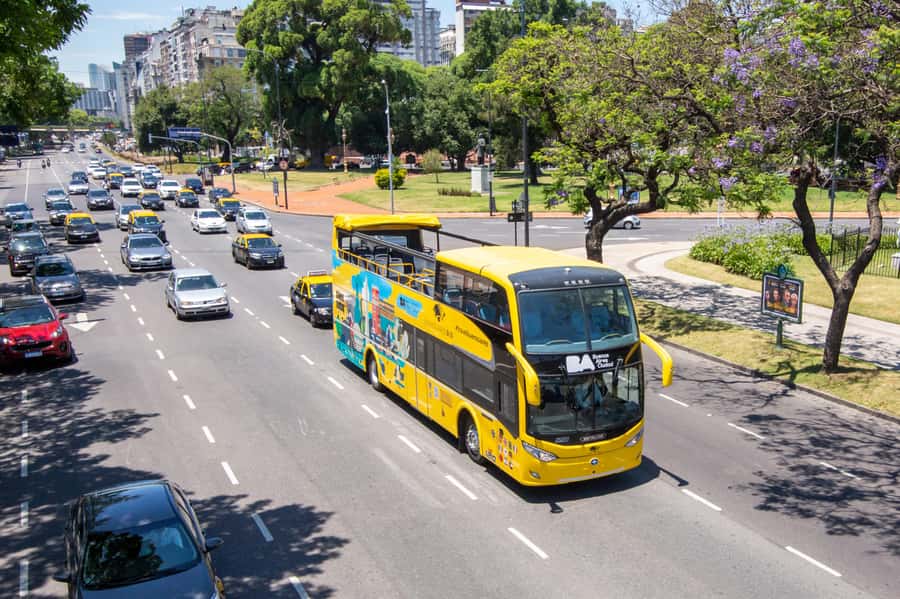
Hop-on buses are gold in Buenos Aires. The Buenos Aires Bus lets you connect major sights like Plaza de Mayo and Teatro Colón without marching to someone else’s pace, thanks to an audio guide in 9 languages.
I especially like the buses every 15 minutes and the relaxed ride style. The top-deck views make it easy to photograph big-name neighborhoods from the street.
One thing to plan around is that a full run can take longer than advertised, and some stops mean extra walking.
In This Review
- Key takeaways before you buy
- Why this Buenos Aires hop-on hop-off loop works for most schedules
- Price and value: what $35 buys you in real sightseeing time
- The practical setup: where you exchange your voucher and how boarding works
- Audio guide in 9 languages: how to get the most out of the headphones
- Route reality check: the loop is about 3 hours, but Buenos Aires traffic is real
- Plaza de Mayo and the central landmarks: where the story starts
- La Boca and Caminito: color, photos, and a neighborhood that pulls you in
- Recoleta and the refined side of town: architecture with breathing room
- Puerto Madero and modern Buenos Aires: a contrast you can feel
- Top deck views and photography: how to ride for pictures, not just transportation
- Exclusive discounts: small savings that add up if you use them
- When things can go sideways: crowds, long walks, and audio glitches
- Best way to use the pass: a simple 1-day or 2-day game plan
- Who this bus suits best, and who might not love it
- Should you book Buenos Aires Bus?
Key takeaways before you buy
- Frequent hop-on hop-off service: buses run about every 15 minutes (traffic can change that)
- Audio in 9 languages: headphones and live commentary at the stops
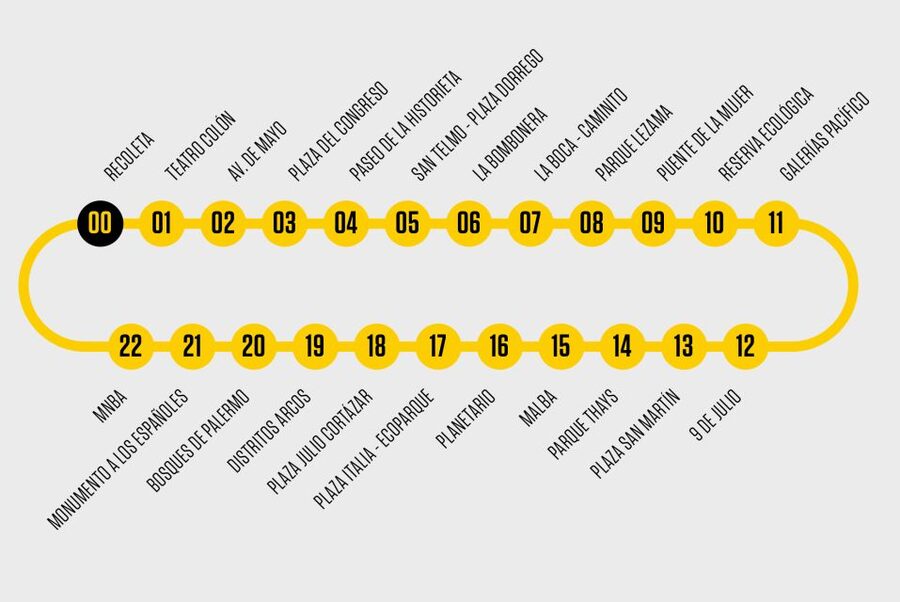
- Iconic route coverage: Plaza de Mayo, Obelisk, La Boca, Puerto Madero, Recoleta, and more
- Discounts beyond the bus: ticket includes exclusive deals at selected restaurants, shops, and attractions
- Useful for first-time orientation: it helps you decide what to revisit when you have time
Narrowing the Buenos Aires list? These kept surfacing while we wrote.
- Buenos Aires Hop-On Hop-Off Bus, Free Walking Tours & Discounts
★ 4.5 · 2,218 reviews - Buenos Aires: Piazzolla Tango Show with Optional Dinner
★ 4.4 · 2,122 reviews - Buenos Aires: City Highlights Guided Tour with Transfer
★ 4.7 · 1,946 reviews - Buenos Aires: Hop-On Hop-Off City Bus Tour
★ 4.2 · 1,855 reviews
Why this Buenos Aires hop-on hop-off loop works for most schedules
Buenos Aires is big, and getting from one highlight to the next can turn into a timing puzzle. This hop-on hop-off bus solves that with a simple promise: you can ride the same route, then get off where you want, later get back on, and keep going.
The best part is that you are not trapped in a fixed walking tour rhythm. You can do the ride while you figure out your next move. Maybe you stay on the bus to cover distance, then hop off in La Boca for photos, then return later for another neighborhood without paying for multiple rides.
The route itself is designed around major landmarks and the feel of different areas. You pass the Obelisk, Plaza de Mayo, La Boca (including the Caminito area), Teatro Colón, Puerto Madero, Recoleta, and more. For many visitors, that is exactly what you need on day one: a fast way to map the city and pick favorites.
Price and value: what $35 buys you in real sightseeing time
At about $35 per person (for the hop-on hop-off pass), the value comes from flexibility. You are not just paying for transportation. You are paying for time saved, decision-making help, and a guided context as you move around.
Think about what that replaces. Without this bus, you typically spend your first day bouncing by taxi or rideshare between far-flung neighborhoods, plus time waiting and re-navigating. With the bus, you trade that for a clear route, frequent departures, and the ability to hop off at the stops that matter most to your itinerary.
Also, you can choose longer validity options. The pass is sold for 24, 48, or 72 hours, so you can spread your sightseeing over more than one day. That matters in Buenos Aires, where weather and attraction hours can swing your plans.
The practical setup: where you exchange your voucher and how boarding works

You start by exchanging your voucher at the ticket counter located at 466 Córdoba Avenue before the bus begins. Arrive about 15 minutes early, because you need that exchange done before boarding starts.
After you get your ticket, you do not have to start at one single pickup point for the whole day. You can board at any of the bus stops on the route during your valid time window.
This setup is convenient if you are staying near a stop you plan to use more often. It is also helpful if your first stop is not your closest one, because you can still choose a different place to board later.



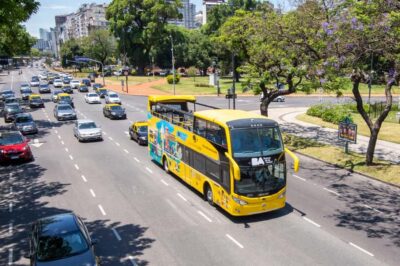
Audio guide in 9 languages: how to get the most out of the headphones

The headphones and audio guide are a core part of the experience. You get local insights in Chinese, English, French, German, Italian, Japanese, Portuguese, Russian, and Spanish, and the commentary is designed to make the stops make sense.
A key tip: listen when you are close to the next landmark. The bus is moving, and the value is in the timing between what you see outside and what you hear in your headset. Use the top deck for views if you want photos, but if you struggle with traffic noise, try a quieter spot on the bus so the audio stays clear.
Not everything is perfect. Some riders have noted that certain audio moments can be hard to hear if music between info segments gets too loud, or if commentary quality varies. The practical fix is simple: keep one ear adjustment handy, and do not rely on audio alone to find every detail. If you want to remember something specific, snap a photo of the area, too.
Route reality check: the loop is about 3 hours, but Buenos Aires traffic is real
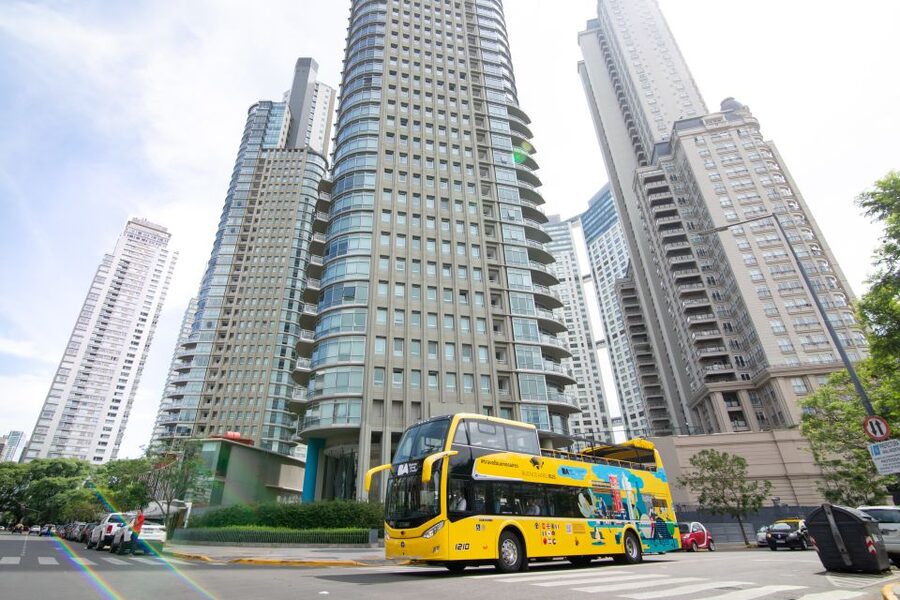
Without stops, the full route takes about 3 hours and 20 minutes. With stops and real-world driving conditions, it is often longer.
In practice, that is not a deal-breaker. It is useful because you can treat the bus ride like a moving orientation lesson. Stay onboard and watch neighborhoods change. Then get off to explore one or two zones more deeply rather than trying to do everything in one go.
Also, the bus runs frequently, about every 15 minutes throughout the day. Still, you can hit crowded periods. On busy days, you might wait longer for a seat, especially if people are filling up right when you arrive.
Plaza de Mayo and the central landmarks: where the story starts
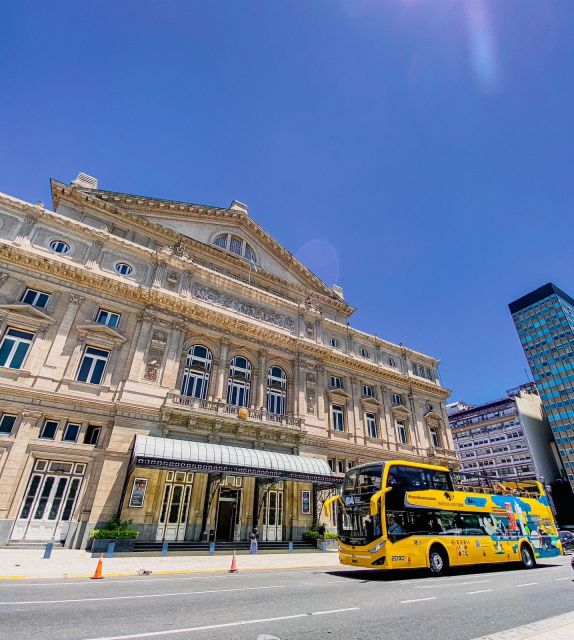
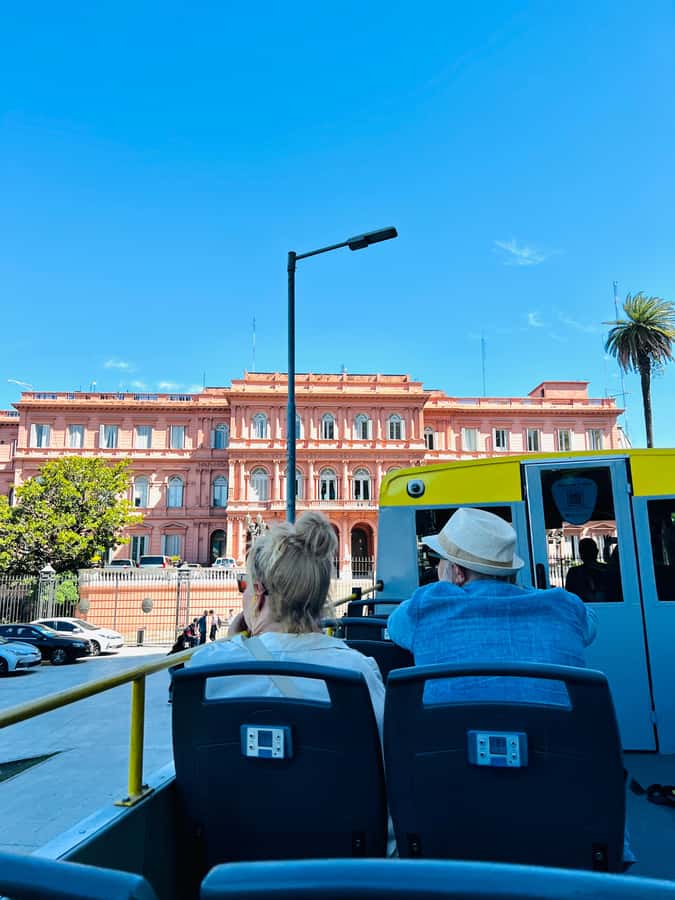
If you have limited time, this is where the loop earns its keep. The central area helps you connect Buenos Aires’ political and cultural heart to the street-level experience.
Plaza de Mayo is a natural anchor. You also pass the Obelisk, one of the city’s easiest visual reference points. If you later come back with your own plans, you will remember the geography because the bus keeps circling the big nodes.
The Teatro Colón stop is another highlight because it signals Buenos Aires’ strong performing arts identity. Even if you do not go inside, seeing it from the street helps you place it within the wider downtown area.
Practical note: downtown streets can be hectic. The advantage of the bus here is that you get the views and context without spending your energy constantly navigating intersections.
La Boca and Caminito: color, photos, and a neighborhood that pulls you in
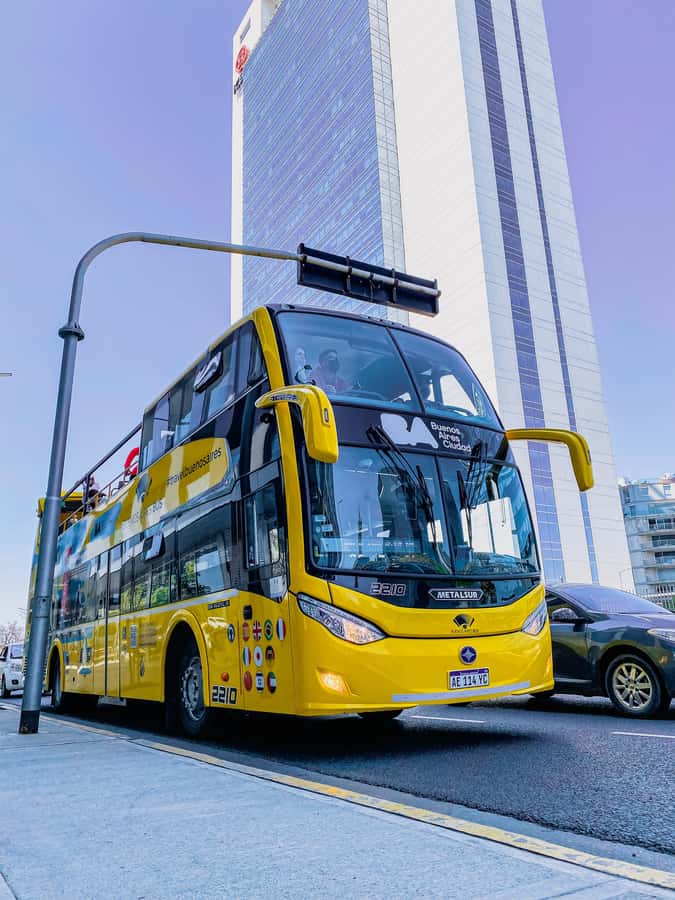
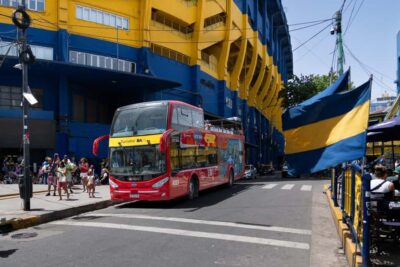
La Boca is the kind of neighborhood that looks like a postcard, and the bus helps you reach it without hassle. You pass through the general area and get access to stops that work for getting off to explore Caminito.
The payoff is that La Boca is best when you can move at your own pace. You might want a quick loop for photos, or you might linger for a coffee and a longer wander. This bus format gives you both options.
One caution: some stops are not right on top of every landmark. If you are hopping off to reach a specific site, give yourself a little buffer for walking time. It is better than arriving rushed.
Recoleta and the refined side of town: architecture with breathing room
Recoleta is where you feel the shift from downtown bustle to a more elegant, relaxed streetscape. From the bus, you see the scale and style of the area, which is helpful for deciding whether you want to spend extra time on foot.
This is also a good zone for photo stops because you can watch the neighborhood change as you move. The bus acts like a moving window, letting you judge streets, distances, and where you want to slow down.
If you are short on time, do not try to do everything in Recoleta in one day. Do one focused walk, then use your next bus ride day to return with better direction.
Puerto Madero and modern Buenos Aires: a contrast you can feel
Puerto Madero gives you a different Buenos Aires mood: more modern, more open views, often easier to take in quickly. The bus route includes this area so you can compare it directly with older neighborhoods you saw earlier in the day.
This contrast is one reason I like doing a hop-on hop-off early in a trip. You stop guessing what areas feel like, and you start understanding how the city is laid out.
When you hop off in Puerto Madero, you can keep plans simple. Walk a bit, take photos, and decide if you want to return later. The bus makes it painless to shift your plan without losing your whole day.
Top deck views and photography: how to ride for pictures, not just transportation
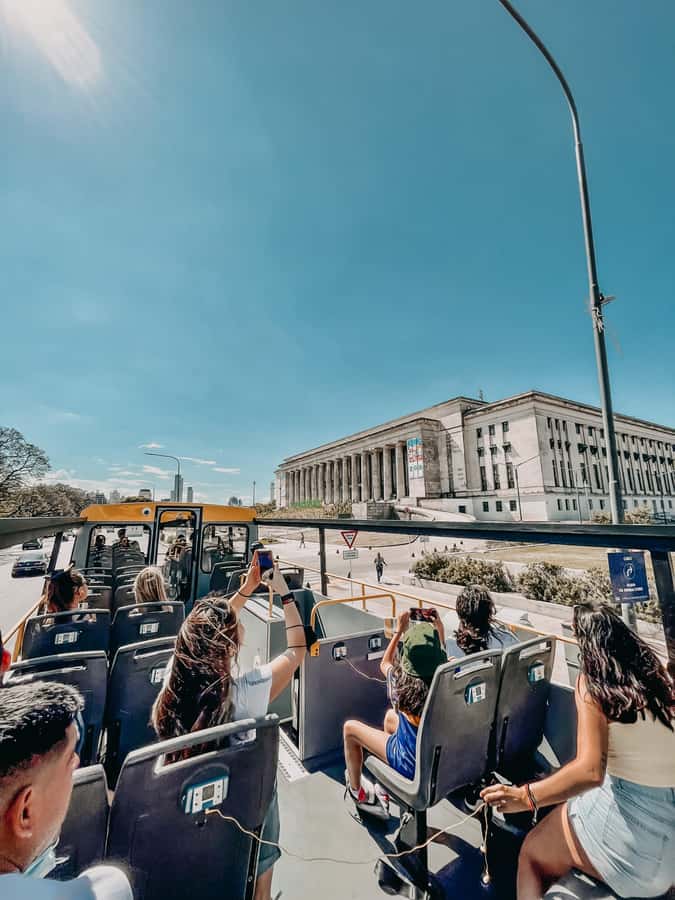
The bus gives you panoramic visibility from the top deck. If you are photographing key spots as you pass, you will appreciate the big windows and the elevated perspective.
Some riders highlight photo-friendly passes like El Rosedal (the Rose Garden) and Puente de la Mujer (the Woman’s Bridge). Even when you do not plan a long stop, these are the moments that make the ride worth staying onboard for.
If it is hot, cold, or windy, that is when you should think about comfort. A closed upper deck may help in colder weather conditions, but you still want clear air and decent angles. The practical move is to switch decks based on conditions and let the route do the work.
Exclusive discounts: small savings that add up if you use them
Your ticket includes exclusive discounts at selected restaurants, shops, and attractions. This matters because you are already paying for one big activity. If the discounts help you avoid one extra expense, the ticket starts to pay for itself in a very practical way.
The key is to check what is available when you redeem your ticket and then use it while you are in those neighborhoods. If you ignore the discount part, the bus is still useful. But if you use it, it becomes better value.
When things can go sideways: crowds, long walks, and audio glitches
This is not a perfect machine. Here are the issues you should mentally budget for.
Crowds and seat pressure: even with frequent departures, you can run into buses that are full, which can lead to waits. If you want to start early, go early. If you arrive at a popular time slot, be ready to wait a bit.
Walking between stops and sights: some stops are a walk from what you want to visit. That is not a reason to avoid the bus, but it is a reason to plan your day like you will be walking, not floating.
Audio quirks: there have been complaints about loud music between information segments, commentary volume balancing, audio quality crackle, and occasional audio issues. The practical fix is to watch outside cues and not treat the headset as your only source of navigation.
Timing shifts: the advertised route time is without stops, but traffic and occasional events or demonstrations can affect scheduling. In Buenos Aires, this is normal. Build your plan around that, and you will feel less stressed.
Best way to use the pass: a simple 1-day or 2-day game plan
If you have one day, I’d treat it as an orientation day. Ride the whole loop once while listening to the audio, then get off at one or two neighborhoods that you genuinely want to return to later that same day.
If you have 48 hours, you get a smart second pass. Use day one for broad coverage and day two for focused exploration. That is the best use of the hop-on hop-off format because you stop trying to see everything and start seeing what fits.
If you have 72 hours, you can go slower. This is especially helpful if you want to revisit one area after you understand the layout better. You also gain flexibility when one attraction has limited hours on your chosen day.
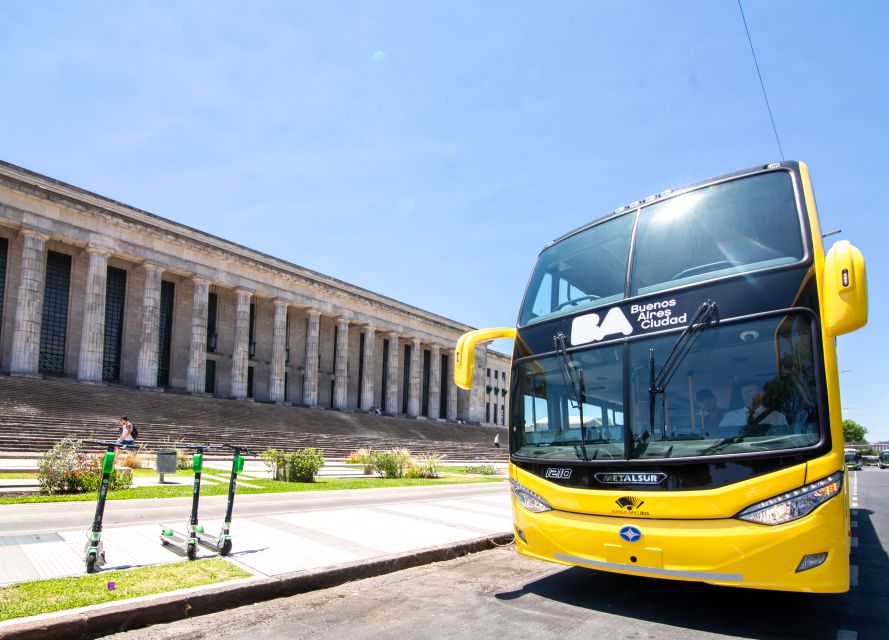
And here is a decision tip from real-world logic: if you are choosing between different bus color routes offered by similar hop-on services, pick the one with the most consistent stop coverage. One rider’s strong recommendation leaned toward the yellow bus for frequency compared with a red option that required longer waits. Even if you do not know the details in advance, frequency is the factor that usually determines whether you feel free or stuck.
Who this bus suits best, and who might not love it
This bus is ideal for you if you want:
- A flexible way to cover big sights without committing to a set walking schedule
- Guided context while you travel, with audio in multiple languages
- A practical approach for a first trip to Buenos Aires, especially if you are moving fast between neighborhoods
It may not be the best fit if you prefer a deep guided experience with minimal transit time. The bus is great for seeing a lot and choosing your next move, but you still have to do some walking when you get off.
If you are traveling with limited patience for crowds, aim for off-peak times. If audio clarity matters a lot to you, test your headphones early so you are not stuck guessing later.
Should you book Buenos Aires Bus?
I think you should book this if you want an easy, cost-effective way to map Buenos Aires. For many visitors, the combination of frequent hop-on hop-off service, audio in 9 languages, and neighborhood coverage makes day one less stressful and day two more purposeful.
Skip it only if your priority is a tightly structured, fully guided day where every minute is planned for you. This is more of a flexible city sampler, with the “choose your pace” part doing the heavy lifting.
If your travel style is independent, and you like the idea of seeing the big landmarks first, then spending your time where you connect, this pass is a very sensible purchase.
More Tour Reviews in Buenos Aires


Newest Buenos Aires write-ups on the desk
- Tango Show at El Querandi with optional Dinner★ 4.2 · 3 reviews
- Velez Sarsfield Football Match★ 5.0 · 3 reviews
- Tango Show at: MichelAngelo★ 4.5 · 3 reviews
- Guided tour Boca Juniors Museum & Stadium + Caminito★ 3.3 · 3 reviews
- From Colonialism to Eclecticism, Buenos Aires arquitectonica★ 5.0 · 3 reviews
- Enjoy a Rural Experience in a Vineyard near Buenos Aires★ 4.7 · 3 reviews