
REVIEW · CITY TOURS
Buenos Aires: Hop-On Hop-Off City Bus Tour
Buenos Aires in a loop beats a map. This hop-on hop-off ride is a smart way to see both old-school corners and newer districts, with an included multilingual audio guide to explain what you are looking at. I especially like the open-top double-decker setup, plus the way the route strings together major landmarks so you can decide where to get off and linger.
I also like that the buses are frequent, usually every 25 minutes, and you get a full circuit over time instead of a rushed one-and-done. One possible drawback to plan for: the bus day ends early, and the WiFi is free but can be patchy.
In This Review
- Quick Take
- Key Points You Should Know
- Entering The City From Diagonal Norte Or Plaza San Martín
- How The 24, 48, Or 72 Hours Really Works
- The Bus Itself: Open-Top Views With Air Conditioning
- Audio Guide And Live Guidance: How You Hear The City
- The Route Overview: 25 Stops That Map Your Day
- Stop-By-Stop: What Each Corner Is For
- Stop 0: Av. Pres. Roque Sáenz Peña 728 (Diagonal Norte)
- Stop 1: Av. Santa Fe 808 (Alternative starting location, tied to the office area)
- Stop 2: Palace of the Argentine National Congress (pass by)
- Stop 3: El Loco Chávez – Paseo de la Historieta (pass by)
- Stop 4: Plaza Dorrego (pass by)
- Stop 5: Usina del Arte (pass by)
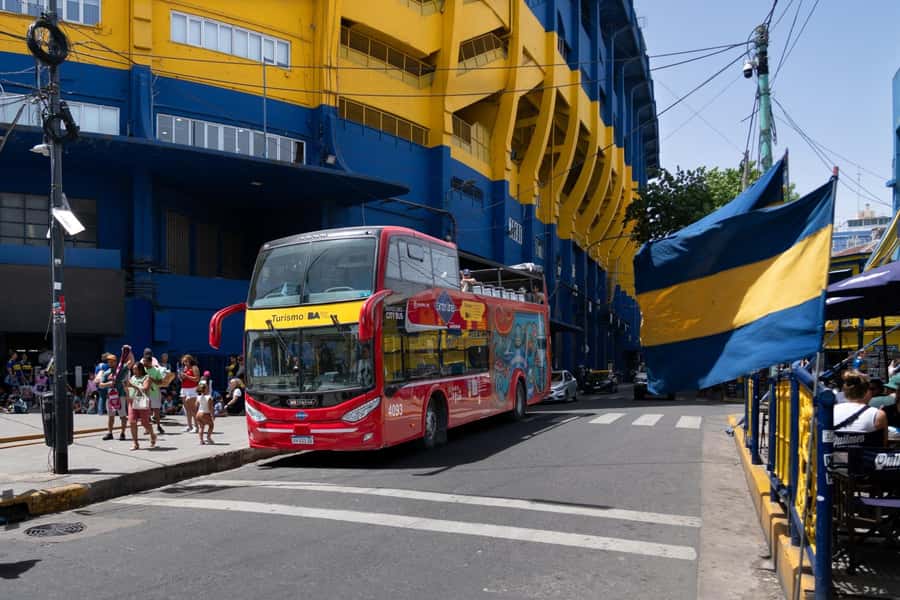
- Stop 6: La Bombonera (pass by)
- Stop 7: Caminito (pass by)
- Stop 8: Costanera Sur (pass by)
- Stop 9: Puerto Madero (pass by)
- Stop 10: Bus Turístico-Circuito Rojo y Amarillo-Estación Fluvial (pass by)
- Stop 11: Galerías Pacífico (pass by)
- Stop 12: Plaza General San Martín (pass by)
- Stop 13: Floralis Genérica (pass by)
- Stop 14: Museum of Latin American Art of Buenos Aires (pass by)
- Stop 15: Planetario Galileo Galilei (pass by)
- Stop 16: Club de Pescadores (pass by)
- Stop 17: Jorge Newbery Airfield (pass by)
- Stop 18: Parque de la Memoria de Buenos Aires (pass by)
- Stop 19: Estadio Monumental Antonio Vespucio Liberti (access River Museum from here)
- Stop 20: Chinatown, Buenos Aires (pass by)
- Stop 21: Argentine Polo Association (pass by)
- Stop 22: Carta Magna Monument (pass by)
- Stop 23: Recoleta (pass by)
- Stop 24: Teatro Colón (pass by)
- When To Ride: Timing That Prevents Regret
- Value For Money: Is $35 Worth It?
- Who This Bus Is For (And Who Should Skip It)
- My Booking Recommendation
- FAQ
- How long are the tickets valid?
- What hours does the bus run?
- How often do buses arrive?
- How many stops are on the route?
- Are attraction tickets included?
- What languages are available for the guides?
- Is WiFi included on the bus?
- What happens if River or Boca are playing?
Quick Take
If you are short on time or you simply want an easy backbone for your days, this bus gives you a practical Buenos Aires “big picture” fast. Just be ready for a long loop, traffic delays, and the fact that the bus ends in the late afternoon.
Other loops around Buenos Aires
- Buenos Aires: City Highlights Guided Tour with Transfer
★ 4.7 · 1,946 reviews - Buenos Aires: Hop-On Hop-Off City Bus Tour
★ 4.2 · 1,855 reviews - Best of Buenos Aires: Guided Sightseeing City Tour
★ 4.0 · 402 reviews - Buenos Aires Private City Tour with Local Guide
★ 5.0 · 308 reviews
Key Points You Should Know
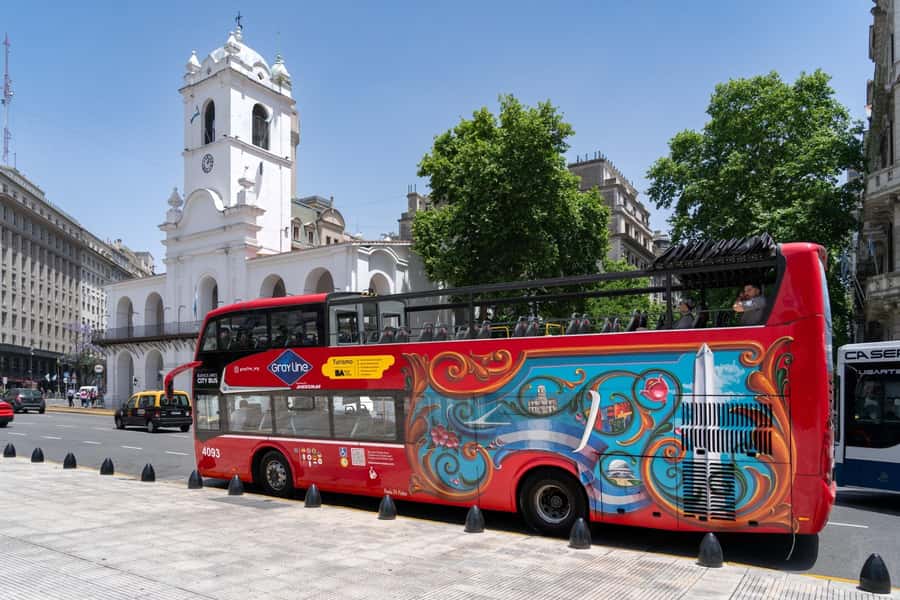
- 25 stops across traditional and modern neighborhoods, so you can build your own route
- 24, 48, or 72-hour ticket options that start counting when you first board
- Every 25 minutes during the day, with frequent chances to hop back on
- Multilingual audio guide covering many languages, plus a live guide in select languages
- Free WiFi onboard and at bus stops, but reliability can vary
- Route includes major landmarks like La Boca, Recoleta, Teatro Colón, and stadium areas
Entering The City From Diagonal Norte Or Plaza San Martín
This tour works best when you start where you are already going. You can hop on at any bus stop, which is handy when you have plans in different neighborhoods. The two main start points are stop 0 at Diagonal Norte, Av. Pres. Roque Sáenz Peña 728, and stop 12 at the office area, Plaza San Martín, Av. Santa Fe 808.
The practical win is simple: you do not have to “cross town” to begin. If your first day is mostly around the city center, starting at Diagonal Norte keeps your travel time low. If your lodging is closer to Plaza San Martín, start there and you are immediately in the thick of it.
Also note a timing detail that matters. Buses begin circulating at 9:20 a.m. from stop 0 and from stop 12. The tour runs Monday to Sunday from 9:30 a.m. to 6:00 p.m. That means you can get a solid sightseeing block in the morning, then still have time for neighborhoods on foot.
How The 24, 48, Or 72 Hours Really Works
You pick a ticket length: 24, 48, or 72 hours. The important part is the countdown. Your selected time starts on the first time you board the hop-on hop-off bus on your reserved day. So you can reserve for a specific day, then use the ticket when you are ready that day.
You also have a six-month window to start using the purchased ticket. That is useful if your plans shift, since you can wait until you know your real schedule.
Here is the other big logistics piece: the route is not a quick spin. A full circuit can take a while, and it is totally possible to only get off once if you try to “do everything” in one day. On at least one Red bus route, a complete loop is around 3 hours. That is not a problem if you treat the bus as your moving base and plan a main get-off, lunch near a stop, then a second exploration later.
Frequency helps with this. During the day, buses run about every 25 minutes. In real life, traffic can stretch that. If you are the kind of person who wants a hard, minute-by-minute schedule, this will test your patience. If you are flexible, you will love the freedom.

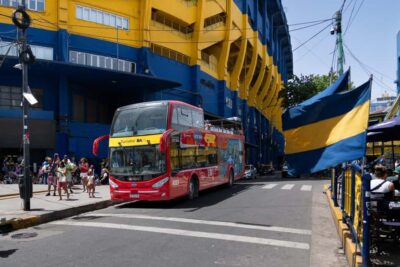
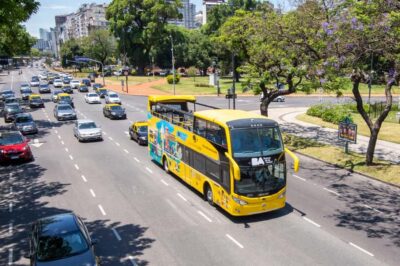
The Bus Itself: Open-Top Views With Air Conditioning
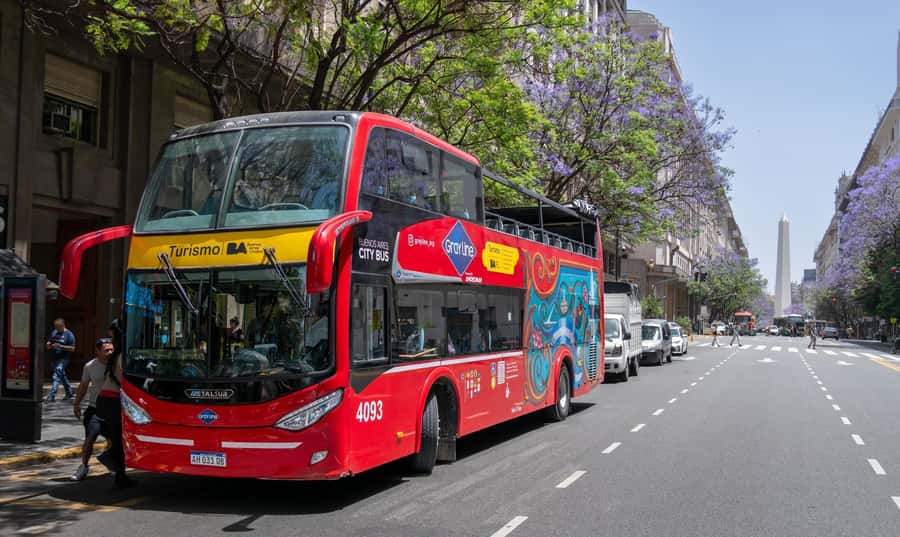
This is an open-top double-decker design with air conditioning and a sunroof. That combo is great in Buenos Aires because you get the “look around” feeling without cooking in the sun. The upstairs deck is the natural choice for photos, and the design makes it easy to see the skyline glide by.
One practical note from real use: the bus can get busy on some departures. You may find moments with plenty of space and other moments where seating fills up. If you want the best view, aim for earlier buses in your day or keep an eye on which stop just loaded.
Audio is delivered through a multilingual system, and the ride is designed to be more than just transportation. Even if you stay on the bus the whole time, the commentary helps you connect neighborhoods to landmarks.
Audio Guide And Live Guidance: How You Hear The City
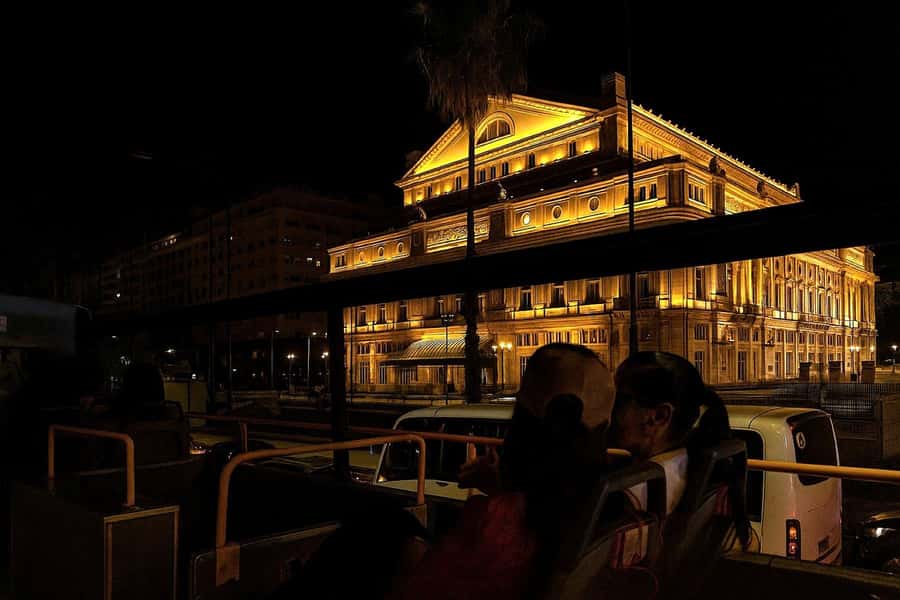
The tour includes an audio guide in a long list of languages, including Spanish, English, Portuguese, Japanese, Chinese, Russian, Italian, French, German, Ukrainian, and Korean. That coverage is a big deal in Buenos Aires because you can keep your day flowing without waiting for translations or hunting for information.
There is also a live tour guide in Spanish, English, and Portuguese. That means you can get human answers at key moments, not just prerecorded narration.
Two realistic things to know about the experience:
- Sometimes the narration is not perfectly synced with the moment you pass a specific spot. It can happen that you are already at the landmark while the audio is describing it.
- The system uses small ear pieces, and some people find the provided ear plugs a bit short for the upstairs setup. If you are picky about comfort, consider bringing earbuds you already like.
Bottom line: it is an easy way to learn while you move. Just do not expect museum-level timing on every single block.
The Route Overview: 25 Stops That Map Your Day
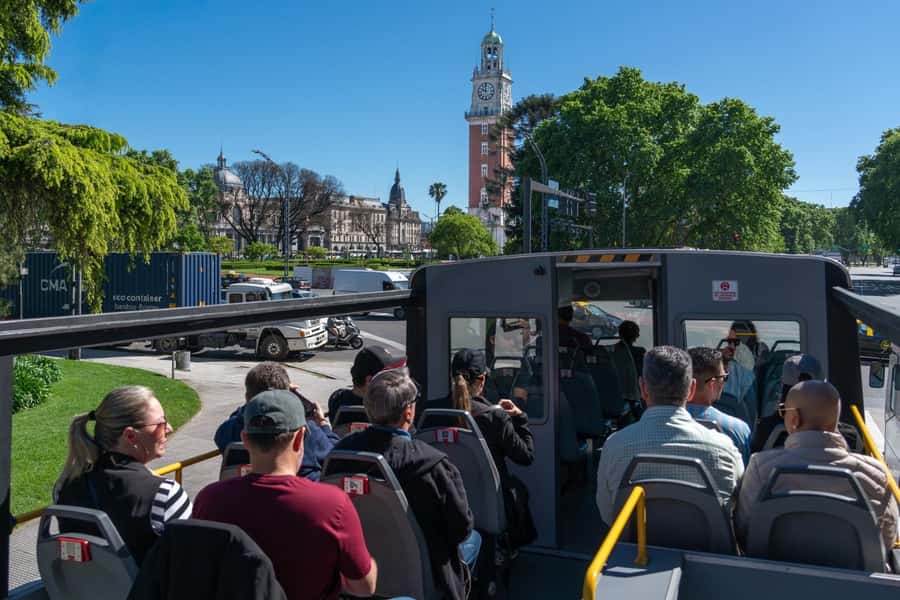
The bus route includes 25 stops, and you can hop on and off at any of them for your chosen time window. The loop passes a mix of historic, cultural, and modern areas, including stops tied to La Boca, San Telmo, Puerto Madero, Palermo, and Belgrano as part of the overall neighborhood mix.
The open-top bus also acts like a “rest mode.” If you get tired, you do not have to stop sightseeing. You can just ride, watch from the deck, and let the audio keep you oriented.
Now the part you really care about: where each stop takes you and how to use it.
Stop-By-Stop: What Each Corner Is For
Below, I treat each stop as a “decision point.” Some are great for a quick photo, others are worth planning time around.
Stop 0: Av. Pres. Roque Sáenz Peña 728 (Diagonal Norte)
This is your main launch point, and it is a strong choice if you want to start in the central area. Use it as your reset. Board early, listen to the early narration, then decide where you want your first real get-off.
Stop 1: Av. Santa Fe 808 (Alternative starting location, tied to the office area)
If you are near Plaza San Martín, this is a convenient way in. It can also be useful when you are coordinating a day around central attractions, since you are starting close to the same neighborhood zone.
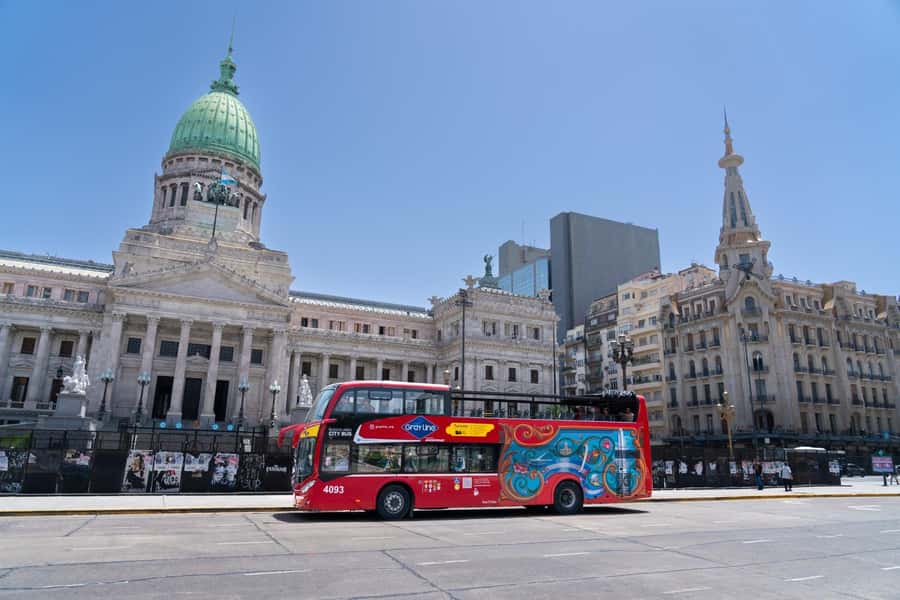
Stop 2: Palace of the Argentine National Congress (pass by)
This one is mainly a “watch from the deck” stop. If you want to keep moving, staying on is fine. If you prefer structured walking time, you can plan a get-off here on one of your days, but the route is really designed for flexible hopping, not a timed itinerary.
Stop 3: El Loco Chávez – Paseo de la Historieta (pass by)
Another pass-by stop that works well for quick interest. The audio is the key value here because it helps you understand what you are seeing as you go.
Stop 4: Plaza Dorrego (pass by)
Plaza areas are natural pause points. Even if you do not hop off, it is worth listening. If you do get off, treat it as an easy entry to the nearby old-school neighborhood mood.
Stop 5: Usina del Arte (pass by)
This stop is a good example of how cultural spots land in the route. If you have an hour to spare, you can hop off and explore nearby streets, then hop back on when you are done. If you are trying to cover a lot quickly, you can simply pass and keep your energy for later stops.
Stop 6: La Bombonera (pass by)
This is a big one for football fans and for anyone curious about Buenos Aires sports culture. You also get access to the Boca Museum from stop 5 (Bombonera). If you only plan one major neighborhood detour, this is a smart candidate.
A practical warning based on the tour operation: on days when Boca plays at their stadium, tours may not take place. If your dates overlap with match day, double-check your schedule.
Stop 7: Caminito (pass by)
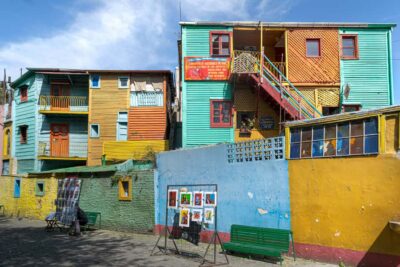
This stop name is one of those Buenos Aires shorthand locations that you will hear about quickly. Use it as your “La Boca area” marker. If you want colorful neighborhood vibes, plan a get-off here on your best day, not your busiest one.
Stop 8: Costanera Sur (pass by)
Waterfront and park-adjacent stops tend to be good for a slow break. Even if you pass, it can be a nice mental reset while the bus moves.
Stop 9: Puerto Madero (pass by)
Puerto Madero is where the city often feels more modern and polished. If you like walking and views, this is a stop worth doing briefly. If you are short on time, keep it pass-by and focus on neighborhoods where you want a longer wander.
Stop 10: Bus Turístico-Circuito Rojo y Amarillo-Estación Fluvial (pass by)
This is a route connector area tied to the different circuits. Use it if you want to coordinate plans or stay flexible about which segment you ride next.
Stop 11: Galerías Pacífico (pass by)
A central indoor or shopping-gallery type stop can be perfect when the weather is unpredictable. If you want a quick break from walking, this stop is a useful pivot.
Stop 12: Plaza General San Martín (pass by)
This area is a strong “meet point” style location. Since stop 12 is also tied to the office zone, it is a helpful landmark if you want an easy return point during your day.
Stop 13: Floralis Genérica (pass by)
This is a sightseeing stop that works best as a deck-view moment. If you love photo landmarks, you can get off, but if you are managing time, passing is still valuable because the audio helps you connect it to the city’s broader story.
Stop 14: Museum of Latin American Art of Buenos Aires (pass by)
Museum-adjacent stops are for people who plan. If you are museum-inclined, this is where you can hop off and then re-board later. If museums are not your thing, just ride through and keep your energy for neighborhoods.
Stop 15: Planetario Galileo Galilei (pass by)
Again, this is a spot that only becomes a priority if you want to spend time there. If you do, plan enough time to actually enjoy the visit, then use the hop-on hop-off flexibility for getting back into the loop.
Stop 16: Club de Pescadores (pass by)
This stop feels like a local-flavored waypoint. It is worth a pass-by if you are just building your map, and worth hopping off if you want a slower, walk-and-look moment.
Stop 17: Jorge Newbery Airfield (pass by)
This one is a “big infrastructure” sight. It can be interesting to see the city’s edges and how the urban area connects to transport zones. If you are mainly neighborhood-focused, you can treat it as a narrated glide-by.
Stop 18: Parque de la Memoria de Buenos Aires (pass by)
A memory or memorial park stop is the kind of place that benefits from a calm visit. If you hop off, do it when you have emotional bandwidth, not when you are racing through the day. If you do not get off, the pass-by still gives you a chance to recognize the area.
Stop 19: Estadio Monumental Antonio Vespucio Liberti (access River Museum from here)
This is the River Plate stadium area stop, and you can access the River Museum from stop 19 (Monumental). If football matters to your trip, this is a strong pairing with the Boca side of the route.
Just like with Boca, on days when River plays, tours may not take place. If your schedule lines up with match days, it can affect your ability to do the full route.
Stop 20: Chinatown, Buenos Aires (pass by)
Chinatown stops are fun because they add a different “food and streets” feel. If you like browsing markets and trying a meal, you can plan a longer hop-off session here and then swing back to the bus later.
Stop 21: Argentine Polo Association (pass by)
This is a “special interest” stop. If polo is on your radar, this is where the route acknowledges it. If it is not, stay on the bus, let the audio give context, and move on.
Stop 22: Carta Magna Monument (pass by)
Monument stops are perfect for quick stops and photos. If you are taking pictures, you will appreciate having a named reference point like this. If you are not stopping often, passing is still useful.
Stop 23: Recoleta (pass by)
Recoleta is a major neighborhood anchor. You can treat it as a second-day focus if you are doing 48 or 72 hours. If your visit is short, you might use Recoleta as the main “get-off and wander” area after you have already done La Boca or Puerto Madero.
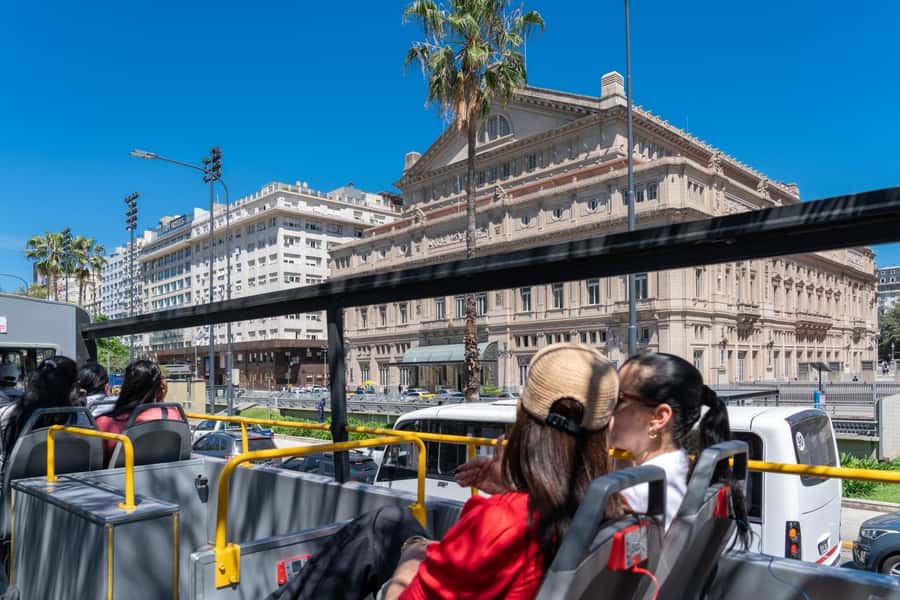
Stop 24: Teatro Colón (pass by)
This is a landmark that tends to matter to many visitors, especially if you enjoy performing arts. If you want a dedicated look, hop off at a time when you have time to stroll the area. If you only have a few hours, passing still gives you a recognizable headline sight.
When To Ride: Timing That Prevents Regret
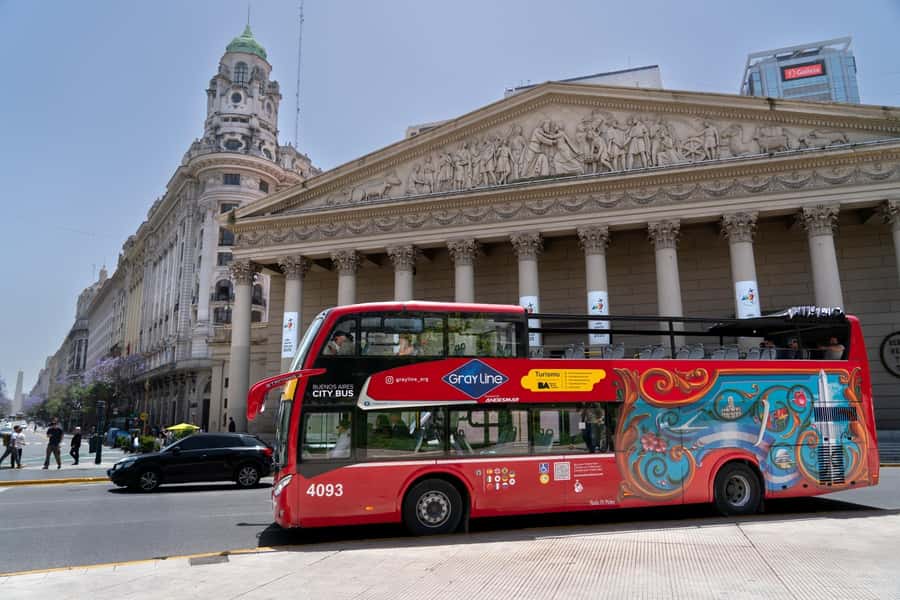
The bus runs from 9:30 a.m. to 6:00 p.m. with last departures at 5:30 p.m. and only a half return on the late buses. This is the most important timing heads-up on the whole experience.
So if you want to end your day with a bus ride back toward where you started, aim for earlier afternoon. If you wait until late, you might not complete the whole loop.
Also, the day you reserve matters for more than just weather. When River or Boca play at their stadiums, the tours may not take place. If match day intersects your travel dates, it can change the reality of your sightseeing plan.
Value For Money: Is $35 Worth It?
At $35 per person, this can feel like a small splurge. But value depends on how you use it. If you are visiting for only one short stretch and you use the bus to cover many named stops, it can pay off fast. You are buying time savings and orientation, not just seats on a bus.
The real value improves if you select 48 hours. A longer window gives you multiple chances to hop off without feeling like you must cram everything into the same day. It also helps if you pick one neighborhood as your anchor, like the Boca area, then another as your second anchor, like Recoleta, with transit between handled for you.
If you are the type who always ends up walking more than planned, the bus becomes a convenient “reset button” in the middle of your day, because you can ride while you recharge.
Who This Bus Is For (And Who Should Skip It)
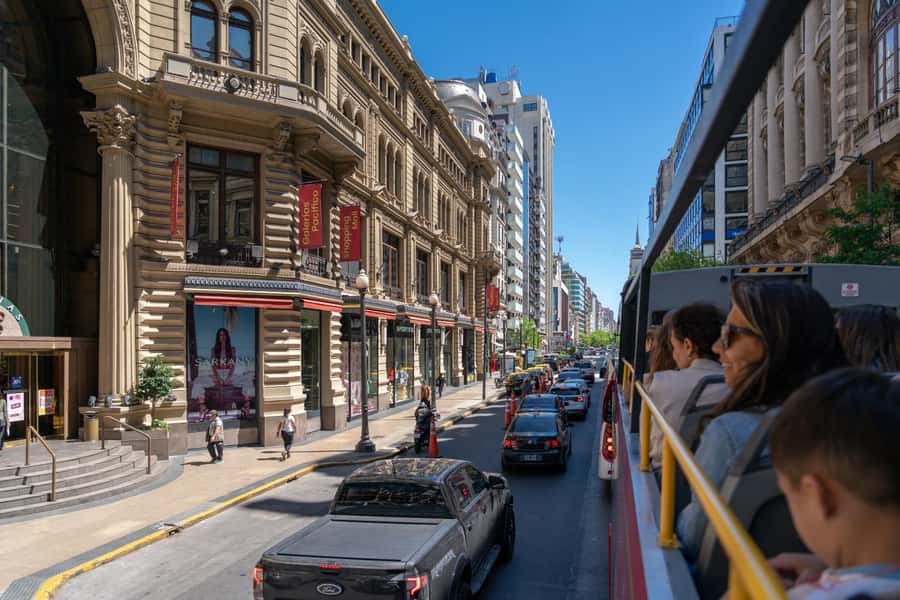
This experience fits you best if:
- You are visiting Buenos Aires for the first time and want a big-picture layout
- You prefer choosing stops yourself rather than committing to a fixed walking tour
- You want a comfortable way to see a lot without constantly negotiating taxis and rides
- You like learning while you move, thanks to the audio system
You might want a different plan if:
- You have very limited time and want only one neighborhood, because the loop can take hours
- You demand pinpoint timing and hate waiting at stops
- You are relying on onboard WiFi for essential tasks (it can be unreliable)
My Booking Recommendation
Book this bus if you want an easy way to build your Buenos Aires map and then tailor the rest of your days from there. For me, the strongest argument is how the route stitches together named districts and landmark areas, so you can decide in real time where you want more time.
If you can, plan to get off at La Boca and then do a second anchor like Recoleta. That pairing gives you the contrast Buenos Aires is known for, and the hop-on hop-off format makes it simple to bounce between them without overthinking.
FAQ
How long are the tickets valid?
You can choose a 24-, 48-, or 72-hour hop-on hop-off ticket. The time starts when you first board the bus on your reserved day.
What hours does the bus run?
The bus operates Monday to Sunday from 9:30 a.m. to 6:00 p.m. Buses begin circulating at 9:20 a.m. from the main starting points.
How often do buses arrive?
During the day, buses run about every 25 minutes. Traffic can affect exact timing.
How many stops are on the route?
The route has 25 stops, and you can hop on and off at any of them during your ticket window.
Are attraction tickets included?
No. Admission to attractions is not included, only the hop-on hop-off bus ticket and the audio guide.
What languages are available for the guides?
You get an audio guide in multiple languages, including Spanish, English, Portuguese, Japanese, Chinese, Russian, Italian, French, German, Ukrainian, and Korean. There is also a live tour guide in Spanish, English, and Portuguese.
Is WiFi included on the bus?
Yes. Free WiFi is available onboard the bus and at bus stops, though performance can vary.
What happens if River or Boca are playing?
On days when River or Boca play at their stadiums, no tours will take place. If your dates matter for match days, plan around it.
Other Loops Around Buenos Aires
More Tours in Buenos Aires


More Tour Reviews in Buenos Aires
Newest Buenos Aires write-ups on the desk
- Tango Show at El Querandi with optional Dinner★ 4.2 · 3 reviews
- Velez Sarsfield Football Match★ 5.0 · 3 reviews
- Tango Show at: MichelAngelo★ 4.5 · 3 reviews
- Guided tour Boca Juniors Museum & Stadium + Caminito★ 3.3 · 3 reviews
- From Colonialism to Eclecticism, Buenos Aires arquitectonica★ 5.0 · 3 reviews
- Enjoy a Rural Experience in a Vineyard near Buenos Aires★ 4.7 · 3 reviews
The rest of the City Tours list.
 ★ 4.7Buenos Aires: City Highlights Guided Tour with TransferFrom $381,946 reviews
 ★ 4.0Best of Buenos Aires: Guided Sightseeing City TourFrom $35402 reviews
 ★ 5.0Buenos Aires Private City Tour with Local GuideFrom $119308 reviews
 ★ 3.8Classic City Tour of Buenos Aires: Neighborhoods and EmblemsFrom $45282 reviews
 ★ 4.4Ushuaia: Panoramic City Train TourFrom $20155 reviews
 ★ 4.5Tierra del Fuego National Park, Ushuaia City Tour Shore ExcursionFrom $119154 reviews
 ★ 4.7Buenos Aires Private City Tour with a local guideFrom $14992 reviews
 ★ 4.0Buenos Aires Premium City TourFrom $7887 reviews
Lists this one is on