
REVIEW · CITY TOURS
Buenos Aires Private City Tour with Local Guide
Buenos Aires moves fast, and this tour gives you the city’s highlights without the chaos. In one 4-hour loop you hit La Boca, Plaza de Mayo, Recoleta, and Palermo, with a bilingual local guide explaining how the city grew. I like that you get real context, not just photo stops, and the pacing stays friendly.
Two things I especially enjoy: air-conditioned private transportation so you spend more time seeing and less time stuck in traffic, and a guide who helps with photos at each stop during your 15 to 20 minute window. One consideration: you do not get long inside-the-building time at every location, so if you want deeper museum or cemetery time, plan on extra tickets or a longer visit later.
In This Review
- Key Points Worth Knowing
- A Short Buenos Aires Loop That Still Teaches You the City
- Price and Value: What $119 Covers When You Travel with Friends
- Getting From Stop to Stop Without Losing Your Morning
- La Boca and Caminito: Colorful Streets With a Real Neighborhood Feel
- Mafalda in San Telmo: Argentina’s Humor Turns a Street Corner Into a Story
- La Bombonera Area: The Stadium You See in Photos, Not Tour Buses
- Mercado San Telmo: Where Old Shops and Antiques Share Space
- Avenida de Mayo and Casa Rosada: The Political Heart Through a Walk-Like Route
- Catedral Metropolitana: Neoclassical Lines and a Construction Story That Took Forever
- Puente de la Mujer and Puerto Madero: Modern Architecture That Still Feels Like Tango
- Rosedal de Palermo: A Garden Stop That Feels Like a Pause
- Recoleta and Evita’s Mausoleums: Why This Cemetery Area Is So Famous
- El Ateneo Grand Splendid: The Bookstore in a Former Movie Theater
- Floralis Generica: A Mechanical Flower That Moves With Light and Time
- The Leather Factory Stop: Shopping Without the Hard Sell Setup
- Who This Tour Fits Best, and Who Might Want Something Different
- Should You Book This Buenos Aires Private City Tour?
- FAQ
- How long is the Buenos Aires private city tour?
- How many people is the tour for?
- What’s included with the tour?
- Is the Recoleta Cemetery ticket included?
- Is the Boca Juniors stadium museum ticket included?
- Can I cancel for a refund?
Key Points Worth Knowing
- Private for up to 4 people, so it feels personal and you can ask questions as you go.
- Air-conditioned vehicle keeps the half-day comfortable, even when the city heat or traffic gets real.
- Photo time at every stop, usually 15 to 20 minutes, and the guide helps you frame the shots.
- Mate and alfajores tasting gives you a taste of Argentinian snack culture early in the day.
- Stretches across several neighborhoods, so you learn where things are instead of just checking boxes.
- Two ticket add-ons are not included: the Recoleta Cemetery and the Boca Juniors stadium museum.
Other Buenos Aires write-ups sitting in the pile
- Buenos Aires: City Highlights Guided Tour with Transfer
★ 4.7 · 1,946 reviews - Buenos Aires: La Boca Guided Walking Tour in English
★ 4.8 · 1,587 reviews - Palermo: Graffiti and Street Art Guided Tour in English
★ 4.8 · 684 reviews - Buenos Aires: Teatro Colon Guided Tour
★ 4.3 · 571 reviews
A Short Buenos Aires Loop That Still Teaches You the City
If you’re trying to get your bearings in Buenos Aires fast, this kind of private half-day works. The ride knocks out distance, and the guide fills the gaps between famous spots, so you start to understand how the city’s different areas connect.
You’re not just seeing monuments. You’re seeing Buenos Aires in layers, from dockside neighborhoods like La Boca to the political heart around Plaza de Mayo, then out to the calmer park world of Palermo and the elegant Recoleta cemetery area.
Price and Value: What $119 Covers When You Travel with Friends
At $119 per group for up to 4 people, the math works out best when you travel as a small team. You’re paying for private transport plus a bilingual guide for about four hours, which is exactly when a lot of independent sightseeing gets frustrating: moving between neighborhoods takes time, and walking without context can feel like you’re chasing your own map.
Here’s the value angle I like. Most stops on the route are listed as free admission, so you are not constantly buying tickets just to look around. The tradeoff is that you still have limited time at each stop, so you’ll likely want to pick one or two places to return to on a longer trip.
Getting From Stop to Stop Without Losing Your Morning
The tour uses private transportation with an air-conditioned vehicle, and the guide stays with you throughout. Expect frequent short breaks where you step out, take photos, and get explanations, then re-board to cover the next area.
This matters in Buenos Aires because streets can be busy, and neighborhoods can be surprisingly far apart. A guided route like this lets you turn that travel time into part of the experience, with history and neighborhood stories while you roll past major streets.
Also, you’ll typically have enough time to ask questions and still keep the flow. In the day-to-day feedback for this tour style, guides are commonly praised for being punctual and flexible, including handling disruptions like rain or traffic changes.
Other loops around Buenos Aires
La Boca and Caminito: Colorful Streets With a Real Neighborhood Feel
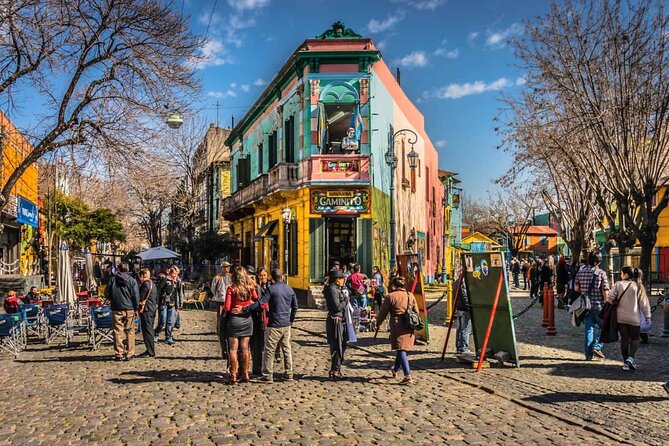
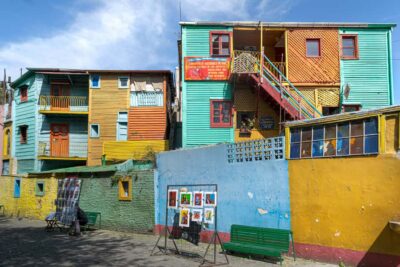
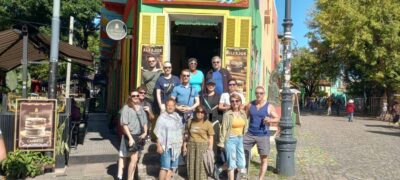
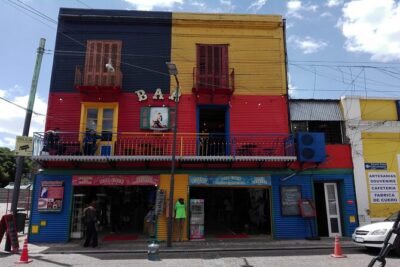
Caminito is the stop that instantly grabs your attention. This curved pedestrian walkway is famous for its colorful buildings and street art, but it’s also close to the stadium energy of La Bombonera, so you’re seeing La Boca from two angles at once.
A practical thing I recommend: treat Caminito as both a photo stop and a mood stop. You can focus on the bright façades and murals, but also glance around so you understand why this neighborhood became such a symbol of identity in Buenos Aires. The guide’s explanation helps you connect the art to the people and history of the area.
Since the time window is short, go easy on overthinking. Take your essentials, then move. This is one of those places where you want a few strong photos instead of trying to do everything.
Mafalda in San Telmo: Argentina’s Humor Turns a Street Corner Into a Story
Right near where artist Quino lived, the Mafalda Monument brings pop culture into the city’s everyday streets. Mafalda is captured sitting on a bench, which makes it easy to photograph without rushing through a crowd.
This stop works because it’s quick, but it also gives you an extra lens for Buenos Aires. The guide’s job here is to translate a cartoon character into something more, tied to the neighborhood and the artist’s presence.
If you like street-level details, this is the kind of add-on that makes the tour feel more local than a checklist.
La Bombonera Area: The Stadium You See in Photos, Not Tour Buses
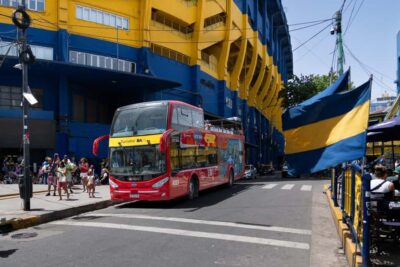
The route includes Estadio Alberto J. Armando, La Bombonera, one of the most emblematic soccer stadiums in the world. You learn why it matters: it was inaugurated on May 25, 1940, and it holds about 40,000 seated spectators, with up to 57,000 when seated and standing areas are counted.
You also hear the Maradona connection, Diego Armando Maradona described it like the temple of the Mouth. Whether you’re a diehard fan or just curious, this is one of those stops where the guide’s soccer knowledge turns a building into a cultural landmark.
Important practical note: the route includes a quick stadium visit, but a ticket to the Museum of Boca Juniors stadium is not included. If you want to go inside exhibits, you’ll likely need to plan that separately.
Mercado San Telmo: Where Old Shops and Antiques Share Space
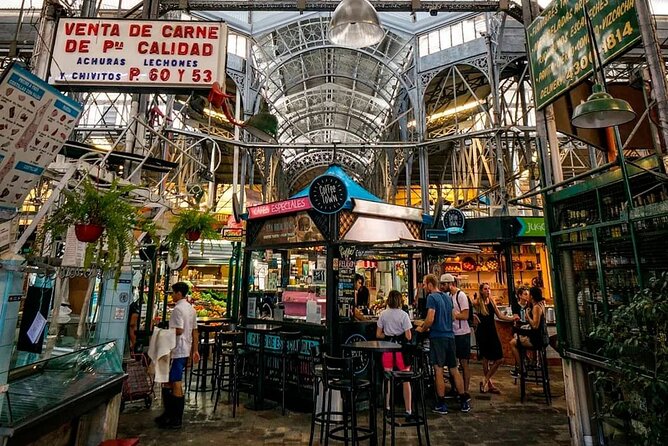
In San Telmo you reach Mercado San Telmo, a large indoor market where old-school stalls still exist alongside antique dealers. It’s a classic “you can browse” place, and it’s especially useful for travelers who want a break from landmarks and want to see local commerce at street level.
You’ll notice the mix immediately. Some stalls keep traditional offerings like vegetables and meat, while the rest leans into the antique and tourist side of San Telmo. The market’s building also houses spots with their own entrances from the street, plus two notable bars: San Pedro Telmo and La Coruña.
For planning, keep your expectations flexible. This is not an all-day shopping center. With the time you have, you’re going to browse, grab one snack if you want (not included), and move on with a better feel for the neighborhood.
Avenida de Mayo and Casa Rosada: The Political Heart Through a Walk-Like Route
From Plaza de Mayo area connections, you go onto Avenida de Mayo, a major artery often compared to Madrid’s Gran Via style. The guided timing here helps because you’re not just seeing buildings, you’re seeing how the city’s power corridors shape movement and identity.
Avenida de Mayo is officially opened in 1894, and the guide frames it as a kind of history timeline. That’s why this stretch can feel more meaningful than it sounds on paper.
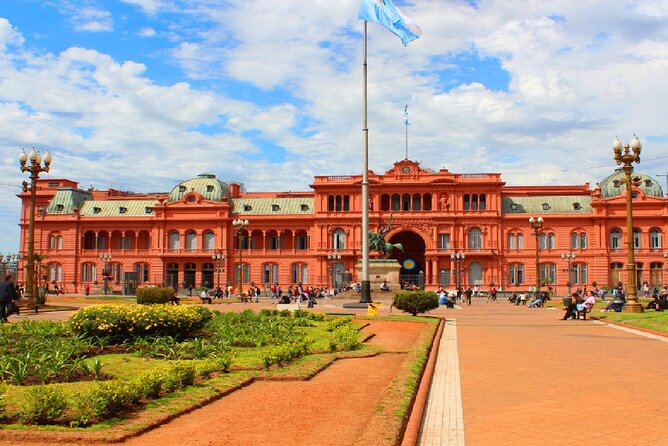
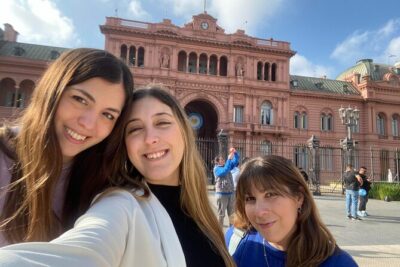
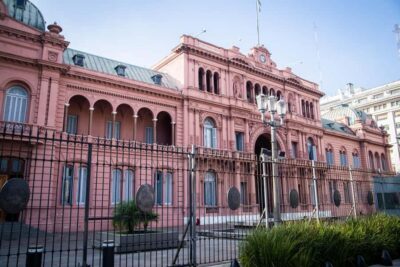
Then comes Casa Rosada, the pink presidential palace in front of Plaza de Mayo. It occupies the site where a fort stood starting in 1580, and it evolved from colonial-era authority under Spanish viceroys to later national government headquarters. The current building is the result of merging earlier structures, including the presidential headquarters and the postal palace at the corner of Hipólito Yrigoyen and Balcarce.
If you want the best photos, spend your time on angles that include Plaza views rather than only the façade. With the short stop length, you want a strong shot that anchors the place, then a second one that shows surroundings.
Catedral Metropolitana: Neoclassical Lines and a Construction Story That Took Forever
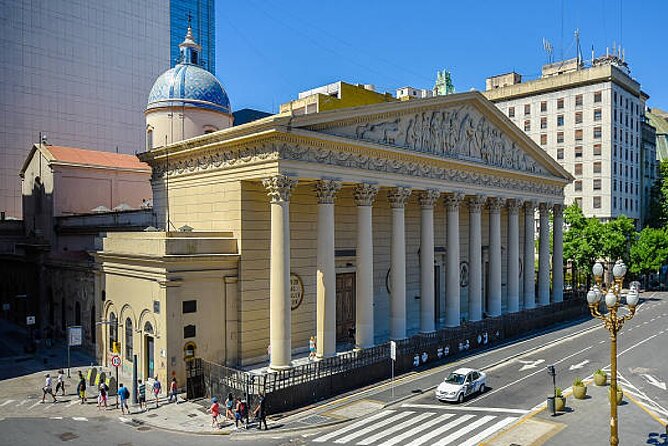
Buenos Aires’ main Catholic church, the Catedral, is in a key central location and carries a long construction record. The current building is the sixth structure on that site since the city was refounded in the area.
The style detail matters here. The final structure is neoclassical, and it has a profile that makes it feel closer to a Greek temple than the classic cathedral silhouettes you might expect.
This stop is brief, but it adds texture. It helps you understand that this part of the city is not just political, it’s also architectural and religious history stacked over centuries.
Puente de la Mujer and Puerto Madero: Modern Architecture That Still Feels Like Tango
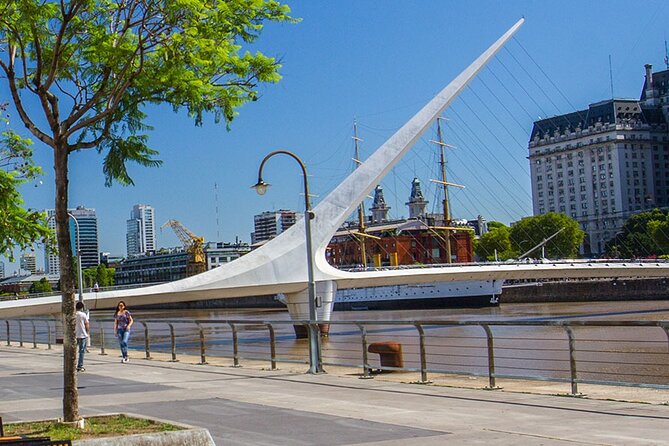
The tour moves into Puerto Madero for Puente de la Mujer, one of the area’s signature landmarks. This is described as the first Latin America work by architect Santiago Calatrava.
The bridge is a revolving pedestrian bridge designed so sailing vessels can pass through docks. Architecturally, it’s tied to movement and engineering, but visually it reads like a tango pose, a dancing couple where the white pole symbolizes the man and the curved silhouette symbolizes the woman.
This is a great stop if you like modern design. It’s also a good counterweight to the older stone and institutional buildings around Plaza de Mayo. You’ll likely take photos from multiple angles because it has that “look again” design.
Rosedal de Palermo: A Garden Stop That Feels Like a Pause
Next is Rosedal de Palermo, inside Parque 3 de Febrero. The Rosedal is known for more than 18,000 roses and a lake that wraps around the garden area.
You also get historical context: the land belonged to Juan Manuel de Rosas until the Battle of Caseros in 1852. Landscaping began with Carlos Thays, and his disciple Benito Carrasco finished the work in 1914.
This stop works because it’s not rushed like a museum. Even with a short visit, you get a change of pace. I recommend you slow down here, even if only for 10 minutes, because it helps balance the earlier dense sightseeing.
Recoleta and Evita’s Mausoleums: Why This Cemetery Area Is So Famous
In Recoleta, you get the neighborhood story first: it’s named for the Recoletos monks, and the cemetery was built in what used to be their garden area.
Then the big reason the area gets so much attention: imposing mausoleums and vaults belonging to major Argentine historical figures. Eva Perón (Evita) is one of the most famous tombs people come to see. The architecture is part of the draw too, with marbles and sculptures and work by important architects.
There are more than 90 vaults declared a National Historic Monument. That’s the kind of line that helps explain why Recoleta Cemetery gets its own reputation.
Practical note: the ticket to the Cemetery of Recoleta is not included. If cemetery entry is a priority for you, you’ll want to budget for it separately. If it’s not, the Recoleta neighborhood itself is still worth a walk for atmosphere and architecture.
El Ateneo Grand Splendid: The Bookstore in a Former Movie Theater
One of the most fun stops is El Ateneo Grand Splendid, often called the most beautiful bookstore in the world. It’s housed in a former Grand Splendid movie theater, keeping the building’s elegance, including a frescoed cupola and original railings.
The stage area still reads like a theater, with a bar where you can sit with a book. There are armchairs throughout the main room, and the boxes function like small reading spaces.
The layout is part of the charm. The basement has a kids’ section, and the upper floor is used for samples and exhibitions. Even if you do not buy anything, you’ll likely want to wander just to see how the space works.
This is also where you can slow down without feeling like you’re “behind” the tour.
Floralis Generica: A Mechanical Flower That Moves With Light and Time
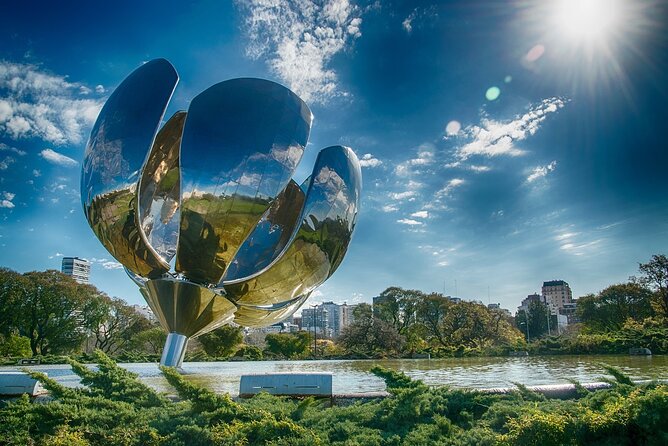
Finish your modern-leaning side with Floralis Generica in the United Nations square area. This is a huge sculpture, about 20 meters high, made of stainless steel and aluminum and weighing 18 tons.
What makes it special is the system controlling it. It’s described as the first sculpture in movement controlled by a combination of a hydraulic system and photoelectric cells. It was inaugurated on April 13, 2002, and the name is a tribute to all flowers.
This stop is a photo favorite because it changes your frame as you watch it and because it’s a large subject with a clean silhouette. With your time window, aim for one wide shot showing the scale, then a closer one that captures the structure’s details.
The Leather Factory Stop: Shopping Without the Hard Sell Setup
A big included extra on this tour is a stop at the biggest leather factory in Buenos Aires. The data here doesn’t spell out whether it’s a long guided demonstration or mostly a showroom browse, so approach it like a planned shopping opportunity rather than a must-do cultural museum.
If you’re interested in leather goods, this is your moment to compare styles and prices in a place built around the trade. If you’re not, keep it simple, look around briefly, and focus your energy on the architectural and neighborhood stops.
Who This Tour Fits Best, and Who Might Want Something Different
This tour fits best if you want a first pass through Buenos Aires and you like the idea of seeing several neighborhoods in one half day. It’s also a solid choice if you travel with friends or family, because the group price is set for up to four people.
You’ll also enjoy it if you care about history and you want stories delivered while you travel, not only while you’re standing in front of plaques.
You might want a different setup if you’re the type who needs long museum time or wants to enter multiple interiors. With the short stops at each site, you may leave wanting more time in just one area.
Should You Book This Buenos Aires Private City Tour?
I’d book it if you’re trying to hit the highlights with a local guide, and you want an efficient way to connect neighborhoods in a short window. The biggest selling points are practical: private transport, a bilingual guide, and a route that balances landmarks with culture stops like Mercado San Telmo and El Ateneo Grand Splendid.
I’d hesitate only if you already plan a full day just for Recoleta Cemetery or the Boca stadium museum, because this experience is built for quick, well-timed visits. In that case, you can still book it, just treat it as your orientation day, then return later for the deeper dives.
FAQ
How long is the Buenos Aires private city tour?
It lasts about 4 hours.
How many people is the tour for?
It is a private experience for up to 4 people per group.
What’s included with the tour?
You get private transportation, an air-conditioned vehicle, a bilingual guide throughout, mate and alfajores tasting, and a visit connected to the biggest leather factory in Buenos Aires.
Is the Recoleta Cemetery ticket included?
No. The ticket to the Cemetery of Recoleta is not included.
Is the Boca Juniors stadium museum ticket included?
No. The ticket to the Museum of Boca Juniors Stadium is not included.
Can I cancel for a refund?
Yes, there is free cancellation if you cancel at least 24 hours in advance for a full refund.
More Guided in Buenos Aires

More Tours in Buenos Aires
More Tour Reviews in Buenos Aires

Newest Buenos Aires write-ups on the desk
- Tango Show at El Querandi with optional Dinner★ 4.2 · 3 reviews
- Velez Sarsfield Football Match★ 5.0 · 3 reviews
- Tango Show at: MichelAngelo★ 4.5 · 3 reviews
- Guided tour Boca Juniors Museum & Stadium + Caminito★ 3.3 · 3 reviews
- From Colonialism to Eclecticism, Buenos Aires arquitectonica★ 5.0 · 3 reviews
- Enjoy a Rural Experience in a Vineyard near Buenos Aires★ 4.7 · 3 reviews
The rest of the City Tours list.
 ★ 4.7Buenos Aires: City Highlights Guided Tour with TransferFrom $381,946 reviews
 ★ 4.2Buenos Aires: Hop-On Hop-Off City Bus TourFrom $351,855 reviews
 ★ 4.0Best of Buenos Aires: Guided Sightseeing City TourFrom $35402 reviews
 ★ 3.8Classic City Tour of Buenos Aires: Neighborhoods and EmblemsFrom $45282 reviews
 ★ 4.4Ushuaia: Panoramic City Train TourFrom $20155 reviews
 ★ 4.5Tierra del Fuego National Park, Ushuaia City Tour Shore ExcursionFrom $119154 reviews
 ★ 4.7Buenos Aires Private City Tour with a local guideFrom $14992 reviews
 ★ 4.0Buenos Aires Premium City TourFrom $7887 reviews
Lists this one is on