
REVIEW · WALKING TOURS
Full Day Private Walking Tour of Buenos Aires Neighborhoods
One day, seven Buenos Aires neighborhoods. This private tour links major landmarks with real local context, and I love Recoleta Cemetery as your history starter, plus the fact that it is private, so your guide can pace the walk and tailor the day to you.
The tradeoff is time and feet, since you’re out for about 7 hours and food is not included, so you’ll want to plan a lunch stop on your own.
In This Review
- Key highlights at a glance
- A 7-hour hit list of Buenos Aires, built for first-timers
- Recoleta Cemetery: the history starter you won’t forget
- Recoleta neighborhood stroll: palaces, cafes, and the Paris comparison
- Plaza General San Martin and the Retiro skyline views
- Obelisco and Diagonal Norte: where theatre energy meets the classics
- Plaza de Mayo: Pink House, cathedral cues, and colonial roots
- San Telmo: antiques, tango street energy, and Sunday market vibes
- La Boca: port beginnings, conventillos, and color that still matters
- Price and value: what $135 covers and why it feels fair
- The guide experience that makes the day feel personal
- What to wear and how to plan your day
- Should you book this private Buenos Aires neighborhood tour?
- FAQ
- How long is the private walking tour of Buenos Aires neighborhoods?
- How much does the tour cost?
- What is included in the tour price?
- Is food and drink included?
- Is the Recoleta Cemetery entrance fee included?
- Is this tour private?
- Do you use the subway during the day?
- What stops and neighborhoods are included?
- What days and times does the tour operate?
- Can I cancel for a full refund, and is USD recommended?
Key highlights at a glance
- Recoleta Cemetery first: the sculptures and famous tomb stories set the whole city’s tone.
- Walking plus subway plus rides: you cover a lot without burning out on long stretches.
- Landmarks in a smart loop: Retiro views, Obelisco, Plaza de Mayo, then on to San Telmo and La Boca.
- Architecture stops you can actually see: Kavanagh Building, British Tower, and the Plaza San Martin viewpoints.
- Two classic neighborhood moods: San Telmo for antiques and tango energy, La Boca for port-age color.
- A guide who keeps improving the day: feedback from real bookings shows strong planning and customization.
Other routes on foot in Buenos Aires
- Buenos Aires Hop-On Hop-Off Bus, Free Walking Tours & Discounts
★ 4.5 · 2,218 reviews - Buenos Aires: La Boca Guided Walking Tour in English
★ 4.8 · 1,587 reviews - Nazis in Buenos Aires: a historical walking tour
★ 4.9 · 193 reviews - Buenos Aires: Personalized 2 to 8-Hour Private Walking Tour
★ 4.7 · 149 reviews
A 7-hour hit list of Buenos Aires, built for first-timers
If you only have one full day, this tour is the kind that helps you get your bearings fast. You’re not doing one “see everything by foot” shuffle. Instead, you move in a loop through Buenos Aires’ biggest postcard layers, with the right amount of walking and the occasional ride or subway hop so the day stays doable.
I also like that it’s private, not a crowded group route. That matters in a city where you can spend time just waiting for people to regroup. Here, the day is structured so you keep momentum and still have room for questions.
Finally, there’s a practical sense of flow. You start with a deep cultural anchor, then you move to neighborhoods, plazas, and skyline views, finishing where the city’s port identity still shows up in the streets.
Recoleta Cemetery: the history starter you won’t forget
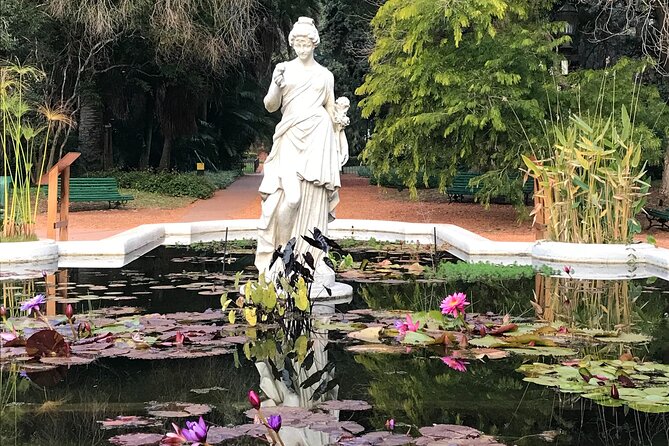
The day begins at La Recoleta Cemetery, and it’s a clever choice. Even if you think you’re just going to “look at graves,” you’ll quickly see why this cemetery is famous. The sculptures and above-ground tombs feel like public art, and your guide’s storytelling connects names and eras to the political and social story Argentina still talks about today.
You’ll focus on the sculptures and the most interesting, often missed works, not just a quick walk past a wall of stone. A big plus here is that the entrance fee (about $15 USD per person) is included in the tour price, so you’re not doing currency math at the gate.
One caution: cemeteries require a bit of respect and patience. It’s not a “snap photos and go” stop. If you enjoy human stories, symbols, and what people choose to memorialize, this is one of the best ways to understand the country before you hit the neighborhoods.
Recoleta neighborhood stroll: palaces, cafes, and the Paris comparison
After the cemetery, you shift into Recoleta itself. This is where Buenos Aires earn its nickname of the Paris of South America, at least in the way the streets, architecture, and high-end pace feel. Expect a guided walk through some of the neighborhood’s most attractive streets and buildings: luxurious homes, impressive palaces, and the kind of café culture that makes people slow down.
This stop works for you if you want two things at once:
- Architecture that’s easy to notice without needing a museum ticket.
- A sense of how Buenos Aires layers wealth, style, and social life right into the street scene.
The drawback is that Recoleta is also one of the most “polished” areas of the city. If you want raw grit and tight local streets in the first hour, you might find it a calmer start than expected. But as a warm-up before the more bohemian neighborhoods later, it’s a good balance.
The same idea, run privately, in Buenos Aires
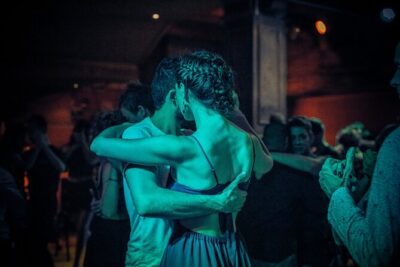


Plaza General San Martin and the Retiro skyline views
Next comes Plaza General San Martín, and the key word here is viewpoints. From this plaza, you get a tidy sweep of architectural highlights. Your route includes the Retiro train station area, the British Tower, the Kavanagh Building (a strong example of rationalist architecture), and nearby palaces such as San Martin y Paz.
What I like about this part of the tour is that it gives you context for the city’s “big building” identity. You’re not just looking up, you’re learning how these landmarks connect to the way Buenos Aires grew and wanted to present itself.
After the views, you’ll take the subway. That’s an important practical touch. It keeps the tour moving while also letting you experience the city’s transit in a way that feels like Buenos Aires, not just a checklist.
Obelisco and Diagonal Norte: where theatre energy meets the classics
From the Retiro area, you reach the Obelisco, the centerpoint of 9 de Julio, the widest avenue on the planet. Yes, that’s the kind of fact you’ll hear in guidebooks, but the real payoff is what it does to your mental map. From here, the city shifts into a busy, central core that feels like a cultural stage.
Your walk down Diagonal Norte keeps the Obelisco in view while you move through the theatre district orbit. Your guide connects this area to Buenos Aires’ love of live performance, including Teatro Colón, plus the cluster of Broadway-style theatres around you.
This is a great stop if you like city energy, because you’re seeing people out and about, not a quiet monument. If you prefer slower, less crowded stops, you might find this section busier than the cemetery and plazas. Still, it’s one of the best ways to understand why Buenos Aires feels theatrical even when you’re just walking.
Plaza de Mayo: Pink House, cathedral cues, and colonial roots
Now you get the civic heart: Plaza de Mayo. This plaza is intense in the best way. It’s not one monument. It’s a whole stage of government and religion, with multiple landmarks within walking distance.
You’ll see:
- The Pink House, Argentina’s version of the White House
- The national Cathedral, where Pope Francis used to work
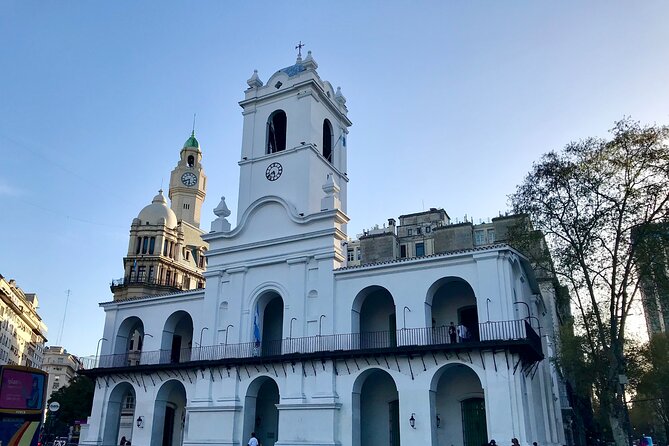
- The Cabildo, Argentina’s first government building when it was still a Spanish colony
- Other significant historic buildings ringing the square
This is where the tour pays off for people who like understanding why places look the way they do. It’s easy to view Plaza de Mayo as “the main square.” With the guide’s framing, it becomes a shortcut to how power, faith, and colonial history stack up in one place.
A small consideration: this area can be lively and change with daily events. The good news is that your guide’s pacing and interpretation help you read what you’re seeing without getting stuck waiting for perfect conditions.
San Telmo: antiques, tango street energy, and Sunday market vibes
Next comes San Telmo, and the mood shift is real. This neighborhood used to be where the wealthiest families lived. Then yellow fever epidemics pushed the wealthy toward areas like Recoleta and Retiro, and San Telmo gradually changed.
What you get today is a bohemian, working-life blend: antiques, tango culture, cafes, bars, and restaurants. The tour also points you toward the San Telmo Street Market, held every Sunday, which is a big reason people build their schedules around coming here.
I especially like San Telmo for travelers who want something more than photos. It’s the kind of place where you can snack, browse, and watch street tango, all while absorbing the neighborhood’s slower rhythm.
The only caution is comfort and timing. San Telmo can mean uneven sidewalks and more “stop and look” moments than earlier plazas. If you’re sensitive to crowds, plan to take breaks and let your guide know what kind of pace you want.
La Boca: port beginnings, conventillos, and color that still matters
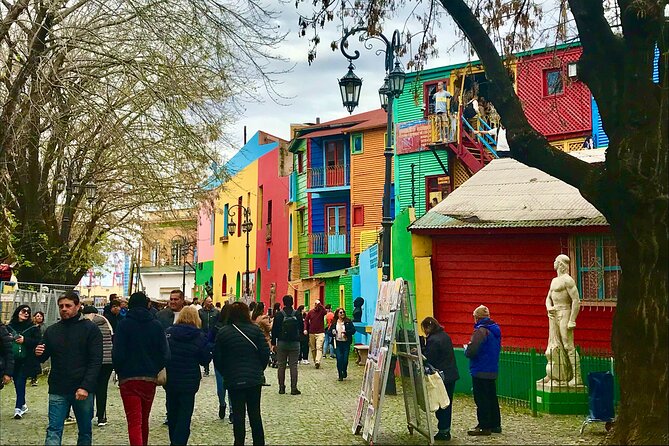
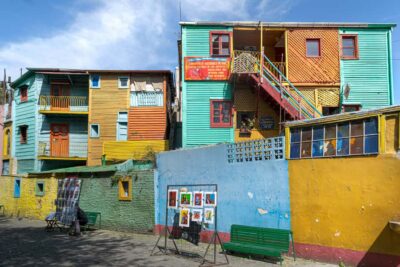
The final neighborhood is La Boca, home to the city’s original port. Today it’s most famous for colorful streets and for the way tango, art, and fútbol show up in everyday life.
Your guide connects the neighborhood’s transformation: old labor housing called conventillos now appear as cafes, steakhouses, and souvenir shops. That means you can walk through a place that still carries the city’s working history, even if it’s now dressed for visitors.
If you like buying small keepsakes, this is the part of the day where you’ll probably feel the urge. But you can also keep it simple and focus on the street scene, the art energy, and the local personality that makes La Boca feel like a living postcard rather than a theme park.
At the end, you’re transported back to your abode, which is a big help after a full day. The city’s traffic and distances can mess up the final hour of a walking tour, so having the wrap-up arranged is smart.
Price and value: what $135 covers and why it feels fair
The price is $135 per person for about 7 hours. That sounds like a lot until you look at what’s included. You get:
- Private tour service for your group
- Transport costs during the tour (including private car, taxi, bus, or subway)
- Private transportation at the beginning and end of the day
- Entrance fee for Recoleta Cemetery (about $15 USD per person)
Food and drink are not included, so you will budget for lunch or snacks. But you’re also not forced into a set-menu tourist trap. The structure leaves room for a meal where it makes sense for you.
One other value signal: this tour is booked far in advance on average. That usually means people find it useful when planning a first visit, or when they want a guided sweep of major neighborhoods without wasting time.
The guide experience that makes the day feel personal
A big theme in the experience is guide style, and the name that shows up often is Tracy. She’s described as bilingual, and her communication in English makes the day easier to follow if your Spanish is limited. More importantly, the guide approach is about storytelling you can use, not just facts you forget.
Several key things stand out about how the day is managed:
- Planning before you arrive: Tracy reaches out in advance and helps with practical tips for Buenos Aires.
- Pacing and customization: the tour can adapt, including changes that help you shop for specific items like tango shoes.
- Follow-up support: guidance does not end when the tour ends.
- Extra help via a colleague: there’s mention of Osvaldo providing driving services when needed, with an on-time, easygoing approach.
That kind of support matters in Buenos Aires because your best day depends on timing and local know-how. If your schedule is tight, a guide who can adjust makes a big difference.
What to wear and how to plan your day
This is a walking-heavy day with real-city logistics. So:
- Wear comfortable shoes. The itinerary mixes walking and transfers, but you’ll still be on your feet.
- Bring layers. Buenos Aires weather can shift, and you’ll be in sun, shade, and transit spaces.
- Plan for lunch outside the tour price. Since food is not included, decide whether you want a sit-down meal or a quick stop during the day.
Also, consider your currency strategy. Because the Argentine Peso can be volatile, the tour advises against booking in ARS. The price is set in USD and converted accordingly, unless you choose to set a manual conversion rate. If you want fewer surprises, pay attention to which currency you select.
Should you book this private Buenos Aires neighborhood tour?
Book it if:
- You have one full day and you want the city’s biggest neighborhoods connected in a smart loop.
- You like historical context and architecture, not just sightseeing.
- You want private guide attention and a day that ends with transportation back to you, not a scramble.
Skip it (or consider a shorter plan) if:
- You prefer to move slowly and spend more time in one neighborhood rather than seeing many.
- You don’t like guided structure and would rather wander independently for longer.
- You’re not comfortable with a day that runs about 7 hours with mixed walking and transit.
My quick verdict: this is a strong value for what you get, especially because the cemetery entrance is included and you’re not paying extra for the day’s transit moves. It’s the kind of tour that helps you understand Buenos Aires fast, then gives you enough context to enjoy your remaining time without feeling lost.
FAQ
How long is the private walking tour of Buenos Aires neighborhoods?
It runs about 7 hours.
How much does the tour cost?
The price is $135.00 per person.
What is included in the tour price?
Transportation costs during the tour are included, along with private transportation at the start and end. The Recoleta Cemetery entrance fee is also included.
Is food and drink included?
No. Food and drink are not included.
Is the Recoleta Cemetery entrance fee included?
Yes. The entrance fee is included in the tour price (about $15 USD per person).
Is this tour private?
Yes. It is a private tour, and only your group participates.
Do you use the subway during the day?
Yes. The tour includes taking the subway from Plaza General San Martín to the next destination.
What stops and neighborhoods are included?
The tour includes La Recoleta Cemetery, Recoleta, Plaza General San Martín, the Obelisco, Plaza de Mayo, San Telmo, and La Boca.
What days and times does the tour operate?
It runs Monday through Sunday, and the listed opening hours are 9:00 AM to 11:00 AM.
Can I cancel for a full refund, and is USD recommended?
Yes, free cancellation is available up to 24 hours in advance for a full refund. The tour also advises not booking in Argentine Peso (ARS) due to volatility, and that pricing is set in USD with local conversion unless you set a manual conversion rate.
Buenos Aires at Walking Pace, Elsewhere
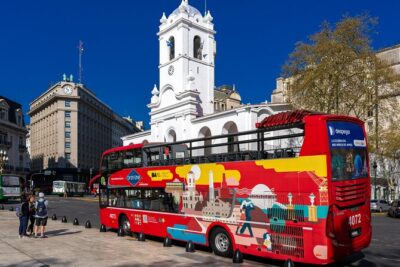
More Tours in Buenos Aires

More Tour Reviews in Buenos Aires
Newest Buenos Aires write-ups on the desk
- Tango Show at El Querandi with optional Dinner★ 4.2 · 3 reviews
- Velez Sarsfield Football Match★ 5.0 · 3 reviews
- Tango Show at: MichelAngelo★ 4.5 · 3 reviews
- Guided tour Boca Juniors Museum & Stadium + Caminito★ 3.3 · 3 reviews
- From Colonialism to Eclecticism, Buenos Aires arquitectonica★ 5.0 · 3 reviews
- Enjoy a Rural Experience in a Vineyard near Buenos Aires★ 4.7 · 3 reviews
The rest of the Walking Tours list.
 ★ 4.8Buenos Aires: La Boca Guided Walking Tour in EnglishFrom $131,587 reviews
 ★ 4.9Nazis in Buenos Aires: a historical walking tourFrom $25193 reviews
 ★ 4.8Bariloche: German Immigration and History Walking TourFrom $41169 reviews
 ★ 4.7Buenos Aires: Personalized 2 to 8-Hour Private Walking TourFrom $37149 reviews
 ★ 4.7La Docta Free Walking Tour “Córdoba La Antigua”.From $0104 reviews
 ★ 4.8Buenos Aires: San Telmo and Market Guided Walking TourFrom $13102 reviews
 ★ 4.5Buenos Aires Walking Tour with Local Guide and Optional RooftopFrom $11187 reviews
 ★ 4.5Penguin walk in Ushuaia + navigation optionFrom $29181 reviews
Lists this one is on