
REVIEW · WALKING TOURS
Best of Buenos Aires Private Walking Tour
Buenos Aires tells stories in stone and iron. On this private walking tour, you connect the shopping glitter of Calle Florida with iconic landmarks like the Edificio Kavanagh, then finish in Recoleta where the city’s graveyard history feels oddly dramatic and human.
I especially love how the walk blends architecture with the “why it exists” behind it. You also get a guide who can turn details into picture-perfect moments, with guide names like Mariano, Martin, and Carlos coming up in praise for clear English and entertaining stories.
One possible drawback: this is solid walking in a tight loop. It is not a casual stroll, and if you are sensitive to distance, you may want to pace yourself and keep comfortable shoes ready.
In This Review
- Key highlights you will feel right away
- Start smart: how to get going from Florida Garden and keep the pace comfortable
- Calle Florida: shopping street, history corridor, and your first Buenos Aires “aha”
- Basilica del Santisimo Sacramento: family-built beauty with a taste for drama
- Edificio Kavanagh: the Art Deco skyscraper with an Irish millionaire origin story
- Torre Monumental and the Malvinas/Falklands memorial: British influence, in one glance
- Plaza General San Martín: civic space that has held everything
- Palacio Paz and Palacio San Martín: French materials, Anchorena ambition, and how wealth shaped streets
- Embassies and institutions: why politics and faith show up in the streets
- Patio Bullrich: from English-built livestock auctions to posh shopping
- Recoleta and Barrio Norte: Avenida Alvear’s mansion rhythm
- Basilica de Nuestra Senora del Pilar: colonial architecture with a timeline
- The Holy Sacrament and extra churches: why the stops are more than decoration
- Recoleta Cemetery: where the stories get intense, and why you should plan to go slow
- La Biela: your graceful exit point to keep exploring at your speed
- Price and value: what $109 buys you in real terms
- Who should book this Buenos Aires walk (and who might want a different style)
- Should you book this private Buenos Aires tour?
- FAQ
- How long is the walking tour?
- Does the tour run in rain?
- Where do we meet, and what time should we arrive?
- What is included in the price, and what is not?
- Do I need to buy Recoleta Cemetery tickets separately?
- What is the cancellation refund policy?
Key highlights you will feel right away
- Calle Florida to Kavanagh: old downtown streets to Buenos Aires’ tallest Art Deco moment
- Torre Monumental and Malvinas memorial: British legacy and the 1982 South Atlantic war, right there in plain sight
- Barrio Norte palaces and Paris-of-the-South mood: Avenida Alvear, Estrugamou-style elegance, and big-statement mansions
- Recoleta Cemetery as the star stop: Evita Peron and other well-known names, plus a lot of guided context
- Private guide attention: the pace can be brisk, but the stories stay focused and funny
Other routes on foot in Buenos Aires
- Buenos Aires Hop-On Hop-Off Bus, Free Walking Tours & Discounts
★ 4.5 · 2,218 reviews - Buenos Aires: La Boca Guided Walking Tour in English
★ 4.8 · 1,587 reviews - Nazis in Buenos Aires: a historical walking tour
★ 4.9 · 193 reviews - Buenos Aires: Personalized 2 to 8-Hour Private Walking Tour
★ 4.7 · 149 reviews
Start smart: how to get going from Florida Garden and keep the pace comfortable
The tour meets at Buenos Aires Walking Tours, near Florida Garden at Florida 899 (corner of Paraguay St.), and you should plan to be there at the start time, no later than 10am. The easiest way to spot the guide is to look for a small BA Walking Tours sign held in-hand or worn.
Since this is a private tour, you only share the group with your party. That matters because the guide can adjust the tempo to your comfort level, but the route still covers a lot of ground. From the reviews, I liked the consistent theme: it is lively and efficient, not dragged out. If you are the type who likes to stop for photos, tell your guide early so you do it without feeling left behind.
A practical note: the tour runs rain or shine, and the full route can shift a bit based on weather or local conditions. Bring a light rain layer if skies look suspicious, and wear shoes that can handle long city sidewalks.
Calle Florida: shopping street, history corridor, and your first Buenos Aires “aha”
Your walk begins on Calle Florida, one of the oldest streets in town and the city’s famous shopping spine. Your guide explains how this route connects major civic spaces, so it stops feeling like “just another pedestrian lane” and starts feeling like the skeleton of downtown Buenos Aires.
This is a great early stop because it sets expectations. Calle Florida gives you the rhythm of the city, busy enough to feel alive, but still close to the landmarks you want for photos. If you are visiting for the first time, this is the moment where your brain starts mapping where everything is.
Basilica del Santisimo Sacramento: family-built beauty with a taste for drama
Next comes the Basilica del Santisimo Sacramento, built in 1916 for Lady Mercedes Anchorena’s family. It is one of those places where the exterior and setting already hint at something special, then the stories push it over the edge into “how did I not know this?”
What makes this stop useful on a walking tour is that you learn to look at buildings, not just pass them. The guide’s focus on curious, human details helps you understand how power, family ambition, and faith all tangle together in Buenos Aires, even when you are standing on a sidewalk at street level.
The same idea, run privately, in Buenos Aires


Edificio Kavanagh: the Art Deco skyscraper with an Irish millionaire origin story
Then you reach the Edificio Kavanagh, Buenos Aires’ tallest Art Deco skyscraper, overlooking Plaza San Martín. This is a major stop for a reason: it is a landmark you have probably seen in photos, but on foot you get context, scale, and a better sense of how it dominates the skyline from street view.
Here are the specifics worth noting. The building was commissioned in 1934 by Corina Kavanagh, a millionaire woman of Irish descent, and it was constructed in just 14 months. It is also described as having UNESCO heritage building status.
Why I like this stop for your experience: it gives you a clean before-and-after feeling. You go from historic downtown texture to a modern-feeling skyline symbol, and you learn how quickly Buenos Aires could build big when it chose to.
Torre Monumental and the Malvinas/Falklands memorial: British influence, in one glance
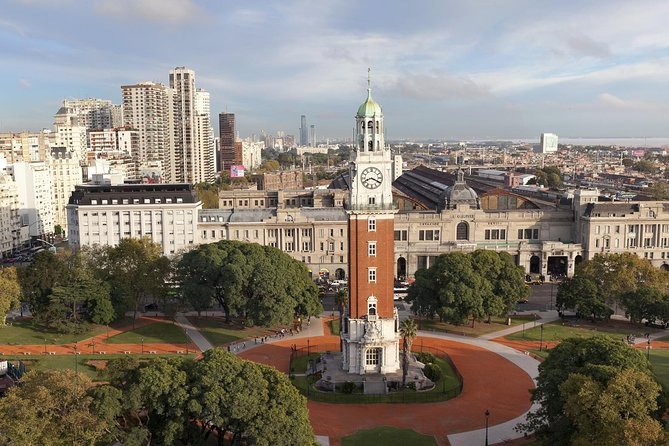
Next is the Torre Monumental, a British-clock-tower style landmark, placed right beside a memorial tied to the 1982 South Atlantic war (Malvinas/Falklands). This is where the tour does something most “pretty city” walks do not: it tackles the political and cultural connection between Argentina and England without burying you in textbooks.
You do not have to love history to appreciate this stop. It is more effective because it is visual. You can stand at the tower, look across at the memorial, and immediately understand why the guide keeps mentioning British presence in Buenos Aires. You also get the sense that Argentina’s relationship with England is not just old news, it is still part of the city’s geography and memory.
Plaza General San Martín: civic space that has held everything
From there you move into Plaza General San Martín, described as packed with layers. Your guide connects the park to older city life, including mentions of slave depots nearby in the past and a wide range of uses over time, like a fort and a bullfight ring.
Today it is anchored by the monument to General José de San Martín, with the guide explaining his full story. This stop works because it turns a green space into a narrative map. Instead of “nice plaza,” you get “this is where national identity got built in public.”
Palacio Paz and Palacio San Martín: French materials, Anchorena ambition, and how wealth shaped streets
The route continues into Barrio Norte style grandeur with two standout palace stops.
First is Palacio Paz, built in 1914 for José C. Paz. The guide emphasizes the French connection here: it was built with materials imported from France, and it was designed for a family of four in a sprawling 120-room setting. On a walking tour, that “how big and how imported” detail matters because it makes you see these buildings as projects of identity, not just architecture.
Then comes Palacio San Martín, described as essentially the Anchorena family palace, called San Martín for political reasons. The guide connects it to Mercedes Anchorena, the woman behind the family’s build-out, including stories about the nearby church for her family.
Why these stops are more than sightseeing: they explain how Buenos Aires used European style as a language. If you have heard the city compared to Paris, these palaces are part of why the comparison sticks. They show you the translation, not just the stereotype.
Embassies and institutions: why politics and faith show up in the streets
The walk also includes stops tied to religion, diplomacy, and politics, and this is a good moment to know what you are signing up for. This is not only about pretty facades.
You pass the Plaza Israeli Embassy, where in 1992 a bomb blast destroyed the embassy and 24 people were killed. The guide explains what happened and why it remains part of the conversation around justice in Argentina.
You also stop near the Embajada de Francia, originally the Ortiz-Basualdo Palace. One of the fun details you get here is an old-world gossip tidbit: the visit of Edward VII of England with his American wife-to-be.
And later there is the Embajada De La Santa Sede Nunciatura Apostolica, where your guide frames the big question of why an Argentine Pope matters and how ultra-rich circles and the Church connect, including mention of Adelia Harilaos and her palace donation to the Vatican.
If you usually skip politics while traveling, this is your compromise. These stops make history concrete. You see where events happened, then you get just enough background to understand why the city remembers.
Patio Bullrich: from English-built livestock auctions to posh shopping
Then you hit Shopping Patio Bullrich, a mall in what used to be an auction house. The key detail: the guide explains how British influence runs deeper than you might guess until you see it.
The original auction house was built in 1867 for the Bullrich family, designed by English Argentine architect Juan Waldorp. It served as a major sales floor for livestock, including prize bulls and thoroughbreds, plus it acted as a consignment house for valuable heirlooms and collectibles.
This stop is a reminder that Buenos Aires is not frozen in time. Old commerce gets repackaged as modern consumption. You get to notice the transformation on foot, without feeling like you need a museum ticket to understand the city’s changes.
Recoleta and Barrio Norte: Avenida Alvear’s mansion rhythm
At this point, you are in the part of the city people associate with the Paris of the South nickname. Your walk includes Recoleta and Barrio Norte, with the guide explaining the style of the neighborhood and the reasons it became a stroll-worthy, affluent area with Paris-like townhouse energy.
A key corridor is Avenida Alvear, where you stroll past lavish mansions and the guide connects that beauty to the broader story of 1880-1930 immigration in Argentina and the country’s rise and fall. This is one of those “walk and think” segments. You see the polish, and you also learn what built it and what challenged it.
Basilica de Nuestra Senora del Pilar: colonial architecture with a timeline
You also visit the Basilica de Nuestra Señora del Pilar in Recoleta. It is a colonial-style basilica associated with the Franciscan Recoletos monastery, completed in 1732, and described as the second-oldest church in Buenos Aires.
This stop is included with admission. On foot, you can slow down here and focus on the building itself, since the route around it is so full of other sights. The guide’s story helps you read the church as part of the Recoleta neighborhood’s early footprint, not just a place to take a quick photo.
The Holy Sacrament and extra churches: why the stops are more than decoration
In the run-up to Recoleta, you are set up to see several churches, including the Holy Sacrament and Nuestra Señora del Pilar. Even if you do not consider yourself a church person, I think this is worth it because architecture is one of Buenos Aires’ strongest languages.
You learn why churches appear where they do, and how private family devotion and public religious life shaped the city. It also gives you a mental break from street-level shopping and skyscraper photos, which makes the cemetery stop later feel even more meaningful.
Recoleta Cemetery: where the stories get intense, and why you should plan to go slow
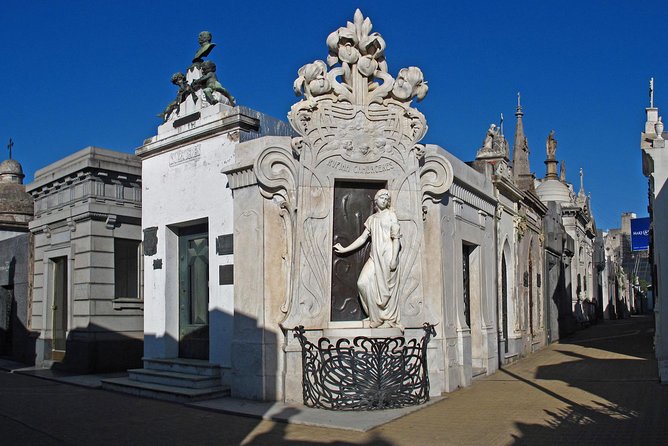
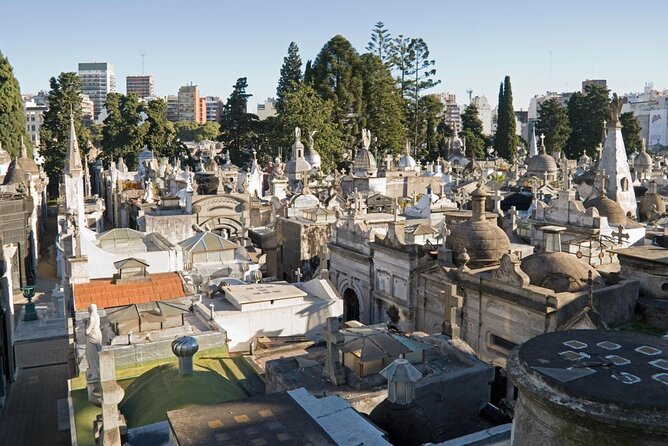
Recoleta Cemetery is where the tour becomes unforgettable for many people. This is a detailed visit with a guided focus, and it is not a quick “look at a few graves and leave.”
Included in the stop are the big, name-recognition points like Evita Peron and her memorial, along with other individual stories such as Rufina Cambaceres, Admiral Brown, and mentions of families and figures like the Leloir, as well as General Guido and other named people the guide covers.
The tour also connects cemetery life to Buenos Aires themes like tango, ports, and immigration. That sounds broad, but on the ground it matters because you start seeing the cemetery as a map of who mattered, who paid for monuments, and how European influence showed up in burials, too.
The stop is described as including more than just graves, with elements like:
- the Pilar Basilica visit
- cultural center and old monastery time
- Palais de Glace, with the angle that tango became of age there
- and even things like a French and Argentina monument and references to museums and design points
One more reason I like this: the guides from the reviews often get praised for turning “cemetery sightseeing” into something that feels like a story tour. If you want a walking tour that has weight, this is it.
La Biela: your graceful exit point to keep exploring at your speed
The tour ends just outside La Biela, a well-known cafe, in the Recoleta neighborhood. The guide uses this as a launchpad so you can choose where to go next on your own.
I like ending here because you are not stuck in a remote spot. You land in an area with food and more sightseeing options, and you can slow down instead of rushing to catch a bus.
If you are planning a second activity that day, keep it flexible around Recoleta Cemetery time. That is where you may lose track of the clock in the best way.
Price and value: what $109 buys you in real terms
At $109 per person for about 3 hours (and listed as about 2.5 hours in the description), this tour is priced for people who want a guided story walkthrough without managing tickets and schedules themselves.
Here is what makes it feel fair value based on what is included:
- a professional English-speaking guide
- Recoleta Cemetery admission ticket
- a route designed to cover at least 25 must-see attractions
- the benefit of a private setup, so you are not competing for the guide’s attention
What is not included is also clear: hotel pickup/drop off and meals. That means you should plan to meet on time, bring your own water, and treat snacks as your own choice.
Also, the tour is typically booked around 59 days in advance on average. If your dates are firm, book earlier rather than hoping for luck.
Who should book this Buenos Aires walk (and who might want a different style)
This tour is a strong fit if you:
- want a first-time orientation that still goes beyond the postcard level
- like architecture and want the “why” behind it, from Kavanagh to palaces
- enjoy stories about how British influence, politics, and religion show up in everyday streets
- want Recoleta Cemetery done properly, not just a quick peek
You might choose differently if you:
- hate long walks, since the route is described by some as solid and fast
- prefer to minimize politics and global history topics, because Malvinas/Falklands, embassy tragedy, and church and state connections are part of the story arc
Families can consider it too. Children 8 and under are free when accompanied by an adult, which makes the tour more manageable for smaller kids who can handle the walking time.
Should you book this private Buenos Aires tour?
If you want one guided walk that links downtown icons to Recoleta culture, I would book it. The big selling point is that it is not just “look at buildings.” It turns streets into causes and landmarks into chapters.
I especially recommend it if you are a photo person, because the route is built around major visual anchors like Calle Florida, Kavanagh, Torre Monumental, Avenida Alvear, and the cemetery. And if you get a guide like the ones named in feedback, Mariano, Martin, or Carlos, you should expect fluent English and stories that actually land.
FAQ
How long is the walking tour?
The tour lasts about 3 hours.
Does the tour run in rain?
Yes, it operates rain or shine.
Where do we meet, and what time should we arrive?
You meet at Buenos Aires Walking Tours near Florida Garden at Florida 899, and the tour starts no later than 10am. Look for the guide holding a small BA Walking Tours sign.
What is included in the price, and what is not?
Included is a professional English-speaking guide and the Recoleta Cemetery admission ticket. Not included are hotel pickup and drop-off and meals.
Do I need to buy Recoleta Cemetery tickets separately?
No. Cemetery admission is included.
What is the cancellation refund policy?
You can cancel for a full refund up to 24 hours in advance of the experience start time. If you cancel less than 24 hours before, the amount paid is not refunded.
Buenos Aires at Walking Pace, Elsewhere
More Tours in Buenos Aires

More Tour Reviews in Buenos Aires
Newest Buenos Aires write-ups on the desk
- Tango Show at El Querandi with optional Dinner★ 4.2 · 3 reviews
- Velez Sarsfield Football Match★ 5.0 · 3 reviews
- Tango Show at: MichelAngelo★ 4.5 · 3 reviews
- Guided tour Boca Juniors Museum & Stadium + Caminito★ 3.3 · 3 reviews
- From Colonialism to Eclecticism, Buenos Aires arquitectonica★ 5.0 · 3 reviews
- Enjoy a Rural Experience in a Vineyard near Buenos Aires★ 4.7 · 3 reviews
The rest of the Walking Tours list.
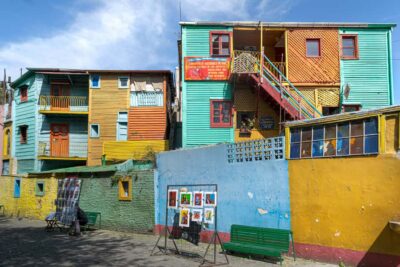 ★ 4.8Buenos Aires: La Boca Guided Walking Tour in EnglishFrom $131,587 reviews
 ★ 4.9Nazis in Buenos Aires: a historical walking tourFrom $25193 reviews
 ★ 4.8Bariloche: German Immigration and History Walking TourFrom $41169 reviews
 ★ 4.7Buenos Aires: Personalized 2 to 8-Hour Private Walking TourFrom $37149 reviews
 ★ 4.7La Docta Free Walking Tour “Córdoba La Antigua”.From $0104 reviews
 ★ 4.8Buenos Aires: San Telmo and Market Guided Walking TourFrom $13102 reviews
 ★ 4.5Buenos Aires Walking Tour with Local Guide and Optional RooftopFrom $11187 reviews
 ★ 4.5Penguin walk in Ushuaia + navigation optionFrom $29181 reviews
Lists this one is on