
REVIEW · WALKING TOURS
Buenos Aires: 7 Hour Small Group “BA 101” Walk
Buenos Aires gets personal fast on foot. This 7-hour small-group walk strings together major sights and real neighborhoods, with an expert guide who keeps the story clear and fun. I really like how it hits the obvious icons (like Plaza de Mayo) without skipping the everyday details that make the city feel lived in.
I also like the practical mix: coffee in the morning, a metro ride, and a proper local lunch, plus you’re not left guessing what to do next. One possible drawback to consider is the pace, you will be walking the whole time, so you’ll want comfortable shoes and the stamina to keep up.
In This Review
- Key highlights to look for
- A 7-hour loop from Recoleta to San Telmo
- Meeting in Recoleta and Barrio Norte, then straight to El Ateneo
- Palacio de Aguas Corrientes, where the city surprises you
- Recoleta Cemetery and Evita’s resting place
- Teatro Colón and Plaza Lavalle, the center of big-city drama
- Avenida 9 de Julio, Obelisk photos, and the “green BA” sign
- Avenida Corrientes and Florida Street, old cafes and shopping streets
- Plaza de Mayo and Casa Rosada, plus the Cathedral and the Pope connection
- San Telmo: market energy at Plaza Dorrego and the Indoor Market
- Price and value for $160, what you’re really paying for
- What the “small group” feels like in practice
- Pace, comfort, and who should skip
- Where this tour fits best in your Buenos Aires plan
- Should you book the BA 101 walk?
- FAQ
- How long is the Buenos Aires BA 101 walk?
- Is it a small group tour?
- What language is the tour guide speaking?
- What is included in the $160 price?
- Where do you meet and where does the tour end?
- What should I bring, and is it wheelchair accessible?
Key highlights to look for
- Semi-private small group (max 7): enough attention for questions, without the chaos of a big bus tour
- Recoleta Cemetery included: entrance fees are part of the price, including the Recoleta Cemetery ticket value
- City-center classics: Obelisk, Teatro Colón, Plaza Lavalle, and Avenida Corrientes
- A local food moment: coffee plus a lunch with main and beverage included
- San Telmo market time: the indoor market, Plaza Dorrego, and cobblestone Defensa Street
- Guides in English: live commentary, designed to help you understand what you’re seeing
Other routes on foot in Buenos Aires
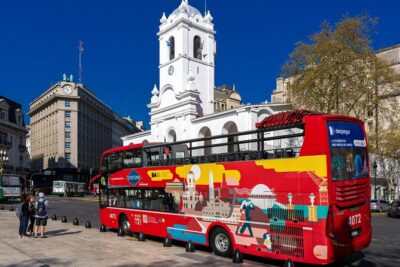
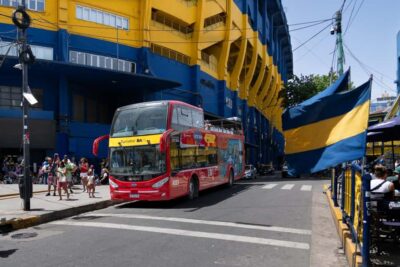
- Buenos Aires Hop-On Hop-Off Bus, Free Walking Tours & Discounts
★ 4.5 · 2,218 reviews - Buenos Aires: La Boca Guided Walking Tour in English
★ 4.8 · 1,587 reviews - Nazis in Buenos Aires: a historical walking tour
★ 4.9 · 193 reviews - Buenos Aires: Personalized 2 to 8-Hour Private Walking Tour
★ 4.7 · 149 reviews
A 7-hour loop from Recoleta to San Telmo
This walk is built like a guided storyline. You start in the Recoleta/Barrio Norte area and end in San Telmo, so you get an easy sense of how the city changes as you move. The day is long enough to cover the big-name stops you keep hearing about, but it also gives you time for the texture stuff, like plazas, cafe stops, market lanes, and photo moments.
Because the group is limited to 7 participants, the guide can slow down when you want more context, or speed up when you’re eager to keep moving. If you’re the type who likes to ask why a place looks the way it does, this setup usually works better than a crowded tour.
The tour is also structured to keep you from running on empty. You’ll have morning coffee, ride the metro as part of the route, and sit down for a lunch that includes a main dish and a beverage. Water is included too.
Meeting in Recoleta and Barrio Norte, then straight to El Ateneo
You begin at 10am near the corner of Av. Santa Fe and Av. Callao in the Recoleta/Barrio Norte area, and you’ll end the day in San Telmo near plenty of places to eat and shop. Starting in this side of town matters because it sets your “lens” for the day. You begin with a Buenos Aires that feels more leafy and elegant, then you gradually shift toward the city’s louder, market-heavy personality.
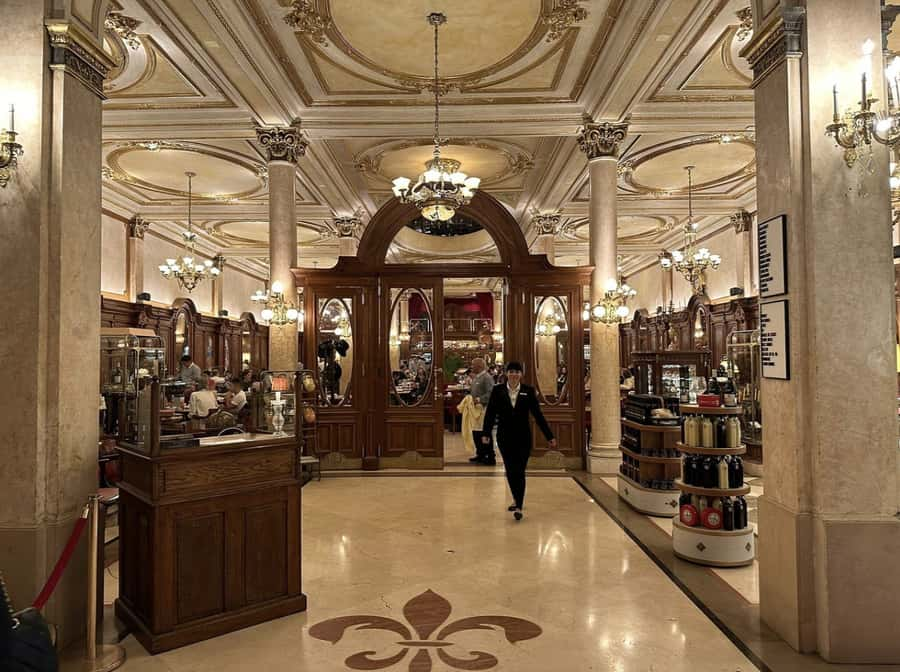
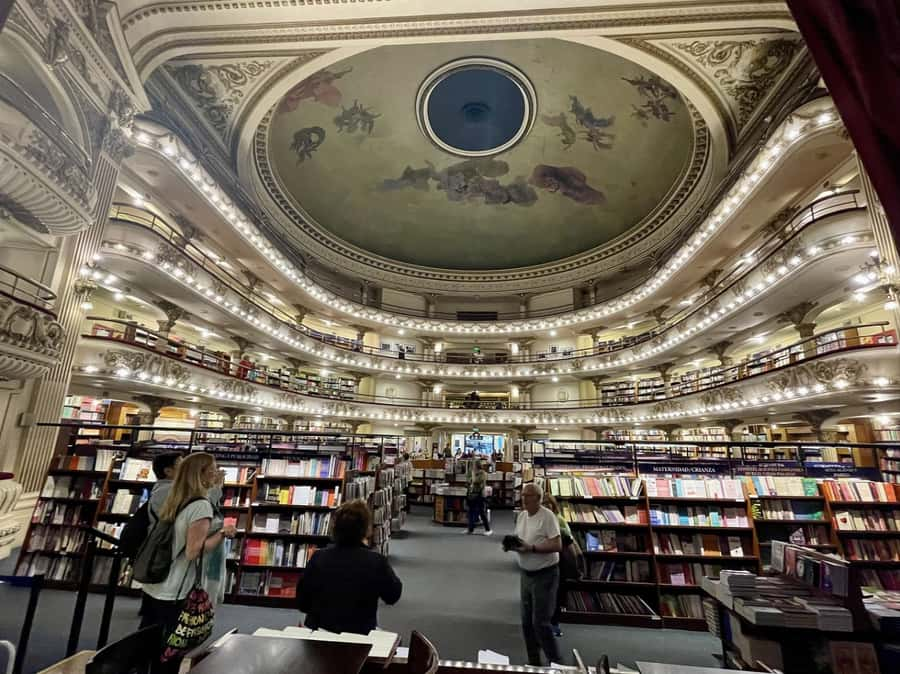
One of the first stops is El Ateneo Grand Splendid, widely known for being one of the most beautiful bookstores in the world. Even if you’re not a book person, you’ll still appreciate it because it’s a perfect example of how Buenos Aires reuses grand spaces in a way that feels both old and current.
From there, you move through Plaza Rodriguez Peña, a green pause in the middle of the neighborhood, and you’ll see Palacio Sarmiento, which the tour notes is home to Argentina’s Ministry of Education. For me, this kind of stop is where a walking tour earns its keep. You’re not just collecting landmarks, you’re also seeing what “important” buildings look like when they’re part of daily city life.
Palacio de Aguas Corrientes, where the city surprises you
Next up is Palacio de Aguas Corrientes, described on the tour as a stunning surprise with a fascinating story behind it. You’re not just looking at architecture. You’re learning how the city’s infrastructure and ambition show up as real, physical buildings.
This stop is valuable for two reasons. First, it breaks the pattern of only seeing squares and churches. Second, it gives you a new category of appreciation: Buenos Aires isn’t only a museum of famous places. It also has engineering-era drama that people still walk by every day.
If you like photos, this is the kind of building where you can get multiple angles without feeling like you’re standing in the same spot forever.
Recoleta Cemetery and Evita’s resting place
Then comes the emotional anchor: Recoleta Cemetery, including the entrance fee being covered. The tour highlights it as a “city within a city” with elaborate tombs for Argentina’s rich and famous. You’ll also see the last resting place of Eva Perón (Evita), alongside countless mausoleums inside the cemetery walls.
This is where the guide matters most. Without commentary, a cemetery can feel like a blur of names and stone. With an expert guide, it turns into a readable story about power, memory, and how a city remembers its icons. The tour’s pacing here also helps. You’re not rushing through. You get time to actually look.
You’ll also hit Plaza Francia and the Our Lady of Pilar Church, which the tour calls one of the best-preserved examples of colonial architecture in the city. Even if you’re not a church person, this is another “stop that teaches you how to see.” You’ll understand why preservation matters when you compare it to the city’s more modern-looking pieces later in the route.
Teatro Colón and Plaza Lavalle, the center of big-city drama
As you shift toward San Nicolas, you’ll see Teatro Colón, one of the most famous opera houses in the world. It’s a stop that works even if you don’t attend opera. The building alone gives you scale, ambition, and a sense of the city’s cultural weight.
From there you walk through Plaza Lavalle, including the Palacio de Justicia de la Nación, home to Argentina’s Supreme Court. This part of the route balances art and law, and it’s a smart combo. It shows you how Buenos Aires divides its identity into different kinds of importance.
For your planning, this segment can be where you’ll want to pause for photos. The plaza settings make it easier to frame shots, and the guide’s explanation helps you know what you’re looking at, instead of just guessing.
Avenida 9 de Julio, Obelisk photos, and the “green BA” sign
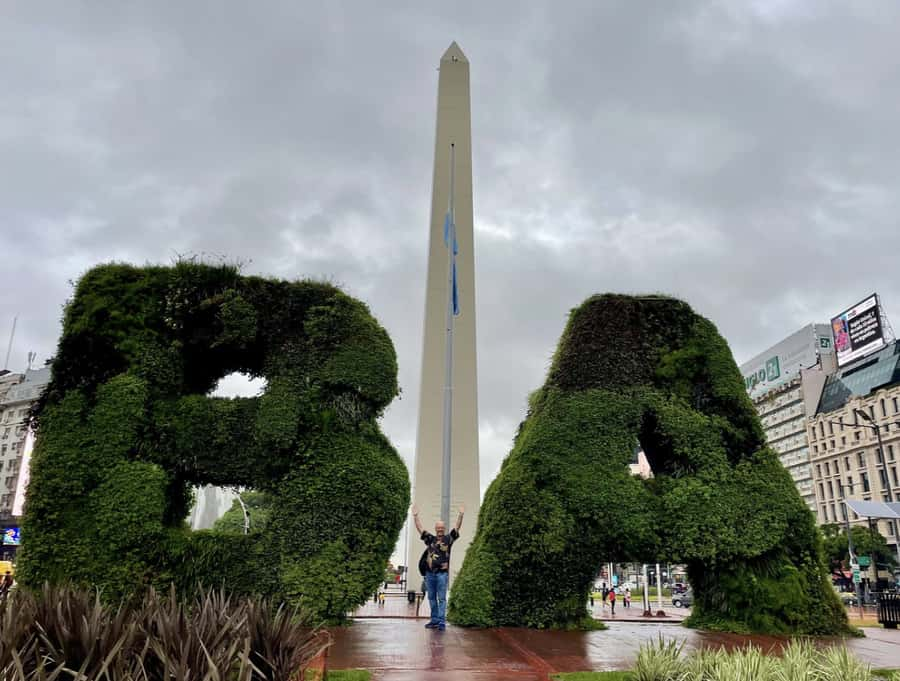
The tour then goes to Avenida 9 de Julio, noted as the widest avenue in the world. You’ll see the Buenos Aires Obelisco monument, and you’ll also get time for the classic photo with the green BA sign.
This is the kind of stop that seems simple but is actually useful. Standing on a broad avenue like this helps your brain recalibrate distance and layout. Later, when you see Avenida Corrientes and the pedestrian shopping lanes, you’ll understand the city’s rhythm better.
If you’re traveling solo and trying to build an instinct for where everything is, these visual anchors are gold.
Avenida Corrientes and Florida Street, old cafes and shopping streets
Next is Avenida Corrientes, the street the tour describes as the street that never sleeps. Along the way, you’ll see Confiteria La Ideal, a beautifully restored old cafe. This is a great moment to slow down and notice the details that survive updates, because it tells you Buenos Aires values style and continuity.
Then you head to Florida Street, the main pedestrian shopping area, and you’ll see the Galería Güemes. The tour frames Galería Güemes as a gorgeous stop, and it’s exactly the sort of place that makes a walking tour better than a ride-only day. You get to feel the energy of pedestrian flow and the way the city invites people to linger.
If you want shopping later, this is your orientation. You’ll remember the streets, and you’ll know where to return if you find something you want.
Plaza de Mayo and Casa Rosada, plus the Cathedral and the Pope connection
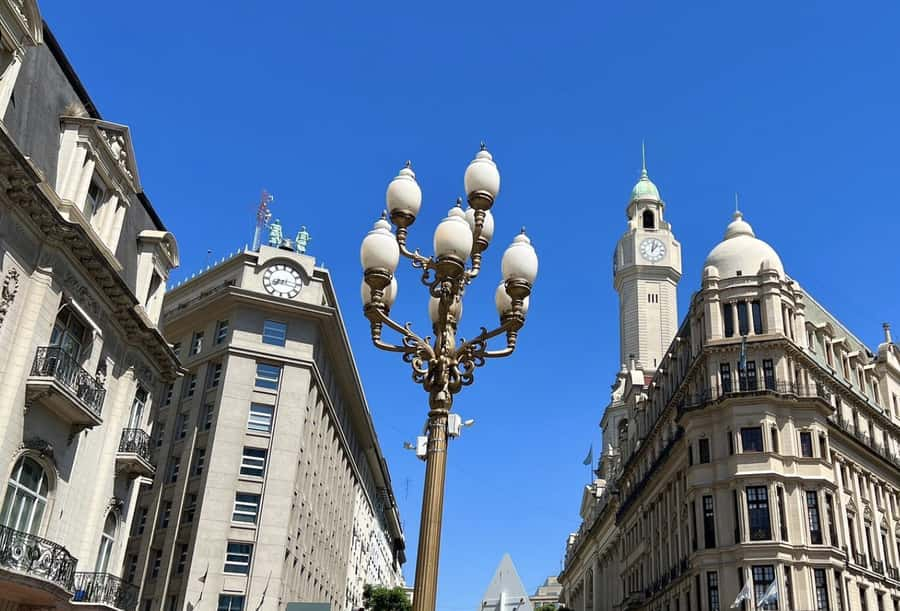
In the Monserrat City Center area, you’ll explore Plaza de Mayo, where the city was founded in 1580 and where it began to grow. From a “what should I care about” point of view, this is the anchor stop. If you only had time to learn one part of Buenos Aires, it would be hard to beat the idea that you’re standing at the start point.
You’ll see Casa Rosada (the Pink House), the executive government branch, and the famous balcony where President Perón and first lady Evita used to address crowds. This is one of those iconic moments that can feel like theater from far away, but it becomes clearer when your guide ties it to the city’s story.
You’ll also see the Buenos Aires Cathedral, called the last resting place of Argentina’s independence hero, and the tour notes that Pope Francis used to give mass there. Even if you are not religious, this fact adds weight, because it places the cathedral in a broader international context.
Finally, the tour includes older city elements, such as the oldest church, street, and business in the city, plus the oldest subway line in the southern hemisphere. The benefit here is simple. These aren’t random claims. They help you understand why Buenos Aires feels layered when you look closely.
San Telmo: market energy at Plaza Dorrego and the Indoor Market
After lunch and continued walking, you reach San Telmo, one of the city’s most atmospheric neighborhoods. You’ll start with Plaza Dorrego, one of the oldest and most popular squares, known for bars and restaurants plus handicraft sellers. This is the place to loosen up a bit, because it feels like the neighborhood is doing its own thing and you’re watching from a comfortable position.
Then you go to the San Telmo Indoor Market, described as an impressive iron structure built in 1897. Inside, you’ll find antiques, souvenirs, and restaurants, along with local market vendors with fresh food and produce. I like this stop because it gives you multiple options in one building. If you want to browse, you can. If you want to snack, you can. If you just want to see how markets work, you can do that too.
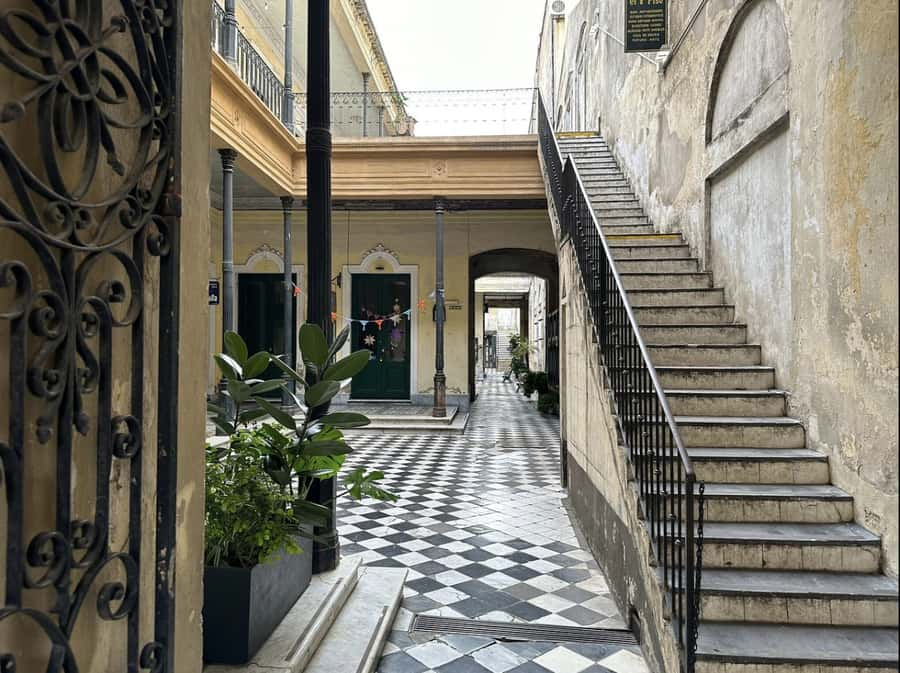
The ending is Defensa Street, a cobblestone road through the heart of San Telmo, famous for antique dealers and original Spanish and Italian architecture. Cobblestones slow you down, which is a good thing on a walking tour. You notice details you would miss if the route were designed only for speed.
Price and value for $160, what you’re really paying for
The price is $160 per person for a 7-hour tour with small-group pacing. On paper, that’s not a bargain. In real terms, it’s a structured day.
Here’s what you get that usually costs extra on similar tours:
- Entrance fees included, including Recoleta Cemetery (listed as a US$15+ value per person)
- Morning coffee (or an equivalent drink)
- Local lunch with main and beverage included
- All public transport taken during the tour (bus or subway)
- A bottle of water
- An expert guide in English with time to answer questions
- The big sightseeing package across Barrio Norte, Recoleta, the City Center, and San Telmo
So you’re not just buying sightseeing. You’re buying a guided route that also handles access, transit, and meal basics. If you only have one day, or you’re worried about spending your time figuring out logistics, the value gets stronger fast.
What the “small group” feels like in practice
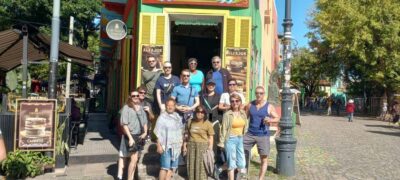
With a group capped at 7, you usually get two things: room to ask questions and a more human pace. That shows up in the guide’s commentary style. In the feedback I’ve heard from people who took the walk, Tracy and Chris were specifically praised for history clarity and for answering questions in a way that made the city feel less confusing.
I also like that the route includes both major monuments and smaller texture stops like plazas and restored cafes. In a big group, those details get swallowed. In a small group, the guide can point out what you should actually notice.
Pace, comfort, and who should skip
This is a walking tour, and it’s a long one at 7 hours. The tour is not a good fit if you can only do short strolls. It’s also not listed as suitable for wheelchair users, children under 10, people with a cold, or people over 95 years.
If you’re healthy and mobile, you’ll probably enjoy the day because it has built-in breaks through plazas and a sit-down lunch. Still, the main advice is simple: wear shoes you trust.
Smoking is not allowed, so plan on a day without smoke breaks.
Where this tour fits best in your Buenos Aires plan
I’d book this if:
- You want a guided overview of Buenos Aires highlights without wasting your day on guesswork
- You like neighborhoods and want to see Recoleta, City Center, and San Telmo in one go
- You’re the type who enjoys history when it’s explained clearly and connected to what you see
I might skip it if:
- You prefer spending your time strictly on museums and don’t want a walking-heavy day
- You already have firm plans for each neighborhood and don’t need the structure
Should you book the BA 101 walk?
If you want one solid, guided day that gives you both the big landmarks and the neighborhood vibe, I think you’ll be happy booking this BA 101 small group walk. The biggest reasons to say yes are the included Recoleta Cemetery entrance, the built-in metro and public transport, and the fact that you get coffee and a real lunch so your energy stays steady.
But be honest about one thing: this is a long walk. If your body tends to get cranky after a few hours, either plan rest time later or choose a shorter outing. If you can handle the pace, this is a smart way to get your bearings fast and decide what you want to return to.
FAQ
How long is the Buenos Aires BA 101 walk?
It lasts 7 hours, starting at 10am and running until 5pm.
Is it a small group tour?
Yes. The group size is limited to 7 participants.
What language is the tour guide speaking?
The tour is in English with a live guide.
What is included in the $160 price?
The price includes entrance fees (including Recoleta Cemetery), morning coffee (or an equivalent drink), a local lunch with main and beverage, all public transport used during the tour, and a bottle of water.
Where do you meet and where does the tour end?
You meet at 10am in the Recoleta/Barrio Norte area near the corner of Av. Santa Fe and Av. Callao, and you end in San Telmo near plenty of spots to eat, drink, and shop. Exact meeting details are sent in your confirmation email.
What should I bring, and is it wheelchair accessible?
Bring comfortable shoes. It is not suitable for wheelchair users, and it is also not suitable for children under 10, people with a cold, or people over 95 years.
Buenos Aires at Walking Pace, Elsewhere
More Tour Reviews in Buenos Aires
Newest Buenos Aires write-ups on the desk
- Tango Show at El Querandi with optional Dinner★ 4.2 · 3 reviews
- Velez Sarsfield Football Match★ 5.0 · 3 reviews
- Tango Show at: MichelAngelo★ 4.5 · 3 reviews
- Guided tour Boca Juniors Museum & Stadium + Caminito★ 3.3 · 3 reviews
- From Colonialism to Eclecticism, Buenos Aires arquitectonica★ 5.0 · 3 reviews
- Enjoy a Rural Experience in a Vineyard near Buenos Aires★ 4.7 · 3 reviews
The rest of the Walking Tours list.
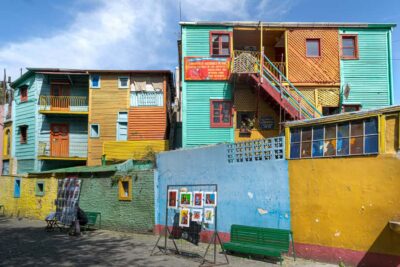 ★ 4.8Buenos Aires: La Boca Guided Walking Tour in EnglishFrom $131,587 reviews
 ★ 4.9Nazis in Buenos Aires: a historical walking tourFrom $25193 reviews
 ★ 4.8Bariloche: German Immigration and History Walking TourFrom $41169 reviews
 ★ 4.7Buenos Aires: Personalized 2 to 8-Hour Private Walking TourFrom $37149 reviews
 ★ 4.7La Docta Free Walking Tour “Córdoba La Antigua”.From $0104 reviews
 ★ 4.8Buenos Aires: San Telmo and Market Guided Walking TourFrom $13102 reviews
 ★ 4.5Buenos Aires Walking Tour with Local Guide and Optional RooftopFrom $11187 reviews
 ★ 4.5Penguin walk in Ushuaia + navigation optionFrom $29181 reviews
Lists this one is on