
REVIEW · WORKSHOPS
Spanish Group Course in Buenos Aires, Argentina: 20 Lessons
Learning Spanish should feel like something you do, not something you endure. This Buenos Aires Spanish group course (Expanish) is built for fast speaking practice with small classes, and it backs it up with practical extras like a welcome pack, orientation, and a course certificate.
I especially like how the format is meant to keep you using Spanish right away, in a relaxed setting with enough class size limits that a teacher can still notice what you need. One thing to weigh: class schedules and teacher-to-teacher continuity can shift, so you may want a flexible mindset, especially if you’re planning other activities in the city around your study time.
In This Review
- Spanish Lessons in Buenos Aires, 20 Lessons, Small Group Energy
- What I Like Most: Teaching Style and Built-In Momentum
- One Drawback to Consider: Scheduling and Teacher Continuity
- Key Things That Make This Course Work Well
- Where You Start in Buenos Aires, and Why That Location Matters
- The 9:30 Rhythm: What a Typical Day Feels Like
- Day One: Orientation and Getting Placed
- How the Lessons Are Structured for Real Speaking
- The Social Activities: Language Practice Without Pressure
- Student Benefits Card and Course Certificate: A Clean End Point
- Price and Value: Is $275 a Good Deal for 20 Lessons?
- Who This Course Fits Best (And Who Might Want Something Else)
- Booking Tips to Get the Most Out of Your Week
- Should You Book This Buenos Aires Spanish Group Course?
- FAQ
- What is the duration of the Spanish group course?
- How many lessons are included?
- Where is the meeting point?
- What time does the course start?
- What is the group size limit?
- Is food included?
- Is a book included?
- What is included with the course?
- Do you store luggage during class?
- Can I get a certificate?
- Can I cancel for a full refund?
Spanish Lessons in Buenos Aires, 20 Lessons, Small Group Energy

This is a 5-day course in Buenos Aires, priced at $275 per person, with 20 lessons across the week. The structure is intentionally simple: you show up, you study in an interactive group, and you keep Spanish moving from your head into real conversation. The school caps the experience at 12 travelers, which is a sweet spot for a group course. It is not too large to feel anonymous, and it is not so small that you lose the group conversation momentum.
The course is listed as suitable for all ages and skill levels. In practice, that matters because you are more likely to stay in your comfort zone while still getting challenged. If you are a true beginner, you get a path to build confidence. If you’re already past the basics, you can push your grammar and speaking without it turning into a lecture.
Other Buenos Aires write-ups sitting in the pile
- Buenos Aires: Empanadas and Alfajores Guided Cooking Class
★ 4.8 · 486 reviews - Buenos Aires: Private Tango Lesson
★ 4.9 · 244 reviews - Buenos Aires: Empanada & Alfajor Cooking Lesson in Palermo
★ 4.6 · 186 reviews - Tango Porteño Show with Optional Dinner and Tango Lesson
★ 4.0 · 97 reviews
What I Like Most: Teaching Style and Built-In Momentum
Two parts of this course stand out the most when you look at the full experience, not just the lesson count.
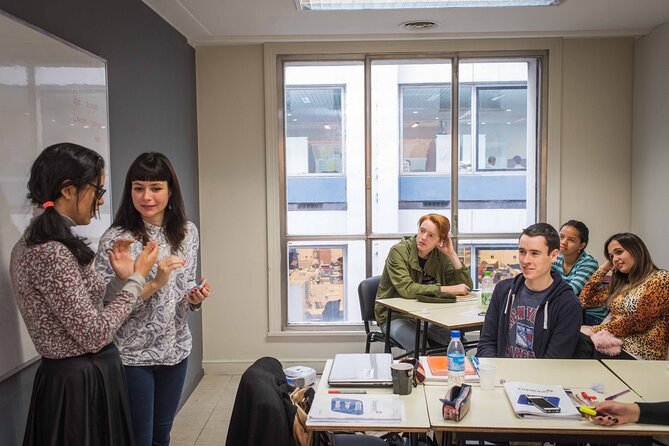
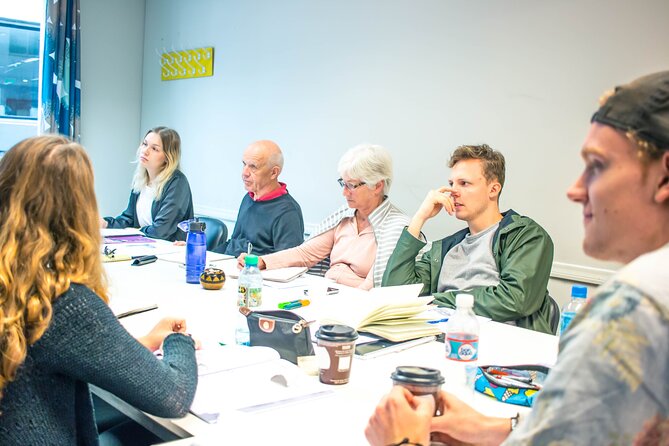
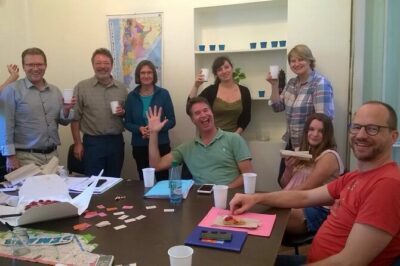
First, the teaching model is set up for interactive group practice. You’re not meant to sit silently through “explanations.” Instead, classes run in Spanish in a relaxed environment, with small classes that allow for personalized attention from the professor.
Second, the extras are clearly there to keep you progressing even when class ends. You get a welcome pack, free Wi-Fi, a student benefits card, and social activities designed to help you speak Spanish more quickly. That is important, because language learning usually stalls when your study stays only in the classroom.
One Drawback to Consider: Scheduling and Teacher Continuity
Here is the main caution I would plan around: the course schedule can be communicated later than you might expect, and if there are public holiday shifts or a session change to the afternoon, you may only get notice close to the time. Also, if you end up changing teachers or moving levels, you might see some overlap in material rather than brand-new content every day.
None of that makes the course a bad choice, but it does mean you should not build your entire Buenos Aires itinerary hour-by-hour around a fixed lesson plan.
Key Things That Make This Course Work Well
Small-group size (max 12): enough people for real conversation, not so many that you disappear.
Interactive group lessons in Spanish: you practice speaking as part of class time, not only outside it.
First-day orientation plus welcome pack: you start with a clear game plan instead of guessing how the week flows.
Luggage storage while you’re in class: helpful if your travel days do not match your accommodation check-in or check-out.
Social activities included: they add low-pressure speaking chances right after lessons.
Certificate on completion: a tidy payoff if you want proof of progress after your stay.
Where You Start in Buenos Aires, and Why That Location Matters
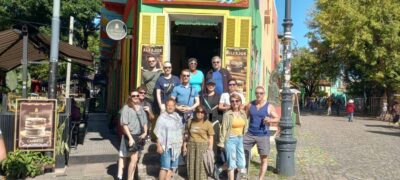
You meet at Federico Lacroze 2315, C1426CPI, in Buenos Aires. Classes begin at 9:30 am. You also have an advantage mentioned in the listing: the meeting point is near public transportation, which is practical for Buenos Aires, where commuting can make or break a day.
A small but meaningful detail: the school provides luggage storage during the time you are in class. If you arrive early, leave late, or change neighborhoods during your trip, that can save you from hauling bags around town while trying to stay focused in class.
If you prefer to move by public transport, plan your days around that strength. Start your morning close to the course, then build the rest of your day with transit in mind.
The 9:30 Rhythm: What a Typical Day Feels Like
The course is built around a repeating flow: classroom time in the morning, then opportunities to use Spanish outside class.
Here is what you can generally expect each day:
- A 9:30 am start at the meeting point area.
- Group instruction where the professor guides you through interactive practice.
- A classroom environment designed to keep you speaking Spanish and participating comfortably.
- Social activities included with the course to help you keep using the language after lessons.
Because the listing only gives the structure at a high level (20 lessons over about 5 days), do not expect a publicly posted timetable for every minute. You will likely get the week’s exact schedule as you arrive, and then it runs from there.
Also note the class placement can be flexible. One review points out that you can change class level anytime. That can be a big win if you progress quickly, but it also means you may not always follow the exact same routine every day.
Day One: Orientation and Getting Placed
The course includes first-day orientation and a welcome pack. That first session matters more than it sounds. If you understand how your class level works, how the schedule runs, and what the expectations are for speaking and participation, you can jump into learning right away.
Orientation typically helps with the real-world stuff:
- where to go for lessons,
- how the school organizes group classes,
- what your week is designed to accomplish.
It is one of those “boring” parts that pays off fast, because it reduces the mental load. When your first hour is smooth, your next few days are easier.
How the Lessons Are Structured for Real Speaking

This is not a grammar-only crash course. The program is described as group classes where students develop language skills in an interactive group, with complete immersion in Spanish during class time. In other words, the course is designed to make Spanish the working language, not just a subject.
The course format also supports different skill levels, which is key for a group setting. With max 12 students, the teacher can still respond to the group’s needs. You get an environment that is relaxed, but not passive.
One useful detail: the course follows Aula Plus from Editorial Difusión, organized week by week with targets based on the program. That can be reassuring if you want a clear path and not a random mix of activities.
The Social Activities: Language Practice Without Pressure
You get social activities included. The goal is simple: get you speaking Spanish faster. These activities are where language study starts feeling like travel instead of school.
The main value here is timing. Many people study a few phrases in the classroom, then run out of steam once they get busy exploring Buenos Aires. Built-in social activities close that gap. You can practice Spanish while doing something enjoyable and more relaxed than a classroom exercise.
From the feedback shared about the experience, the after-class programming is also a big reason people recommend the school. If you like meeting fellow students and you enjoy practicing with real conversation, you’ll probably feel a noticeable boost in confidence.
Student Benefits Card and Course Certificate: A Clean End Point
Two practical items are included: a student benefits card and a course certificate upon completion. For many travelers, the certificate is not just a souvenir. It gives you something concrete to show for the time you invested, and it can help if you want to track your level for later language plans.
The benefits card is also a nice touch because it reinforces that you’re not only paying for lessons. You are getting part of the school’s ecosystem during your time in Buenos Aires.
Price and Value: Is $275 a Good Deal for 20 Lessons?
Let’s do the simple math: $275 for 20 lessons works out to about $13.75 per lesson. That is the core value question.
Where this price becomes more reasonable is the mix of what you get, not just the lesson count:
- welcome pack and first-day orientation,
- free Wi-Fi,
- social activities,
- luggage storage,
- student benefits card,
- and a certificate.
In a lot of language trips, the “hidden cost” is what happens outside class, like paying extra to meet people or spending time trying to find speaking opportunities on your own. Here, the course includes social activities meant for speaking practice. That can make the overall deal feel stronger, especially if you want your Spanish improvement to happen during your travel week, not after you’ve left.
If you’re a traveler who will actively participate in the school’s social activities, this course is likely to feel like good value. If you know you’ll skip most of the included extras, you may feel like you paid mostly for classroom time.
Who This Course Fits Best (And Who Might Want Something Else)
This course is a good match if:
- you want a structured program but still like a relaxed vibe,
- you want small-group speaking practice,
- you’re traveling to Buenos Aires anyway and want a practical reason to use Spanish beyond the classroom,
- you value included social activities and school support.
You might look at alternatives if:
- you want a very fixed schedule printed far in advance,
- you expect every day to be brand-new material with zero overlap,
- you prefer highly individualized, one-on-one coaching.
Given the stated suitability for all ages and skill levels, most people should find a class that works. The real deciding factor is your flexibility and willingness to speak and join the after-class activities.
Booking Tips to Get the Most Out of Your Week
A few practical moves can help your week feel smoother:
- Plan your other activities with some buffer. If the schedule changes due to holidays or shifts, you’ll avoid frustration.
- Decide in advance to participate in the social activities. That is where a lot of the confidence jump tends to happen.
- Bring a notebook and a small habit. After class, write down short phrases you actually used. Even a few lines a day turns your lessons into travel language you can reuse.
And one more mindset tip: in group classes, progress often comes from speaking often, not from perfect grammar. If you treat mistakes as part of the practice, you’ll get more out of the 20 lessons.
Should You Book This Buenos Aires Spanish Group Course?
If you want a structured, small-group Spanish course in Buenos Aires with included speaking opportunities beyond class, I think this is an easy yes. The combination of interactive group lessons, capped group size, and included social activities is exactly what helps your Spanish feel useful during your trip.
Before you book, consider two things: keep your plans flexible around the schedule, and be ready for the possibility of some lesson overlap if teachers or levels shift. If that does not scare you off, you’ll likely come away with stronger confidence and a clearer sense of how to keep using Spanish while traveling.
In short: if your goal is steady improvement plus real chances to speak, this course checks the boxes.
FAQ
What is the duration of the Spanish group course?
The course is listed as 5 days (approximately).
How many lessons are included?
You get 20 lessons.
Where is the meeting point?
The start meeting point is Federico Lacroze 2315, C1426CPI, Cdad. Autónoma de Buenos Aires, Argentina.
What time does the course start?
It starts at 9:30 am.
What is the group size limit?
The experience has a maximum of 12 travelers.
Is food included?
No, food and drinks are not included.
Is a book included?
No, the book is not included.
What is included with the course?
Included items are a welcome pack, free Wi-Fi, social activities, first-day orientation, and a course certificate.
Do you store luggage during class?
Yes, luggage storage is provided during the time you are in class.
Can I get a certificate?
Yes, you receive a course certificate upon completion.
Can I cancel for a full refund?
You can cancel for a full refund if you cancel at least 24 hours before the experience’s start time. If you cancel less than 24 hours before, the amount paid is not refunded.
More Workshops in Buenos Aires
More Tour Reviews in Buenos Aires
Newest Buenos Aires write-ups on the desk
- Tango Show at El Querandi with optional Dinner★ 4.2 · 3 reviews
- Velez Sarsfield Football Match★ 5.0 · 3 reviews
- Tango Show at: MichelAngelo★ 4.5 · 3 reviews
- Guided tour Boca Juniors Museum & Stadium + Caminito★ 3.3 · 3 reviews
- From Colonialism to Eclecticism, Buenos Aires arquitectonica★ 5.0 · 3 reviews
- Enjoy a Rural Experience in a Vineyard near Buenos Aires★ 4.7 · 3 reviews
The rest of the Workshops list.
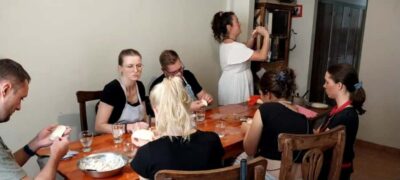 ★ 4.8Buenos Aires: Empanadas and Alfajores Guided Cooking ClassFrom $37486 reviews
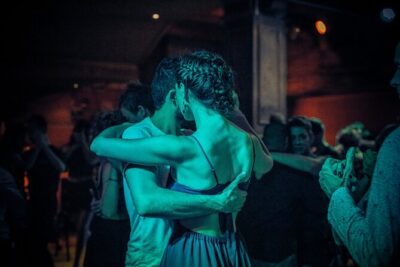 ★ 4.9Buenos Aires: Private Tango LessonFrom $39244 reviews
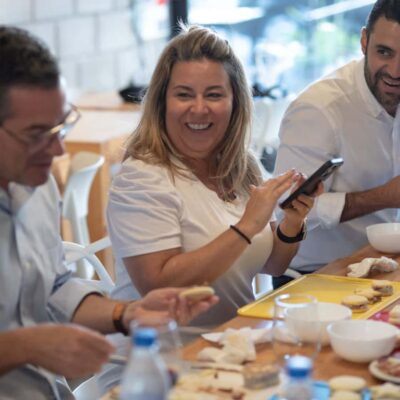 ★ 4.6Buenos Aires: Empanada & Alfajor Cooking Lesson in PalermoFrom $49186 reviews
 ★ 5.03h Cooking Class in Mendoza with 7 Recipes & Bottomless DrinksFrom $99125 reviews
 ★ 4.0Tango Porteño Show with Optional Dinner and Tango LessonFrom $3597 reviews
★ 5.0Buenos Aires – Private Tango lessonFrom $3996 reviews
★ 4.0Tango Porteño Show with Optional Dinner and Tango LessonFrom $3597 reviews
★ 5.0Buenos Aires – Private Tango lessonFrom $3996 reviews
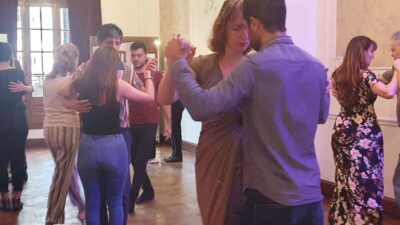 ★ 4.4Buenos Aires: Group tango class with mate and snacksFrom $2544 reviews
 ★ 5.0English Classes with Native TeachersFrom $2037 reviews
Lists this one is on