
REVIEW · ESTANCIA AND GAUCHO EXPERIENCES
Estancia Gaucho Day at Buenos Aires
Pampas life, right outside Buenos Aires. This full-day outing turns Argentina gaucho culture into a day you can actually feel, with an estancia lunch that hits the spot and horse whispering plus a folklore show for the grand finale. The trade-off is simple, you’re looking at a true 9-hour day, and the horseback riding is usually short and gentle rather than a big gallop-fest.
You start at 8:30 am with hotel pickup and a guided ride out to the pampas, then the schedule mixes town stops with ranch time. Guides such as Carolina and Enrique are often praised for keeping things organized and making the history and traditions easy to follow. If you like your day to move, with stops that feel efficient instead of wandering, you’ll probably love the pace.
In This Review
- Key things I’d bet you’ll notice fast
- Buenos Aires to the pampas: the road part is where context starts
- San Antonio de Areco craft time: silversmiths and chocolate, short but smart
- The parish on Segundo Sombra Street: a quick stop with named historical weight
- Inside the estancia: where the day turns into asado, rides, and folklore
- A quick note on vegetarian needs
- Horseback riding reality check: fun, but set expectations
- Folklore show and gaucho demonstration: why this timing works
- Guides make the difference: how Carolina and Enrique set the tone
- Price and value: what $168 buys you in real-world terms
- Logistics that can save you hassle: pickup, timing, and passports
- The passport requirement
- Who should book this gaucho day trip from Buenos Aires
- Should you book Estancia Gaucho Day in Buenos Aires?
- FAQ
- What time does the tour start?
- How long is the Estancia Gaucho Day?
- Does the tour include hotel pickup and drop-off?
- What does the price include?
- Is the tour suitable for kids?
- How big is the group?
- Are there dietary options or dietary accommodations?
- Do I need a passport?
- How long are the stops in San Antonio de Areco?
- What should I wear?
Key things I’d bet you’ll notice fast
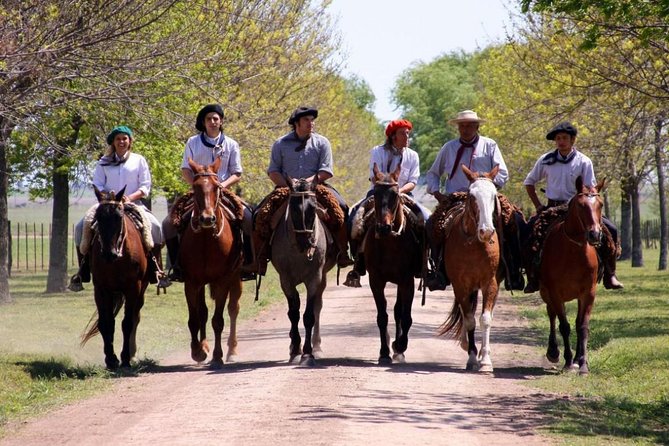
- San Antonio de Areco craft stop: silversmithing and a quick chocolate visit set the cultural tone.
- A real-feeling estancia flow: snacks and meats, then dessert, then entertainment.
- Folklore and gaucho demonstrations: dancing and show elements are built into the timing.
- Horse riding with realistic expectations: often more of a tame loop than an all-action ride.
- Small group size: capped at 30 people, which helps the day feel less chaotic.
Other ranch days out in Buenos Aires
- From Buenos Aires: Gaucho and Ranch Day Tour
★ 4.7 · 809 reviews - Gaucho Day Trip from Buenos Aires: Santa Susana Ranch
★ 4.0 · 272 reviews - Gaucho Experience: A Day Trip to Don Silvano Ranch
★ 4.0 · 148 reviews - Polo Under the Stars and Argentine BBQ Evening Venue from Buenos Aires
★ 5.0 · 69 reviews
Buenos Aires to the pampas: the road part is where context starts
The day begins in Buenos Aires, then you head toward San Antonio de Areco for a long slice of countryside time. This is not a quick hop. You’re spending a good chunk of the morning on the road while your guide explains what you’re looking at, how life worked in the pampas, and why gaucho culture became such an Argentine symbol.
That road time matters because it makes the ranch portion click. Instead of showing up to a show and a buffet, you arrive with a mental picture. You know what an estancia is, why the work required skill and patience, and what traditions you’re being shown later in the day.
Practical tip: plan to dress in layers. One review noted it can be chilly, especially before the day fully warms up, and ranch time tends to be outdoors even when you’re in the shade.
San Antonio de Areco craft time: silversmiths and chocolate, short but smart
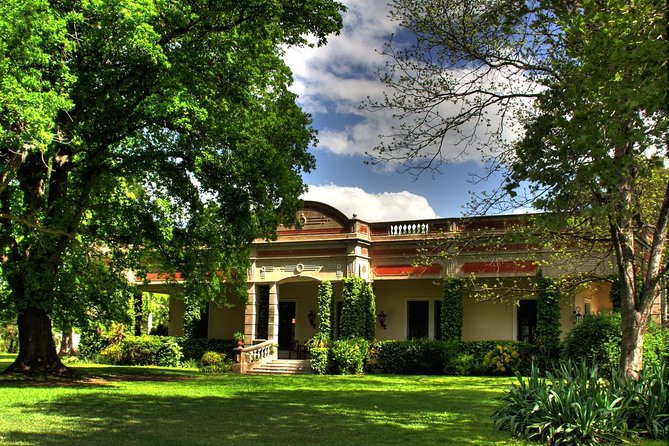
Once you arrive, you get a focused taste of town life. The schedule includes a stop at a silversmith’s workshop for a look at traditional gaucho-era craft work, plus a brief visit to a local chocolate shop.
This part is easy to overlook if you think the day is only about horses and barbecue. But it’s a good warm-up. You’re moving from city explanations into something hands-on: you can see how local artisans express identity through metalwork. Then chocolate gives you a quick reset before the long ranch stretch.
Don’t expect a long shopping spree here. The visit is brief by design. If you’re the type who wants hours to browse, you might wish you had more time in Areco proper.
The parish on Segundo Sombra Street: a quick stop with named historical weight
Next is a stop at Parroquia San Antonio de Padua, located on Segundo Sombra Street. You’re not there for a long church crawl, but you do get a meaningful context moment.
The church is tied to the town’s early religious life. The current building dates to 1869, and the cornerstone includes historical records and relics, plus the area connection to Don José Ruiz de Arellano, who established the town’s first oratory.
At 10 minutes, this is a look, not a deep dive. Still, it gives you something valuable: it anchors the day in place. It’s one thing to learn gaucho culture, but it’s another to understand that the gauchos lived within towns like this, not in a history vacuum.
If you’re traveling on a day when services or local timing affect visits, the schedule can shift. One account described a Sunday where some stops like museum and church time may not line up with what’s planned. So keep a flexible mindset if your day feels a bit shorter than you expected in the town portion.
Inside the estancia: where the day turns into asado, rides, and folklore
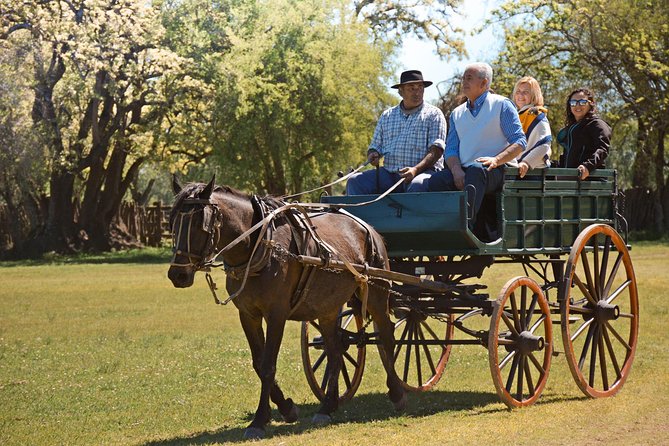
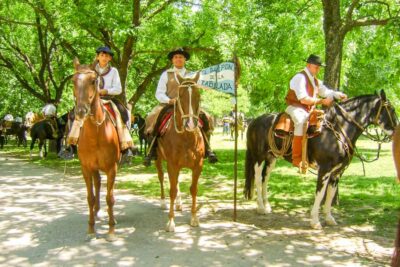
This is the heart of the experience. At the estancia, you get around 5 hours that are built around a classic gaucho-themed rhythm: arrival reception, food, horseback riding, then entertainment.
A common highlight is the welcome snack, often empanadas served right away. Some guides set this up under the big shade of an ombú tree, which makes the wait feel pleasant rather than rushed.
Then comes the meal structure. You’ll usually get cheeses and cold cuts first, then a full Argentine barbecue with plenty of meat. After dessert, the estancia shifts into performance mode. This is when folklore music and dancing take over, along with a gaucho demonstration that helps connect what you ate and what you saw to the culture behind it.
This is also where the most-praised moments tend to show up. People often rate the entertainment highly, especially the horse whispering component. It gives you the practical side of gaucho skill: calm control, patient training, and a way of working with animals that feels intentional rather than just showy.
A quick note on vegetarian needs
The tour asks you to advise dietary requirements at booking. That matters because food is a major part of the estancia schedule. One vegetarian-focused experience described getting a vegetarian meal later in the lunch flow, and another described that the estancia can cater to vegetarians, so your best move is clear communication when you book.
If vegetarian or another diet matters to you, send the details early, and don’t assume the default snack and the main meal will match. In this kind of setting, you want your dietary needs recognized before the grill starts.
Horseback riding reality check: fun, but set expectations
Horseback riding is a key part of the day, and it’s one of the main reasons to book. Just don’t walk in expecting a long, wild pampas ride.
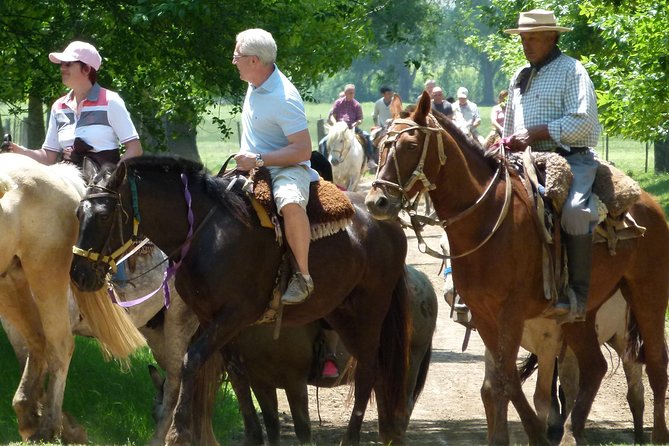
Multiple experiences describe the ride as relatively tame, often a controlled loop through paddocks or along a simple dirt path. In some cases, riders were not given detailed instructions and the ride felt short. In other cases, nervous riders still felt comfortable enough to manage a trot across a short stretch.
So here’s the honest expectation: you’ll probably get a ride that’s safe, scenic, and meant for most skill levels. You may not get the action-heavy riding that some people imagine when they hear gaucho.
Practical advice for comfort: wear what you’d use for an active outdoor day. The tour guidance simply says comfortable clothes, and that’s the correct approach. Ranch weather can change, and you’ll be outdoors for parts of the reception, riding, and show.
Folklore show and gaucho demonstration: why this timing works
The entertainment is scheduled right after dessert. That timing does two things for you.
First, it keeps you from leaving before you’re full and content. If the show happened right after lunch, some people would be too tired to enjoy it. Second, ending with music and dancing gives the day a celebratory finish, which helps justify how long the day feels from start to finish.
The show isn’t just background. It’s paired with a gaucho demonstration, plus that prized horse whispering moment. The overall effect is that you leave understanding gaucho culture as performance and practice, not just a word you heard on the bus.
If you’re traveling with kids, this part tends to land well because it’s visual. If you’re an adult who wants history, it still works because the demonstration aims to show skills and temperament, not just costumes.
Guides make the difference: how Carolina and Enrique set the tone
One of the biggest strengths of this day trip is the human factor. Reviews highlight how guides such as Carolina and Enrique helped keep the experience smooth and inclusive, answering questions and making the culture easy to understand.
Other names you may see attached to past groups include Jael, Miriam, Nico, Lorena, Marcello, Patric, and Eugenia. The pattern across these accounts is the same: a guide who manages timing, explains what you’re seeing, and pays attention to how the group is doing can turn ranch time from a standard package into an actual Argentine day.
So when you book, look at this as a day trip where your guide matters. The itinerary is set, but the tone is not.
Price and value: what $168 buys you in real-world terms
At $168 per person for about 9 hours, you’re paying for more than entry into a ranch. You’re paying for a bundled day that includes:
- Hotel pickup and drop-off
- A professional guide
- Lunch and beverages
- Live commentary during the bus portion
- Live entertainment at the estancia
- Town stops that include cultural sites
That’s the value math. You get transport out of Buenos Aires, a structured day that doesn’t require you to plan drive time and ticket timing, and a single bill that covers the big pieces.
Where value can feel uneven is if you came expecting lots of riding time or lots of free exploration at the estancia. Some people want more than a short paddock loop. Others want more time in San Antonio de Areco. If that’s you, you may feel the day is efficient in ways you don’t fully enjoy.
Still, for most people, the combination of asado lunch plus folklore plus a gaucho-style demonstration is exactly the point. If your goal is a complete cultural ranch day with minimal logistics, this fits.
Logistics that can save you hassle: pickup, timing, and passports
Hotel pickup and drop-off are included, so you’re not figuring out transit to the pampas on your own. The start time is 8:30 am, and the whole day runs about 9 hours.
One practical thing to watch: communication around where exactly to meet can be inconsistent. Some experiences mention not being fully aware that a taxi might transfer you to a different waiting spot before boarding the tour vehicle. You can avoid headaches by confirming your meeting point the day before, and arriving a few minutes early.
The passport requirement
The tour data states that a current valid passport is required on the day of travel, and passport details are required at booking for all participants. One experience suggested passports were not checked in practice, but you should not count on that. Bring your passport, and make sure the details you provided match your document.
Who should book this gaucho day trip from Buenos Aires
This tour is a good match if you want:
- A full Buenos Aires countryside day without planning the details
- A combined experience, craft stop plus church stop plus estancia food plus performance
- A day that feels family-friendly, since it’s described as kid-friendly
- A small group environment, maximum 30 people
It’s less ideal if you’re mainly chasing an all-day riding adventure, or if you hate structured schedules. The town stops are short, and the ranch activities follow a set rhythm. You’ll get a taste, not a slow immersive weekend.
Should you book Estancia Gaucho Day in Buenos Aires?
I’d book it if your dream Buenos Aires day includes barbecue, a folklore performance, and a real taste of estancia life with a guide who keeps the culture readable. It’s especially strong if you value the overall package, pickup included, rather than squeezing every minute of independent exploring.
I’d hesitate if you specifically want long horseback riding sessions or extra free time at the ranch. In that case, the shorter, controlled ride may not match your expectations, and you might wish for more time where you actually want to linger.
If you’re flexible and you want a well-packaged gaucho day that feels authentic without the logistics headache, this one earns its high marks.
FAQ
What time does the tour start?
The tour start time is 8:30 am.
How long is the Estancia Gaucho Day?
The duration is approximately 9 hours.
Does the tour include hotel pickup and drop-off?
Yes. Hotel pick-up and drop-off are included.
What does the price include?
The tour includes beverages, lunch, live commentary on board, a professional guide, hotel pick-up and drop-off, and live entertainment.
Is the tour suitable for kids?
Yes. The tour is described as kid-friendly.
How big is the group?
The maximum group size is 30 travelers.
Are there dietary options or dietary accommodations?
You should advise any specific dietary requirements at time of booking.
Do I need a passport?
Yes. A current valid passport is required on the day of travel, and passport details are required at booking.
How long are the stops in San Antonio de Areco?
The silversmith workshop and chocolate shop stop is listed at 25 minutes, and the parish church stop is listed at 10 minutes. The estancia time is listed at about 5 hours.
What should I wear?
Wear comfortable clothes, since you’ll be outdoors for parts of the day.
More Tour Reviews in Buenos Aires
Another Day on the Estancia
Newest Buenos Aires write-ups on the desk
- Tango Show at El Querandi with optional Dinner★ 4.2 · 3 reviews
- Velez Sarsfield Football Match★ 5.0 · 3 reviews
- Tango Show at: MichelAngelo★ 4.5 · 3 reviews
- Guided tour Boca Juniors Museum & Stadium + Caminito★ 3.3 · 3 reviews
- From Colonialism to Eclecticism, Buenos Aires arquitectonica★ 5.0 · 3 reviews
- Enjoy a Rural Experience in a Vineyard near Buenos Aires★ 4.7 · 3 reviews
The rest of the Estancia and Gaucho Experiences list.
 ★ 4.7From Buenos Aires: Gaucho and Ranch Day TourFrom $168809 reviews
 ★ 4.0Gaucho Day Trip from Buenos Aires: Santa Susana RanchFrom $313272 reviews
 ★ 4.0Gaucho Experience: A Day Trip to Don Silvano RanchFrom $244148 reviews
 ★ 4.5Estancia Cristina Mirador del Glaciar UpsalaFrom $285122 reviews
 ★ 5.0Full Day Tour of Cabo San Pablo and Estancia PirinaicaFrom $18093 reviews
 ★ 5.0Horseback riding and barbecue in a private ranch – La Carrera, MendozaFrom $20075 reviews
 ★ 5.0Polo Under the Stars and Argentine BBQ Evening Venue from Buenos AiresFrom $24769 reviews
 ★ 5.0The Real Gaucho Day Trip from Mendoza – Don Daniel RanchFrom $29060 reviews
Lists this one is on