
REVIEW · ARGENTINA
Buenos Aires for curious people
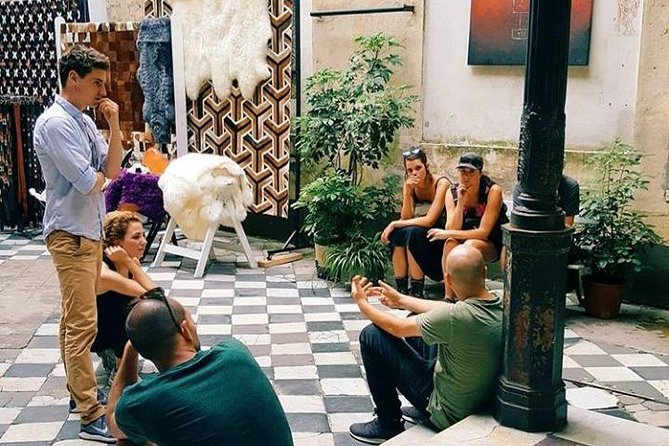
Buenos Aires has a way of showing you its story. This tour is a conversational walk that connects the city’s streets to big ideas like migration, power, and memory, with anthropology as the lens. I especially like two things: you get real discussion time, not a monologue, and Nicolás helps you link everyday landmarks to Argentina’s political turning points, including Casa Rosada. One drawback to consider: it is not only for photo stops, the route spends time on heavy history, and you’ll be thinking, asking, and talking.
You’ll start at Bar Británico, move through the historic center on foot, and finish around Casa Rosada and Plaza de Mayo, all in about 3 hours. It’s designed for small groups or private setups, and the guide can work in Spanish, French, English, or Portuguese, with wheelchair accessibility listed. If your ideal tour is quiet, strictly factual, and super light on discussion, this might feel more intense than you want.
In This Review
- Key points you will care about
- Why this Buenos Aires walk works for curious first-timers
- From Bar Británico to Lezama Park: the story starts with place
- Churches, Swedish links, and immigrant clues you can actually see
- Plaza Dorrego and San Telmo Market: a planned break that fits the theme
- Espacio para la Memoria ex CCD Club Atlético: history with memory, not slogans
- The British interest, African roots, and Perón and Evita in one storyline
- Puente de la Mujer, then Casa Rosada and Plaza de Mayo
- Price and value: what $30 buys you in the real world
- Who this tour is for, and who should skip it
- My booking advice: when to say yes
- FAQ
- Where does the tour start?
- How long is the walking experience?
- What does the tour include?
- What languages are available?
- What should I bring?
- Is there a cancellation option?
Key points you will care about
- Anthropology-first perspective: the guide uses people, culture, and identity, not just dates and buildings
- Discussion built in: you can ask questions as you walk and compare past and present
- More than the postcard route: you hit parts of the historic center that explain how Buenos Aires formed
- Politics with real consequences: you address topics like Perón, Evita, and the desaparecidos with care
- Architecture as evidence: churches, markets, and bridges become clues to immigration and power
- Good value for a focused 3-hour: $30 gets you a professional guide plus plenty of context
Narrowing the Buenos Aires list? These kept surfacing while we wrote.
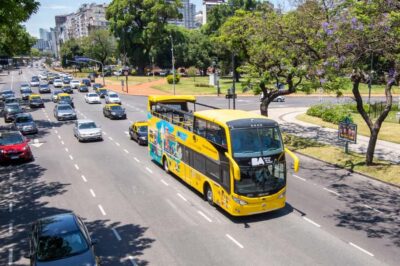
- Buenos Aires Hop-On Hop-Off Bus, Free Walking Tours & Discounts
★ 4.5 · 2,218 reviews - Buenos Aires: Piazzolla Tango Show with Optional Dinner
★ 4.4 · 2,122 reviews - Buenos Aires: City Highlights Guided Tour with Transfer
★ 4.7 · 1,946 reviews - Buenos Aires: Hop-On Hop-Off City Bus Tour
★ 4.2 · 1,855 reviews
Why this Buenos Aires walk works for curious first-timers
Buenos Aires is big, and first visits can turn into a blur of neighborhoods and landmarks. What I like about this experience is the structure: you are not just passing sights, you are building an understanding of why the city looks the way it does, and why people argue about what matters.
The format is conversational. Instead of waiting until the end for questions, you get prompted with real questions along the way, like who lived here first, why the British were so interested in these shores, and what happened to the African-descendant population. You are encouraged to talk, not just listen, so the tour becomes more of a guided back-and-forth than a lecture.
And you do not stay stuck in the past. The conversation is designed to connect older layers to the present, including how Argentina’s economy is tied to the US dollar and how memory still shapes modern politics.
From Bar Británico to Lezama Park: the story starts with place
You begin at Bar Británico, which is a smart starting point because it puts you in the mood for Buenos Aires, social life included. From there, the first stop is Parque Lezama, where you get a short guided introduction before you move on.
Lezama Park matters in this tour because it is a way to start thinking about time layers. Early on, you are set up with questions about the city’s first inhabitants. Even if you already know basic Argentine history, this kind of framing nudges you to notice that Buenos Aires did not become important overnight, it grew through shifting waves of people, power, and conflict.
If you like tours that explain why a place feels the way it does, this opening helps. You get grounding before the route becomes more intense with political and cultural topics later.
Churches, Swedish links, and immigrant clues you can actually see
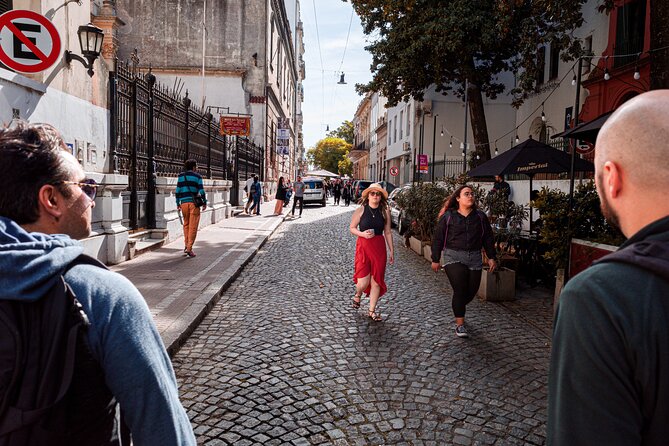
After Lezama Park, the walk takes you past the Russian Orthodox Church of the Holy Trinity. This stop is short, but it is there for a reason: it shows how religious and cultural variety took root in the city. In other words, it is not only about what happened, it is about what survived in the built environment.
Next, you visit Club Sueco Restaurante. Even without going deep into a single building’s details, the name alone signals something important for your understanding of Buenos Aires: immigration was not one wave, it was many communities, each leaving marks. This is where the tour’s anthropological approach pays off, because it asks you to read the city like a record of identities.
You also have time at Parroquia de San Pedro González Telmo. This is the kind of stop that helps you connect neighborhood character to older roots. The route builds a bridge between “what the city is now” and “how it got there,” so the later political stops feel less random.
One practical thing I appreciated: these early segments are broken into manageable chunks, so you can stay alert. It helps when weather changes, and it helps when the ideas get heavy later.
Plaza Dorrego and San Telmo Market: a planned break that fits the theme
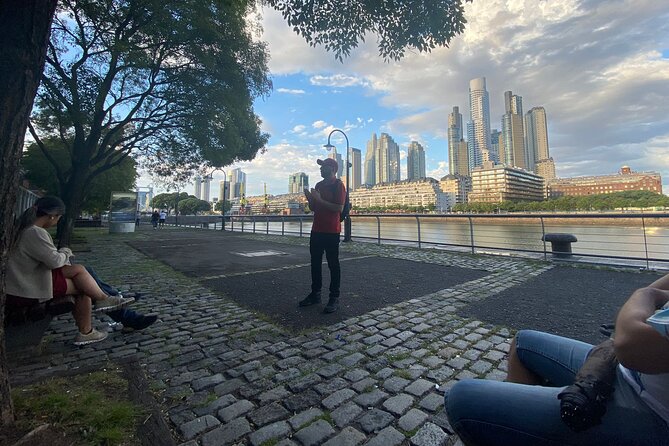
Soon you reach Plaza Dorrego, then you transition to San Telmo Market for a break. The break time is built in, so you can grab water, use the restroom, or just sit for a minute and watch how the neighborhood moves.
This part is valuable because it gives you a reality check. The tour is full of big questions about migration and identity, but here you get to experience the city’s daily rhythm. You can pause, look around, and ask yourself how older Buenos Aires coexists with present-day commerce and street life.
If you are the type who likes to “calibrate” during a tour, this market stop helps. You are not forced to keep walking and thinking the whole time. It also makes the rest of the route feel more grounded.
Tip for your comfort: wear shoes you trust. This is a walking experience, and the schedule assumes you can stay on your feet for a few hours.
Espacio para la Memoria ex CCD Club Atlético: history with memory, not slogans
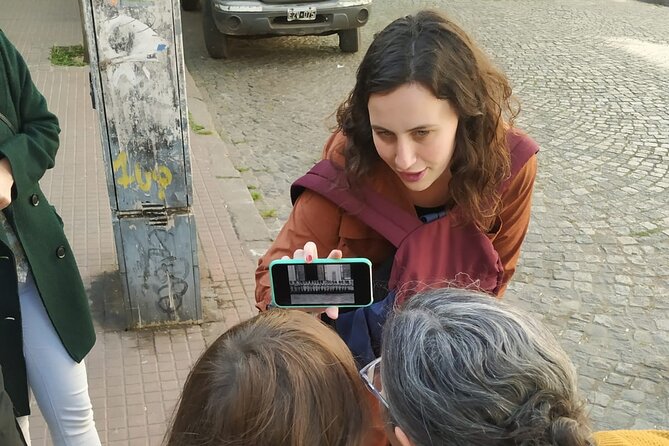
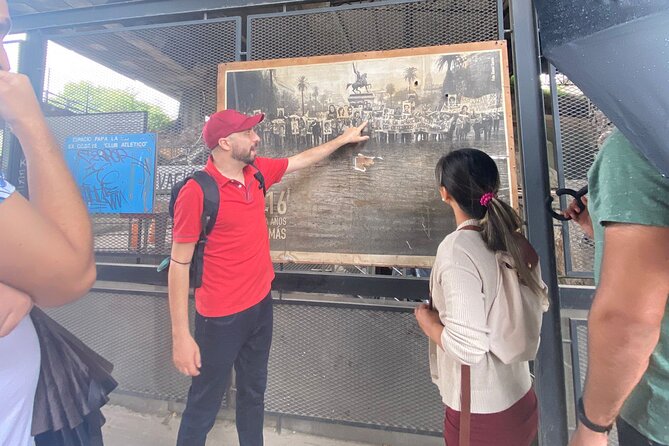
One of the most important stops comes at Espacio para la Memoria ex CCD “Club Atlético.” This is not a casual sight. It is a place tied to the darkest chapter in Argentina’s recent history, and the tour treats it as such.
Here, the discussion centers on how the memory of the desaparecidos shapes modern Argentina. The tour’s value is that it does not reduce the topic to slogans or shock. Instead, it connects the past to what people talk about now, how they remember, and why these events still matter in political life.
This is also where your conversational approach matters. If you have questions, this is the kind of stop where asking feels more meaningful than rushing past. If you prefer lighter tours, you might find this segment emotionally heavy, but it is one of the reasons the experience feels serious and not just sightseeing.
The British interest, African roots, and Perón and Evita in one storyline
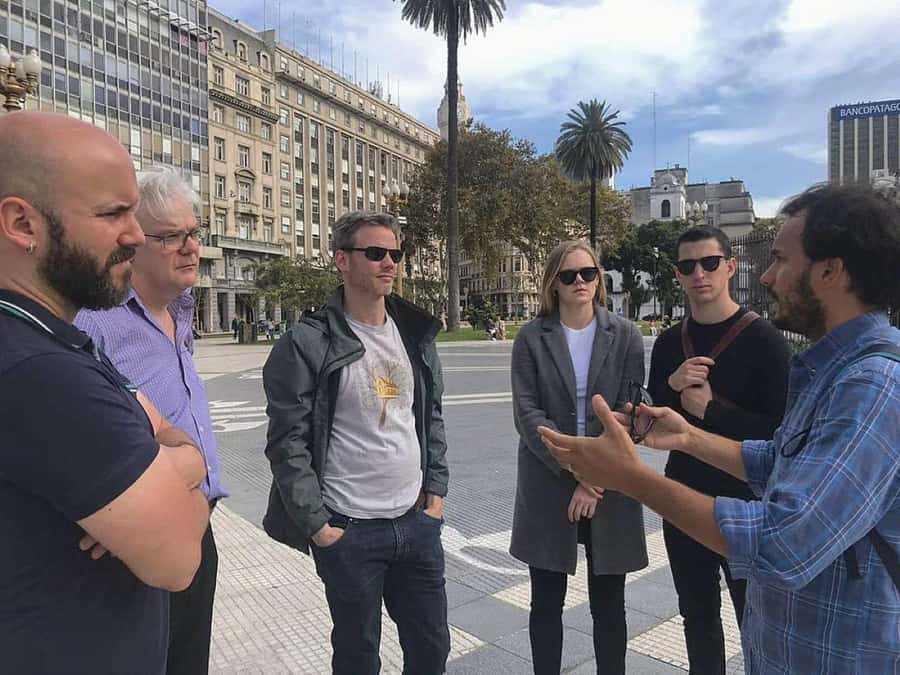
The route is built to answer the questions people often carry in their heads about Argentina, and it strings them together in a way that makes sense. You talk about why the British had interest in the city, what British involvement meant, and how those external forces interacted with the local social fabric.
You also discuss Buenos Aires’ significant African-descendant population. That topic is crucial, because it pushes you to see Buenos Aires as shaped by more than just the most visible European migration story. The tour frames it as essential context, not a side note.
Then the conversation turns to Evita and Perón. These names can feel like textbook material unless someone ties them to the city’s physical and political evolution. In this tour, the guide uses the walk itself to help you understand why those figures became symbols, and why the political narrative keeps echoing.
If you want to understand Argentina beyond headlines, this is where the tour delivers. It gives you a storyline you can hold onto while you explore on your own afterward.
Puente de la Mujer, then Casa Rosada and Plaza de Mayo
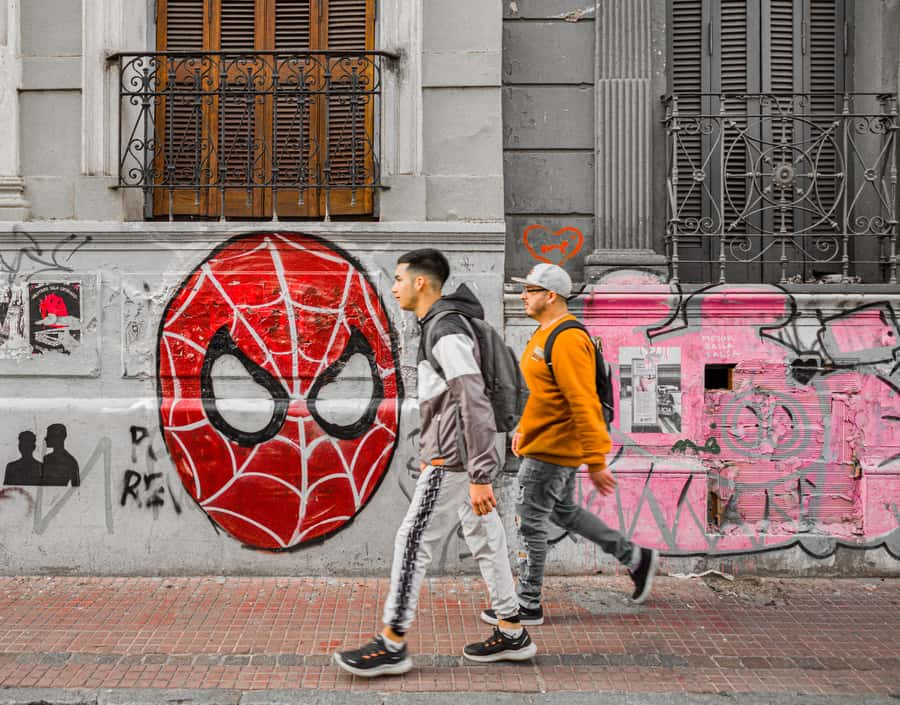
Next you reach Facultad de Ingeniería and UCA Santa María de los Buenos Aires. These stops help shift the lens from older political layers to modern institutions. Even if you do not study engineering or university life, it helps to see how the city keeps building and shaping its future.
After that, you walk to Puente de la Mujer. A bridge is an easy landmark to overlook, but here it becomes a prompt for thinking about connection, movement, and how modern Buenos Aires represents itself.
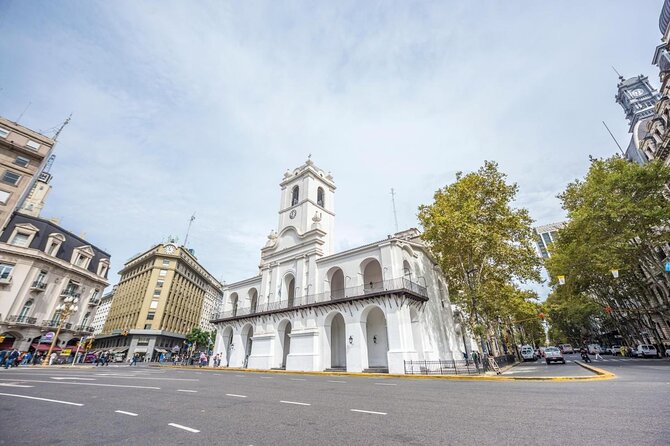
Finally, you wrap up around Museo Casa Rosada, Casa Rosada, and Plaza de Mayo. This ending is perfect if you want a first visit that leaves you oriented. You are right where Argentina’s political story becomes visible, and the tour’s earlier themes finally land with purpose.
Casa Rosada is more than a photo. The guide ties it to the history of the city’s political leaders, so you can connect the building to the systems and personalities that shaped Argentina. It’s also where the talk about the US dollar fits naturally. Argentina’s economy is not abstract here. The tour helps you understand why the dollar matters in day-to-day life and why it becomes part of political reality.
Price and value: what $30 buys you in the real world
At $30 per person for about 3 hours, this is strong value if you want understanding, not just motion. The price covers a professional guide, historical insights, and discussion time. In a city where tours can cost much more and still feel like a checklist, this one stays focused on the why behind the city.
The pacing also matters for value. The stops are staggered with guided segments and short walks between them. You get attention at each location instead of being rushed through everything at once, and the break at San Telmo Market helps keep the experience from feeling exhausting.
What you should budget separately is simple: meals and drinks, plus getting yourself to the meeting spot at Bar Británico. The tour gives you the route and the thinking, but you still need to handle your own snacks and transportation.
Who this tour is for, and who should skip it
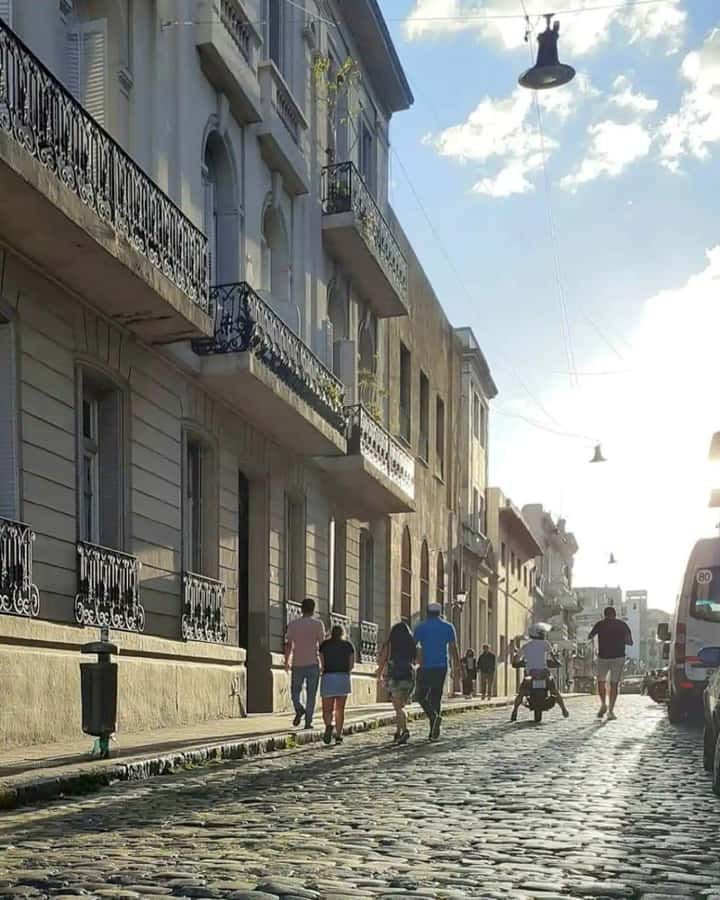
This is a great fit if you are curious and you like asking questions. The conversational format works especially well for people who want a smarter first introduction to Buenos Aires, with real context for politics, immigration, and identity.
It also suits you if you want an active way to see the historic center without turning it into a nonstop slog. The tour keeps moving, but it also slows down enough to explain what you are looking at and why it matters.
You might want a different option if you prefer tours that are purely scenic and light on difficult history. The segment at Espacio para la Memoria ex CCD “Club Atlético” is part of the core experience, and it will not be treated as optional background.
My booking advice: when to say yes
I recommend booking this tour early in your Buenos Aires trip. Not because you need to “do it first,” but because it gives you a framework. After three hours, you will have names, themes, and questions in your head, so your later wandering feels less random.
If you can choose a private or small-group setup, it is worth considering. One review noted that the tour can finish a bit earlier in that kind of setup, and that extra time can mean you get to ask more questions directly.
Bring comfortable shoes, water, sunscreen, and your camera. Weather can shift, and you do not want to be worrying about comfort when the guide is walking you through the city’s most meaningful layers.
FAQ
Where does the tour start?
You meet at Bar Británico.
How long is the walking experience?
The duration is 3 hours.
What does the tour include?
It includes a professional guide, historical insights, and time for discussion and debate.
What languages are available?
The live guide is available in Spanish, French, English, and Portuguese.
What should I bring?
Bring comfortable shoes, a camera, sunscreen, and water.
Is there a cancellation option?
Yes. You can cancel up to 24 hours in advance for a full refund. There is also a reserve now and pay later option.
Should you book this tour? If you want Buenos Aires that makes sense, not just Buenos Aires that looks nice, yes. The mix of anthropology, politics, and real discussion time is exactly what turns a short walk into a meaningful first read of the city.
More Tour Reviews in Buenos Aires
Newest Buenos Aires write-ups on the desk
- Tango Show at El Querandi with optional Dinner★ 4.2 · 3 reviews
- Velez Sarsfield Football Match★ 5.0 · 3 reviews
- Tango Show at: MichelAngelo★ 4.5 · 3 reviews
- Guided tour Boca Juniors Museum & Stadium + Caminito★ 3.3 · 3 reviews
- From Colonialism to Eclecticism, Buenos Aires arquitectonica★ 5.0 · 3 reviews
- Enjoy a Rural Experience in a Vineyard near Buenos Aires★ 4.7 · 3 reviews