
REVIEW · USHUAIA ADVENTURES
Exploring Ushuaia: Double Decker Bus Tour
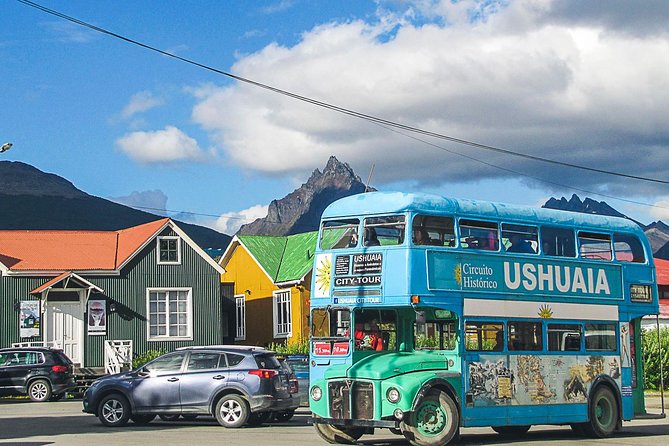
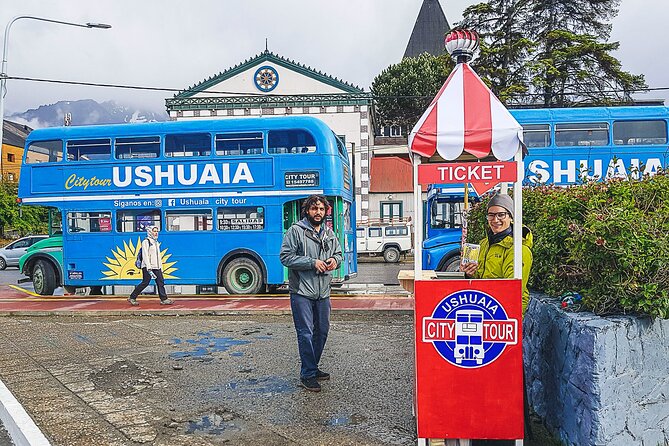
Ushuaia in 70 minutes, without the stress. This double-decker bus loop is a smart way to knock out the city’s most talked-about stops fast, with English and Spanish narration that helps the names make sense as you go. I especially like how it strings together civic sites, war memory, and big viewpoints in one smooth route. One thing to keep in mind: the tour is tight on time, so you get short photo breaks, and if the bus gets loud it can be harder to catch the narration.
If you’re arriving with sore feet or a full day ahead, this is the kind of tour that gets you oriented right away. It’s compact enough to do early in your stay, then use what you learned to plan the rest of your Ushuaia days. The group stays small, with a maximum of 20 people, so it feels less like a cattle line and more like a guided highlights circuit.
Plan to meet at Civic Plaza Ushuaia, Av. Maipú 420-498. There’s no hotel pickup, and depending on the season you might ride the double-decker (October to April) or a winter vehicle (a Bondi 4×4 in Spanish only). If weather is poor, the operator notes the tour needs good conditions, with options if it gets canceled.
In This Review
- Key highlights worth choosing this tour for
- Why Ushuaia’s double-decker loop works so well
- Getting on board: Civic Plaza meeting point and the top-deck reality
- Stop 1: Antigua Casa de Gobierno, First School, and the First Chapel
- Stop 2: Lucinda Otero House and the local mix of architecture and belief
- Stops 3 and 4: Malvinas Memorial and the First Cemetery
- Stop 5: CADIC, Universidad Nacional, and panoramic Monte Gallinero and Monte Vigía
- Stops 6 and 7: Rio Pipo and Camino de los Presos
- Stop 8: Laguna del Diablo photo break, plus Italian Quarter vibes and the hospital
- Stop 9: Museo del Fin del Mundo and the Saint Christopher shipwreck
- Stop 10 and the finish near the Naval Pier and Fournier Monument
- Guides, narration, and the headset trick that actually matters
- Group size, comfort, and what to pack
- Price value: why $32 can be a smart deal in Ushuaia
- Should you book the Ushuaia double-decker bus tour?
- FAQ
- How long is the Ushuaia double-decker bus tour?
- Where is the meeting point, and does the tour end nearby?
- Is it always a double-decker bus?
- What languages are available during the tour?
- What is included in the price?
- Do I need hotel pickup and drop-off?
- What happens if weather is bad?
- Can I cancel and get my money back?
Key highlights worth choosing this tour for

- Small group, big overview: limited to 20 travelers, so you do not feel lost in a crowd.
- One loop, many iconic stops: Antigua Casa de Gobierno, Malvinas Memorial, Camino de los Presos, Laguna del Diablo, and more.
- Clear multilingual setup: narration in English and Spanish in summer, and Spanish in winter, plus other languages available via headset jack at each seat.
- Top-deck views pay off: you get a better angle for city and harbor panoramas, with stops built in for photos.
- Guides add meaning, not just driving: the guide helps connect what you see with why it matters.
- Good value for a short schedule: it is a long list of landmarks for a relatively low price per person.
Further south from Ushuaia
- Ushuaia: National Park & Train of the End of the World Tour
★ 4.5 · 811 reviews - Ushuaia: Penguin Watching Tour by Catamaran
★ 4.5 · 439 reviews - Ushuaia: Catamaran Sailing to Penguin Island
★ 4.4 · 436 reviews - Ushuaia: Beagle Channel & Sea Wolves Island Catamaran Cruise
★ 4.6 · 433 reviews
Why Ushuaia’s double-decker loop works so well
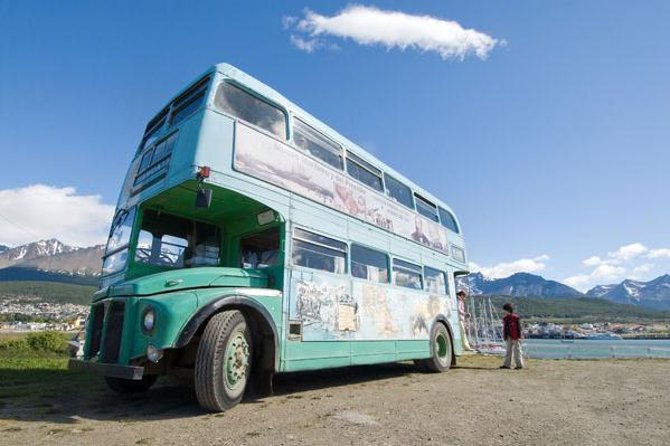
Ushuaia is compact, but the points of interest are scattered up hills, along bays, and out toward historic roads. Walking it all would be slow and often damp, and if you are on a cruise or just have a packed itinerary, you need something efficient. That is where a 1 hour 10 minute guided bus tour shines. You get the “where is everything” picture quickly, then you can return on your own when you find the stops you care about most.
I also like that the tour does not just do street names. It builds a story as you move around town: government and education, faith, conflict and remembrance, science and views, then the more emotional layers tied to the city’s past. The route even includes quick detours through neighborhoods and viewpoints, so it feels like you are getting the rhythm of Ushuaia rather than only seeing postcards.
Price matters too. At $32 per person for a guided ride that hits a lot of major anchors, you are paying for time saved and context gained. This is not the kind of tour you book for one single must-see. It is the kind you book so your first day in Ushuaia stops being chaotic.
Getting on board: Civic Plaza meeting point and the top-deck reality
You start at Civic Plaza Ushuaia on Av. Maipú (420-498). That is handy because it is easy to find and it links you to the core of town. Just remember: there is no hotel pickup or drop-off service, and the activity ends back at the meeting point, so build in time to get there on your own.
Also, if you plan to sit up top, be ready for a bit of physical effort. One review described the stairs as narrow, and it can feel like a movie prop more than a modern tourist bus. The upside is that top-deck seating gives you better angles on the hills and harbor, especially around panoramic stops like the Monte Gallinero and Monte Vigía viewpoints.
Weather is part of the deal in southern Argentina. Bring a rain layer. Even on calm days, Ushuaia can change mood fast, and you will be outside briefly for photos at a couple of stops.
Stop 1: Antigua Casa de Gobierno, First School, and the First Chapel
The tour kicks off with the Antigua Casa de Gobierno. This is a strong opening because it places you in Ushuaia’s civic roots before you race toward the scenic bits. The route continues from the old governor’s building to the first school, which frames how education and governance developed together in the region. Then you continue on to the First Chapel.
What you get from this start is mental orientation. You see how the town’s institutions shaped daily life, not just the later tourism era. It is also a good primer if you have not read up on Tierra del Fuego before arriving. In a short time, you get the basic language of the place.
Time here is brief, around 15 minutes, and tickets for these stops are noted as free. So do not expect a long museum-style visit. Think of it as a guided “signpost tour,” where the guide points out what to remember later.
Stop 2: Lucinda Otero House and the local mix of architecture and belief
Next comes the Lucinda Otero house, a stop designed around local architecture and spirituality. It is quick, about 5 minutes, but it adds a different texture than the government sites. Ushuaia is often described through war memorials and big nature views, but this stop reminds you that everyday life, faith, and building styles are part of the story too.
One of the practical benefits of a tour like this is that you get a guided explanation right when you are standing in front of the thing. Later on, if you pass by a similar building on your own, you will recognize what the guide was pointing out.
Stops 3 and 4: Malvinas Memorial and the First Cemetery
The Malvinas Memorial is one of the emotional anchors of the route. You spend about 10 minutes here, and it is clearly presented as a key historical point representing combatants from the Malvinas War. This is not a quick rubber-stamp stop. Even at 10 minutes, it gives you enough time to take in the message and snap a photo if you want one.
Right after that, you reach the Cementerio Antiguo de Ushuaia, the First Cemetery. This is a 5 minute pause for reflection and memory. It helps you understand Ushuaia as a place that carries history in public spaces, not only in museums tucked away from view.
If you want a tour that helps you absorb more than just geography, these two stops are where it happens. If you are tired, you can still take it in without rushing, because the route continues afterward with viewpoints and lighter moments.
Stop 5: CADIC, Universidad Nacional, and panoramic Monte Gallinero and Monte Vigía
Then the bus shifts to education and science with the Universidad Nacional de Tierra del Fuego and the CADIC area. The tour’s phrasing signals an emphasis on scientific and educational progress, and it makes sense. Ushuaia is not just a terminal town. It is also a base for study and research tied to the far south.
You get a small break at around 5 minutes, then the bus continues toward Monte Gallinero and Monte Vigía for panoramic views. This is where the top-deck advantage pays off, even if you are not an “I climb hills for views” person.
The panoramic stops are often the best payoff for people who do not want to spend a whole afternoon on one hike. The tour gives you the viewpoint energy in a controlled, time-efficient way. It also sets you up to decide later whether a longer viewpoint walk is worth it for you.
Stops 6 and 7: Rio Pipo and Camino de los Presos
The route passes through the Pipo River and the Nuevos Barrios before entering the historic Camino de los Presos, also called Prisoners’ Road. Another stop covers the Camino de los Presos itself, again around 5 minutes each for these segments. These short stops are important because the road connects Ushuaia to its penal-era history.
This is one place where a guide matters. If you only see the road and surrounding buildings, it can look like any street winding through a town. With narration, the meaning clicks, and suddenly the road feels like part of a bigger explanation, not just a scenic route.
If you are sensitive to heavy history, these moments are brief and structured. They are also spaced so you can process before the tour reaches the more nature-focused stop at Laguna del Diablo.
Stop 8: Laguna del Diablo photo break, plus Italian Quarter vibes and the hospital
Laguna del Diablo is the tour’s best-known nature stop. You get off for a longer photo pause, about 10 minutes, to appreciate the area and take pictures. This is one of the moments where you can move at your own pace for a bit, rather than only listening from your seat.
Afterward, the route continues through the Barrio de los Italianos and passes by the local hospital. These are not long stops, but they add everyday context. Ushuaia is shaped by many waves of settlers and workers, and the neighborhoods help you see the town as something lived in, not just visited.
One small but useful tip: keep an eye on how you dress for wet weather. Even if it is not raining, it can feel cold and damp outside. You will be out briefly, but the “brief” part adds up across a tour like this.
Stop 9: Museo del Fin del Mundo and the Saint Christopher shipwreck
The tour includes a stop at the End of the World Museum area, associated with the Saint Christopher shipwreck. This is where Ushuaia’s maritime identity becomes tangible.
The time here is short (around 5 minutes), but the benefit is that you get an introduction to the museum’s theme. If this subject interests you, you will have a clear target for a return visit later with more time and fewer time constraints.
A couple of you may care about maritime and prison history as a single package. The overall route finishes near the harbor and related historic sites, so you can often connect the dots if you are planning a longer museum day afterward.
Stop 10 and the finish near the Naval Pier and Fournier Monument
The last part brings you back to the maritime core of the city, culminating near the Naval Pier and the Fournier Monument. This is a fitting ending because Ushuaia is built on exploration routes, survival at the edge of the map, and the sea.
Then the tour ends back at the meeting point. In practice, that means you get an easy landing back into town, instead of being stranded somewhere far from your next plan.
If you are thinking about an evening stroll, this ending helps. You now know where you were, and you can choose a walk based on what you liked most.
Guides, narration, and the headset trick that actually matters
In summer, you get a professional guide who speaks English and Spanish. In winter, it shifts to a professional Spanish-speaking guide and the operation uses a Bondi 4×4. So yes, the vehicle and language setup can change by season.
The narration setup is also worth paying attention to. Equipment for other languages is described as available at each seat, with a jack for headphones. Languages listed include German, Chinese, Russian, Italian, French, and Portuguese. If you do not have headphones, you might want to plan to borrow or buy what you need at the destination, since the tour notes that you can use your own headphones via the jack.
Two practical takeaways from real-world experience on tours like this:
- If it is a narrated format and people around you talk, it can get harder to hear. Pick a seat where you can focus, not where you are surrounded by loud conversation.
- If you get motion discomfort, you might prefer a seat with steadier footing. The top deck can feel bumpy on steep sections, and Ushuaia is not exactly flat.
Group size, comfort, and what to pack
With a maximum of 20 travelers, the tour feels more manageable than bigger bus circuits. It also helps with flow at photo stops, even if you still get that usual “bus unload, bus load” choreography.
Comfort is generally described as good, with at least some rides feeling warm and cozy. Still, it is a bus ride with brief outdoor moments. Pack a rain layer, plus something warm for the top deck. You will often be looking into wind and light drizzle at the wrong moment.
If you have limited mobility, the stairs to the top deck could matter. If you are unsure, you can default to a lower-deck seat. That decision is partly about comfort, partly about avoiding stress when the bus pauses.
Price value: why $32 can be a smart deal in Ushuaia
At $32 per person for a 1 hour 10 minute guided loop, this tour prices itself for one key job: giving you direction on your first day. Ushuaia can swallow time fast. You spend hours deciding where to go, and then suddenly the day is gone. This tour compresses the decision-making.
You also get a long menu of meaningful stops, including civic sites, war memory, and maritime identity. Tickets for the stops listed are described as free, which helps keep the outing from turning into an add-on spending spree.
Is it perfect for everyone? No. It is designed for breadth, not depth. You will not get a long, slow museum day from this alone. But for most first-timers, that is exactly the point.
Should you book the Ushuaia double-decker bus tour?
Book it if:
- You want a quick orientation on your first day in Ushuaia.
- You care about history and context as much as photos.
- Your schedule is tight, and you want a guided overview in just over an hour.
Skip it or consider pairing it with something else if:
- You only care about one major attraction and would rather spend time on depth than breadth.
- You want a tour that matches a specific expectation about a glacier or very remote sites, because this ride focuses on city landmarks, viewpoints, and museum themes inside Ushuaia.
My practical advice: do this early. Let the stops teach you what to prioritize next. Then you will not end up spending your limited time in Ushuaia wandering between “maybe” plans. Instead, you will spend it where you actually want to linger.
FAQ
How long is the Ushuaia double-decker bus tour?
It runs for about 1 hour 10 minutes.
Where is the meeting point, and does the tour end nearby?
You meet at Civic Plaza Ushuaia on Av. Maipú 420-498. The activity ends back at the meeting point.
Is it always a double-decker bus?
Double-decker service runs from October to April. In winter, it operates in a Bondi 4×4 in Spanish only.
What languages are available during the tour?
In summer, the guide is English- and Spanish-speaking. In winter, the guide speaks Spanish. Other languages are available at each seat via provided equipment and a jack for your own headphones.
What is included in the price?
The price includes a professional guide (English and Spanish in summer, Spanish in winter). The stops listed show free admission tickets for those specific points.
Do I need hotel pickup and drop-off?
No. The tour does not include hotel pickup or drop-off.
What happens if weather is bad?
The tour requires good weather. If it is canceled due to poor weather, you will be offered a different date or a full refund.
Can I cancel and get my money back?
This experience is non-refundable and cannot be changed for any reason.
More Tours in Ushuaia
More Tour Reviews in Ushuaia
Ushuaia, More of It
Newest Ushuaia write-ups on the desk
- Trekking Esmeralda Lagoon★ 4.8 · 3 reviews
- Ushuaia: Tour: Beagle Channel Navigation★ 4.7 · 3 reviews
- USHUAIA: LANDSCAPES AND DELIGHTS – CITY TOUR★ 4.5 · 3 reviews
- Private Experience “Tierra del Fuego” National Park★ 4.7 · 3 reviews
- Full Day Trip to Tierra del Fuego National Park★ 4.2 · 3 reviews
- Emerald Lagoon Helicopter seeing★ 5.0 · 3 reviews
The rest of the Ushuaia Adventures list.
 ★ 4.5Ushuaia: National Park & Train of the End of the World TourFrom $111811 reviews
 ★ 4.5Ushuaia: Penguin Watching Tour by CatamaranFrom $180439 reviews
 ★ 4.4Ushuaia: Catamaran Sailing to Penguin IslandFrom $92436 reviews
 ★ 4.6Ushuaia: Beagle Channel & Sea Wolves Island Catamaran CruiseFrom $115433 reviews
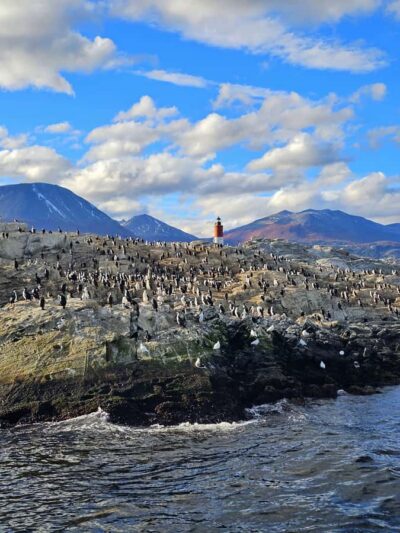 ★ 4.6Ushuaia: Beagle Channel and Penguin IslandFrom $178318 reviews
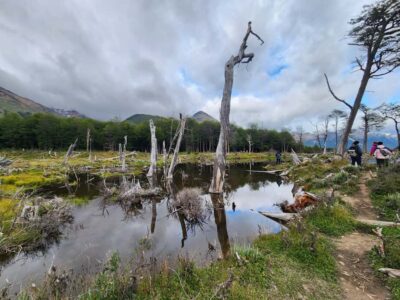 ★ 4.9From Ushuaia: Tierra del Fuego Emerald Lagoon Trekking TourFrom $105271 reviews
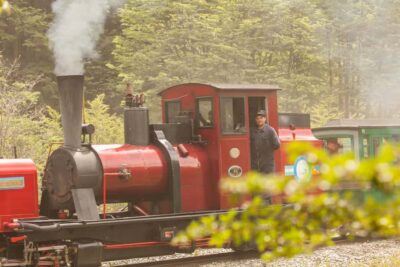 ★ 4.5Ushuaia: National Park, Train, and Beagle Channel NavigationFrom $190182 reviews
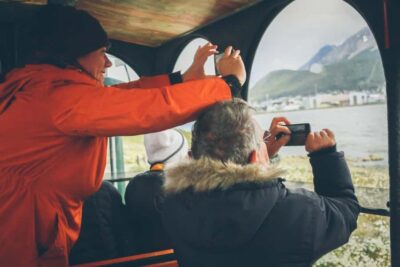 ★ 4.4Ushuaia: Panoramic City Train TourFrom $20155 reviews
Lists this one is on