
REVIEW · EL CALAFATE AND EL CHALTEN TRIPS
El Chalten: Rio de las Vueltas and Patagonia Rafting
Cold water, big mountains, serious fun. This is rafting on Río de las Vueltas from El Chaltén, where you get both the quiet, contemplative float and then the adrenaline of Class III to III+ rapids. I really liked the way the guides coach paddling and safety so you feel confident quickly, and I also loved the river-level views of Mount Fitz Roy plus the chance to spot local wildlife. One thing to consider: it gets chilly, and the activity has strict health and mobility restrictions.
You’ll start at the operating base (Av. San Martín 872), get fully kitted out, then take a short van ride to the water. This route is often described as the southernmost rafting in South America, and it feels that way in the best possible manner, raw Patagonian scenery, wind, and glacier-cold water in your face.
In This Review
- Key points before you go on Río de las Vueltas
- Why Río de las Vueltas rafting feels different in El Chaltén
- Starting at San Martín 872: gear, safety talk, and quick prep
- Van to the river and the first 6 km: learning strokes with Fitz Roy in view
- The canyon section: where the rapids go from fun to focused
- Pauses for views, the action bursts, and what you get between rapids
- Timing, route ends, and that post-raft warmth
- Price and value: is $120 a fair deal?
- Who this rafting trip suits best, and who should skip it
- Should you book El Chaltén Río de las Vueltas rafting?
- FAQ
- How long is the El Chaltén Río de las Vueltas rafting experience?
- What river conditions and rapids should I expect?
- What gear is included, and what should I bring?
- Where does the activity start, and how do you get to the river?
- Can I bring a cellphone or professional camera?
- Who is the activity not suitable for?
Key points before you go on Río de las Vueltas
- Quiet paddling first, so you can learn strokes and take in views before the rapids
- Around 20 Class III to III+ rapids in a natural canyon, for real action
- Wildlife spotting is part of the show, with condors, geese, ibises, guanacos, foxes, and more
- Gear is included, including a neoprene suit and helmet, so you travel lighter
- Guides bring energy and humor, with named favorites like Juan and Lollie mentioned in recent experiences
- Hot tea and a post-raft snack help you warm back up before the return drive
Why Río de las Vueltas rafting feels different in El Chaltén
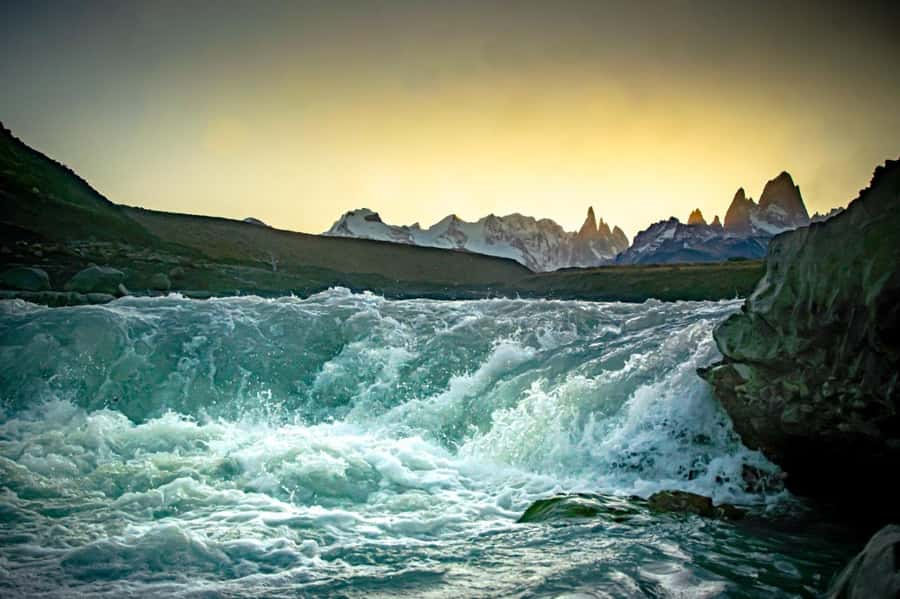
El Chaltén already pulls you toward the mountains, but doing it from the river changes the whole rhythm. You start with calm water and meanders that give you time to look up and really track Fitz Roy and its jagged neighbors, then the canyon tightens and the river stops being polite.
What makes this trip worth your time is the mix of moods. You get long stretches to practice paddling while taking in the Andean forest and then the more open steppe. Then you get that controlled chaos where everyone must paddle together, because coordination is the difference between a fun ride and an exhausting one.
Starting at San Martín 872: gear, safety talk, and quick prep
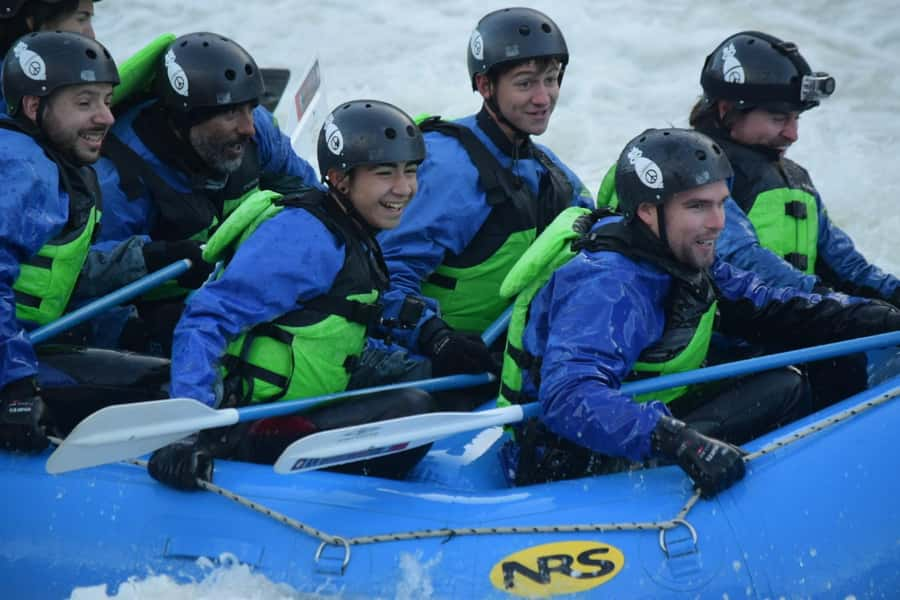
Your morning begins at Av. San Martín 872, at the operating base by the dome in the corner. From there, guides hand you the technical kit you need, so you are not hunting for rentals or figuring out sizing on the fly. You’re given a neoprene suit (3 millimeters), micro polar layer, jacket, life vest and helmet, neoprene boots, and mitts, plus a paddle.
That matters more than it sounds. Cold water rafting is a different sport than summer whitewater, and Patagonia wind can sneak under your layers. The included gear is built for the reality of this place, meaning you can focus on the technique and the experience instead of playing catch-up with clothing.
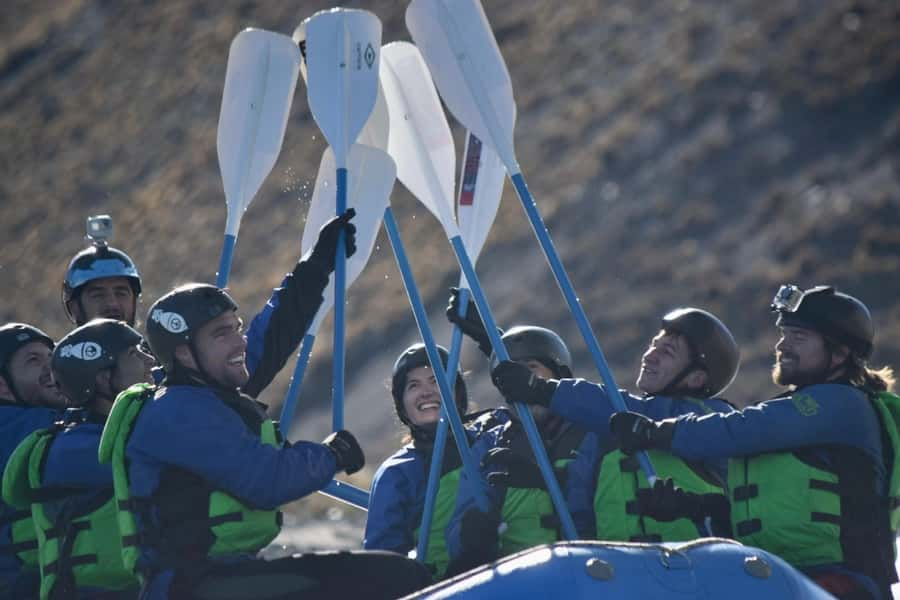
Before you ever hit the current, you get a river-specific talk on how to hold the paddle and how the team moves the raft: forward, turning, and how to paddle back so the group stays in sync. The guiding style is a big reason people rate this so highly, including first-timers who felt nervous at the start but relaxed after the coaching.
Also, keep your expectations realistic about electronics. Cellphones are not allowed during the activity, and professional cameras are not allowed either, so plan to rely on the moment, not your camera roll.
Van to the river and the first 6 km: learning strokes with Fitz Roy in view
After the safety briefing and gear check, you go by van about five blocks up to the river. On the banks of Río de las Vueltas, you get set for what is essentially the training phase, but it never feels like just practice.
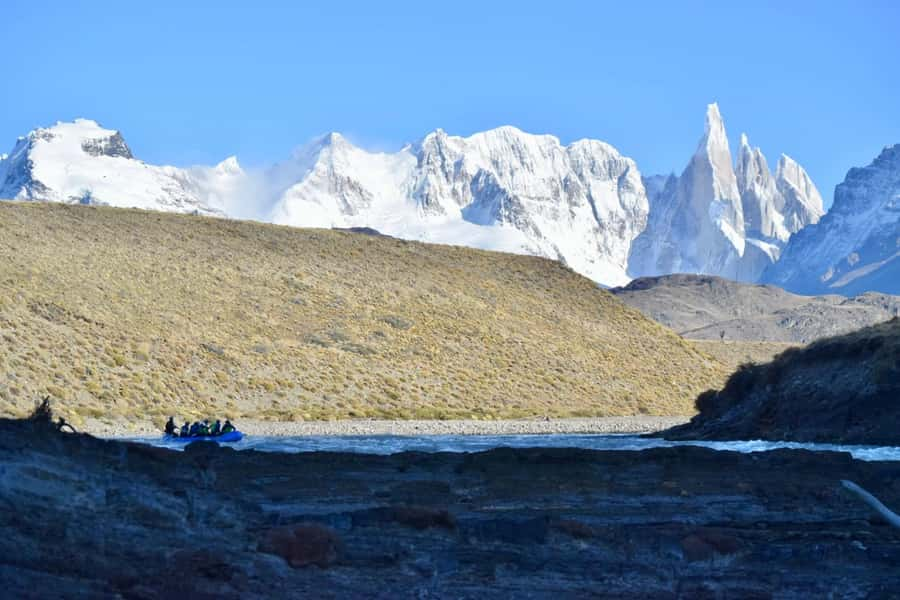
The first stretch is quiet water with meanders, and it is designed for both views and technique. You’ll paddle about 6 kilometers while the river offers gentle turns that help you feel the raft’s movement. This section is where you catch the best early Fjord-like framing of Fitz Roy, plus the angles change often enough that you do not feel stuck staring in one direction.
You’ll also see the ecology change along the way. One moment you’re moving through Andean forest, and the next you’re looking out into steppe. That shift is subtle from a trail, but from the water it is obvious, like the river is escorting you through Patagonia’s different faces in one continuous ride.
And yes, wildlife shows up in a way that surprises people. You might spot condors, upland geese, black-faced ibis, and other local birds. You can also see foxes, armadillos, and guanacos, which makes the quiet section feel like a moving wildlife-watching platform as well as a warm-up.
The canyon section: where the rapids go from fun to focused
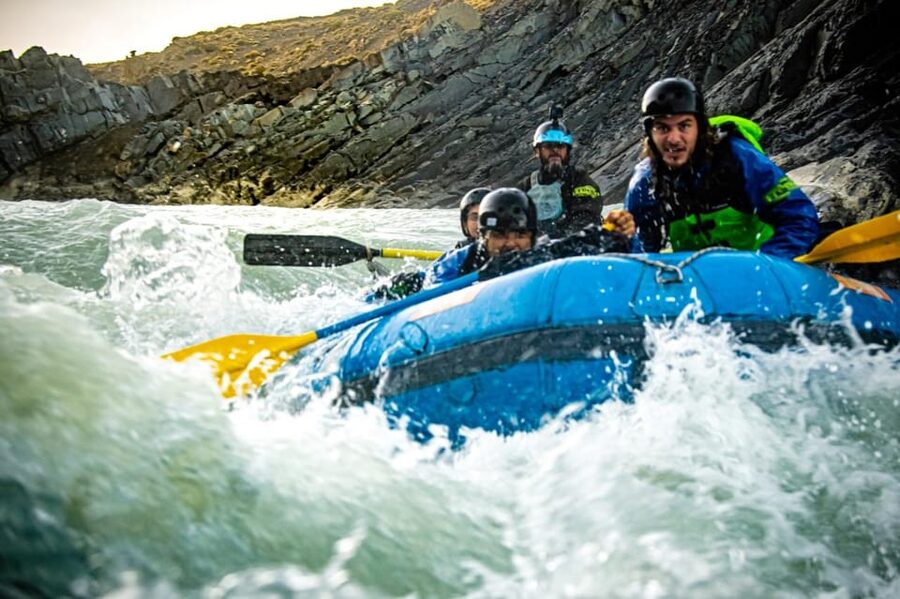
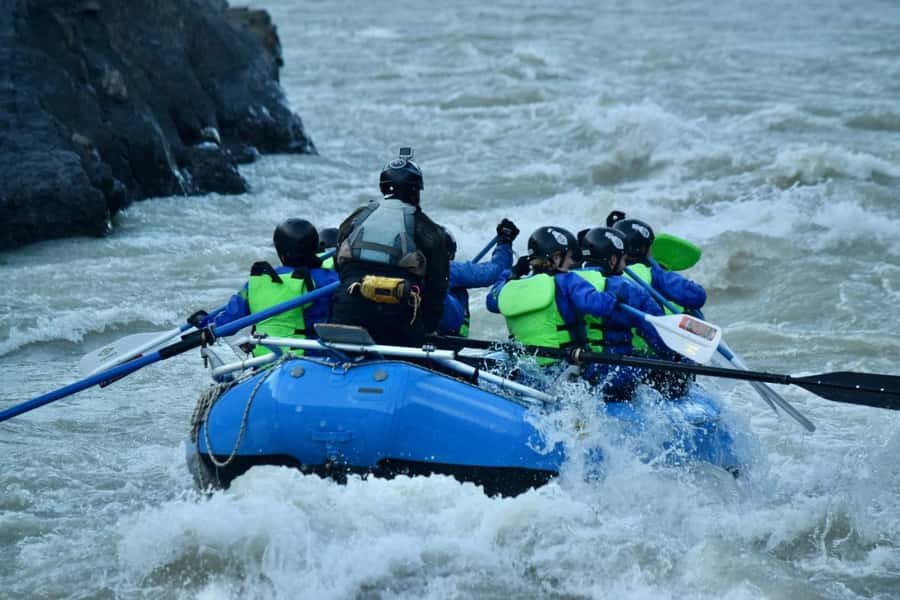
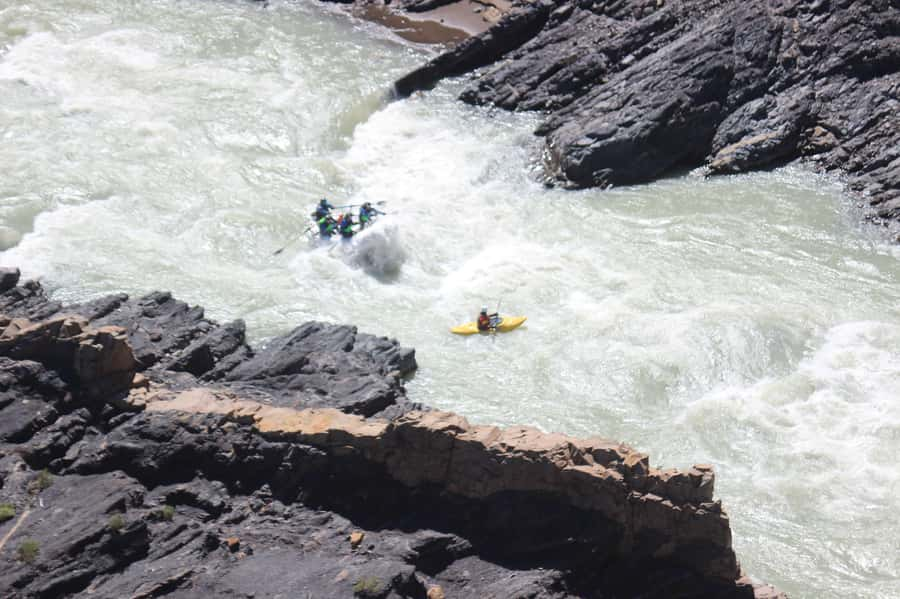
The second half is where the river becomes a different animal. You move into a natural canyon, and the energy ramps up fast. This part runs about 10 kilometers, and it includes roughly 20 rapids graded around Class III to Class III+.
This is the point where your technique matters, not because you need to be a pro, but because your team needs you to paddle when the guides say. Class III and III+ rapids usually mean you are handling waves, steering calls, and quick adjustments. In other words, you are still safe, but your brain gets busy.
The canyon setting also changes what you feel. The walls bring the sound of the water right into your face, and the tight geometry makes the turns more intense. The result is that adrenaline hits without the trip turning into a long grind.
What I like about this structure is that you get both experiences in one day. You learn how the raft responds in the calm section, then you get rewarded when you apply it in the rapids. If you are new to rafting, this pacing is ideal, because you’re not thrown straight into the toughest part without time to understand basic paddle commands.
Pauses for views, the action bursts, and what you get between rapids
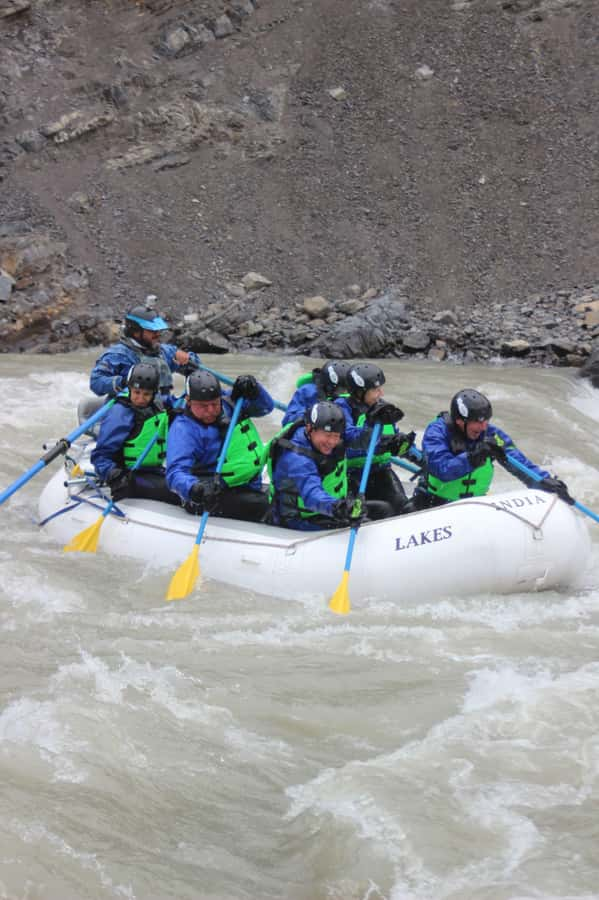
Even in the middle of excitement, you still get moments to breathe. The whole river circuit takes about 2 hours on the water, with time for contemplation and breaks to take in the scenery and reset your grip.
Those short pauses matter. They give your arms a rest, but they also let you look up at Fitz Roy again when you’re not bracing for the next shove of water. In Patagonia, weather can flip quickly, and these brief view windows are often when conditions are best.
Recent experiences also highlight that guides do more than call commands. People mention guides with strong humor and strong safety standards, and named examples include Juan and Lollie. That combination helps a lot when you’re in unfamiliar gear and water depth feels new under your feet.
Timing, route ends, and that post-raft warmth
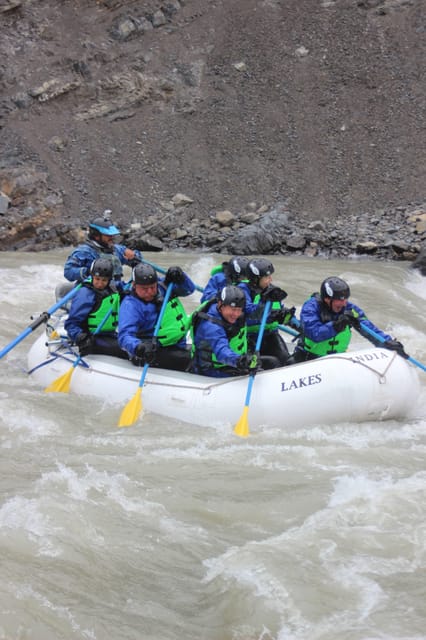
You’re on the water for about two hours, but the full experience is listed as 3 hours total. That makes sense because you’re also doing short transfers, the safety briefing, and time to warm up after the splashes.
When you finish, you’re offered a hot snack. This includes tea or coffee plus something sweet or savory, and it depends on the time of day. In a cold river environment, this is more than a treat. It’s a practical reset, helping your body recover after neoprene and icy water.
After that, you head back to the base. The return vehicle is waiting at the bridge of Provincial Route 23, then you ride back to Av. San Martín 872.
Price and value: is $120 a fair deal?
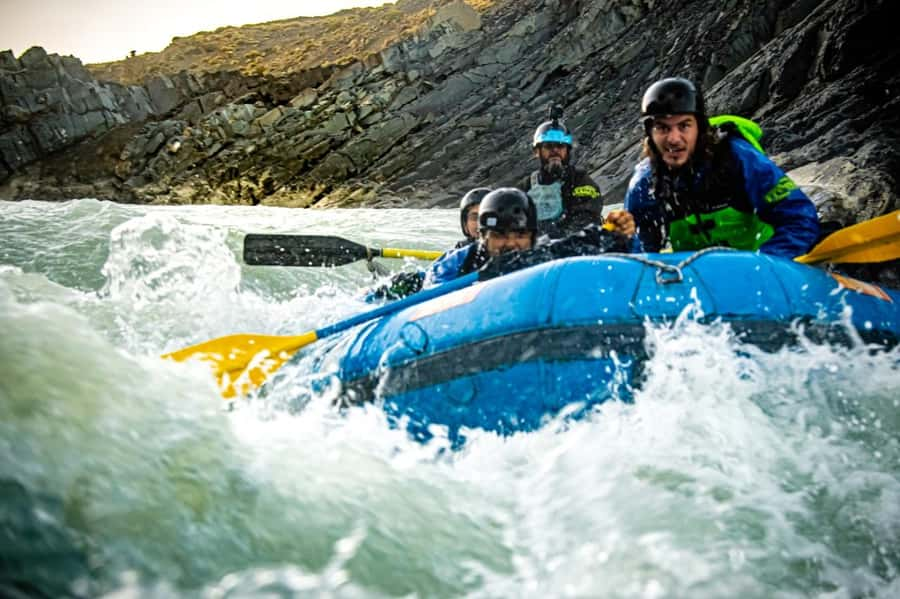
At $120 per person for a 3-hour outing, you are paying for more than just the raft. You are getting full technical gear, a bilingual guide (Spanish and English), insurance coverage (civil liability and personal accidents), and transportation from the base to the river and back.
So the value equation is strong if you need the gear and don’t want to manage rentals. It is also a good use of time in El Chaltén, because you get a real taste of Patagonia from the water without committing to a full-day hike.
One practical note from recent feedback: one guest suggested buying on site can be cheaper than booking ahead. I can’t promise that is always the case, but it’s a smart habit to check before you pay, especially if you are comparing options in town.
Also, don’t assume photo packages are guaranteed. The information provided says photos and videos are not included, yet some recent experiences mention receiving pictures and videos quickly. I’d treat that as a possible bonus, not a core part of the deal, and ask ahead if photos matter to you.
Who this rafting trip suits best, and who should skip it
This rafting is built for people who can handle cold water, wet gear, and active paddling. The age range is 16 to 65. It also lists clear restrictions: it is not suitable for pregnant women, people with respiratory disabilities like COPD, asthma, or emphysema, and people with cardiovascular disease or limited cardiac and vascular capacity. The restrictions also mention that you should not participate if you use things like pacemakers, stents, or other prostheses, and it is not suitable for people with obesity or any physical or mental disability that affects attention, gait, or coordination.
It’s also not suitable for children under 16, and it specifically says not suitable for people over 60. If you are close to those limits, confirm before you book.
If you meet the requirements and you want a mix of scenic paddling and real rapids, this is a strong match. You’ll likely enjoy it most if you like action that has a clear learning curve, because the coaching before the canyon helps you participate, not just hold on.
Should you book El Chaltén Río de las Vueltas rafting?
I’d book this if you want a high-value Patagonian experience that combines Fitz Roy views, wildlife chances, and genuine whitewater without needing prior rafting skill. The included gear, transport, bilingual guiding, and insurance make it a lot easier to say yes once you’re already in El Chaltén.
I would hesitate if you know cold water will be a problem for you, or if any of the medical restrictions apply. And if photos and videos are a must-have, verify what you’re actually getting, because the deal terms and real-world reports can differ.
If you fit the criteria, this is one of those rare days where you spend 3 hours and still feel like you saw the region from a whole new angle.
FAQ
How long is the El Chaltén Río de las Vueltas rafting experience?
The total experience is listed as 3 hours. You spend about 2 hours on the river itself, with time for the paddling phases and contemplation.
What river conditions and rapids should I expect?
The trip includes about 20 rapids graded around Class III to Class III+. The river starts with quiet water meanders, then transitions into a natural canyon for the more technical section.
What gear is included, and what should I bring?
Included gear covers a neoprene suit (3 millimeters), micro polar, jacket, life vest and helmet, neoprene boots, mitts, and a paddle. You should bring a towel and thermal clothing.
Where does the activity start, and how do you get to the river?
You meet at the operating base in El Chaltén at Av. San Martín 872. After gearing up, you take a van about five blocks to the river, then return to the base after rafting.
Can I bring a cellphone or professional camera?
No. Cellphones are not allowed, and professional cameras are also not allowed during the activity.
Who is the activity not suitable for?
It is not suitable for pregnant women and for people with respiratory issues, certain cardiovascular conditions, or other listed health limitations. It also lists restrictions for age, mobility, and disabilities that affect attention, gait, or coordination.
The rest of the El Calafate and El Chalten Trips list.
 ★ 4.7El Calafate: Perito Moreno Glacier & Optional Boat CruiseFrom $802,586 reviews
 ★ 4.4From El Calafate: Full-Day Tour to El ChalténFrom $130926 reviews
 ★ 4.8El Calafate: Perito Moreno Glacier Trekking Tour and CruiseFrom $396805 reviews
 ★ 4.8El Calafate: Glaciers Gourmet Experience – Full Day CruiseFrom $225285 reviews
 ★ 4.5El Calafate: All Glaciers Boat TripFrom $255263 reviews
 ★ 4.5El Chalten Complete Experience Full Day Tour from El CalafateFrom $110219 reviews
 ★ 4.0El Chaltén with Trekking from El CalafateFrom $97157 reviews
 ★ 4.8Calafate: Perito Moreno Glacier Guided Full-Day TourFrom $76155 reviews
Lists this one is on